

Lapsang Souchong is one of the most exclusive teas in the world. Its characteristic aroma and smoky flavour have made it a unique reference point in the premium tea scene, appreciated both for its distinctive sensory profile and for its history and meticulous production process.
For professionals in the sector, this tea represents a strategic opportunity: to offer an authentic product with a clear origin and a distinctive positioning that appeals to discerning consumers in search of unique experiences.
In this article, we will explore Lapsang Souchong in depth: its history, production process, best preparation techniques and most highly valued blends. We will also analyse how to effectively integrate it into a professional catalogue, highlighting its potential to enrich the value proposition and strengthen brand identity.
What is Lapsang Souchong smoked tea?
It is a black tea originating in the Wuyi region of China, known for its distinctive smoky flavour. This is achieved through a unique process in which the tea leaves are dried and smoked over a pine wood fire, giving them an earthy and resinous profile. Although its flavour varies depending on the length and type of smoking, Lapsang Souchong is famous for its deep and complex notes, which make it stand out from other black teas.
The term Lapsang Souchong comes from the Chinese words “Lapsang”, which refers to pine wood, and “Souchong”, a term used to describe a category of tea leaves, usually the largest and most mature ones, found at the bottom of the plant.
Origin, history and evolution
Lapsang Souchong originated in the mountainous region of Wu Yi, in Fujian, China, during the Qing dynasty.
Although there are several legends about its creation, the most widely accepted version states that in 1646, due to the intervention of Qing military troops during tea production, local farmers were forced to improvise methods to dry the leaves quickly.
To prevent the fresh tea from spoiling, they began to dry it over a pine wood fire, which gave it its characteristic smoky flavour. Thus, this unique tea was born, which today is recognised for its intensity and unmistakable aromatic profile.
Initially known as “smoky souchong“, the tea was adopted by European traders, especially the Dutch, who marketed it under the name Lapsang Souchong. Over the centuries, this tea became popular in Europe and was incorporated into such iconic blends as “Russian Caravan“.

Current cultivation and production of smoked tea
Lapsang Souchong is mainly grown in the Wu Yi Mountains, located in the north-west of Fujian Province, China. This volcanic region is famous for its unique microclimate, which offers cool temperatures, fertile soils and an environment protected by rock formations.
The ideal climatic conditions and biodiversity of the area allow for the cultivation of high-quality teas, with the highest altitude plantations producing the most prized leaves. These high altitudes provide a tea with an intense and complex flavour profile.
Although Wu Yi is the heart of this tea’s production, it is also grown in some nearby areas of Jiangxi. However, teas from this region do not achieve the same complexity or level of smokiness as those from Wu Yi, which are still considered to be of the highest quality. Wu Yi plantations continue to use traditional techniques to preserve the authenticity and unique flavour of this tea.
Lapsang Souchong tea production process
The production of Lapsang Souchong combines centuries-old artisanal techniques with precise control of each stage, resulting in one of the most complex aromatic profiles in the world of tea.
Although it shares common stages with classic black tea production, its identity arises from the way these phases are adapted to enhance the characteristic smoky flavour.
1. Harvesting and withering
The mature leaves are harvested by hand and spread indoors to gradually reduce their moisture content. This slow withering prepares the leaf to absorb aromas during the subsequent smoking process.
The technique is similar to that used for other teas, although with Lapsang, ventilation and temperature are even more carefully controlled to avoid interfering with the final flavour profile.
2. Rolling and first oxidation
After withering, the leaves are lightly rolled to break some of the cell walls and initiate oxidation. This process is carefully controlled to develop the nuances of a black tea without saturating the final character of the product.
3. Smoking in traditional smokehouses
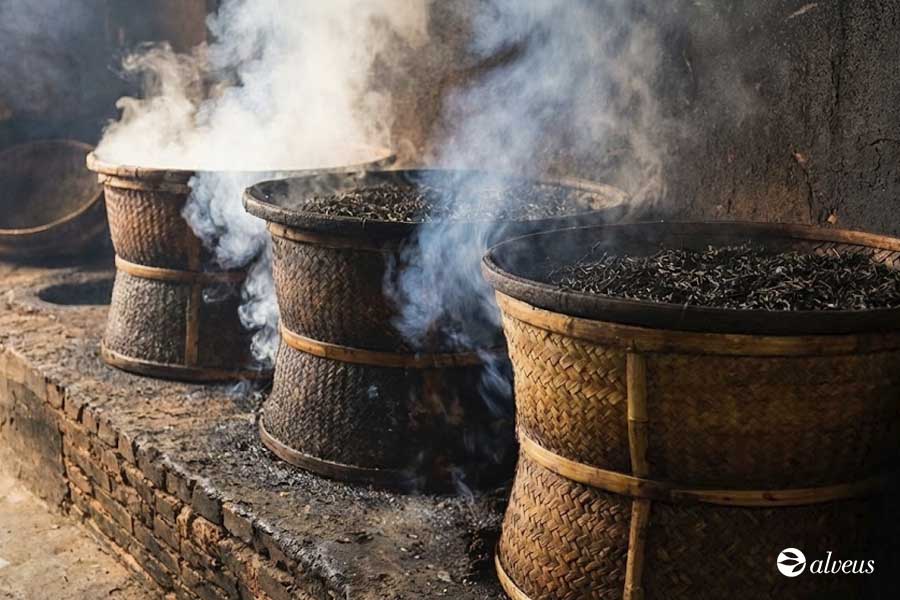
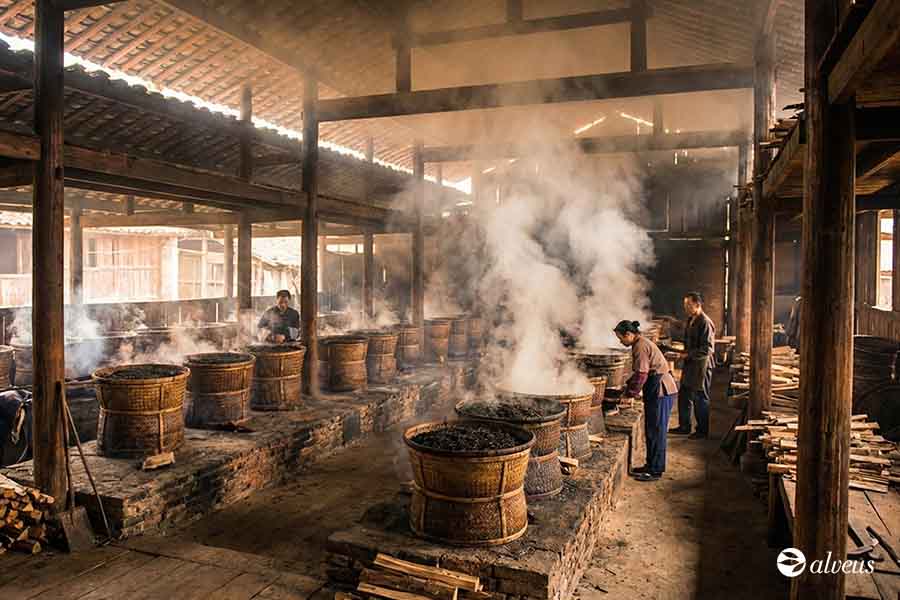
The heart of the process is smoking. The leaves are placed on the upper floors of a smokehouse, where they are exposed to smoke from fresh pine wood, usually Pinus taiwanensis.
The intensity of the final flavour is adjusted by three key variables:
- The distance between the leaves and the embers.
- The temperature of the smoke.
- The total duration of smoking.
During this stage, the leaves incorporate aromatic compounds from the combustion of the wood, which are responsible for the characteristic smoky, resinous and slightly spicy notes that distinguish this tea.
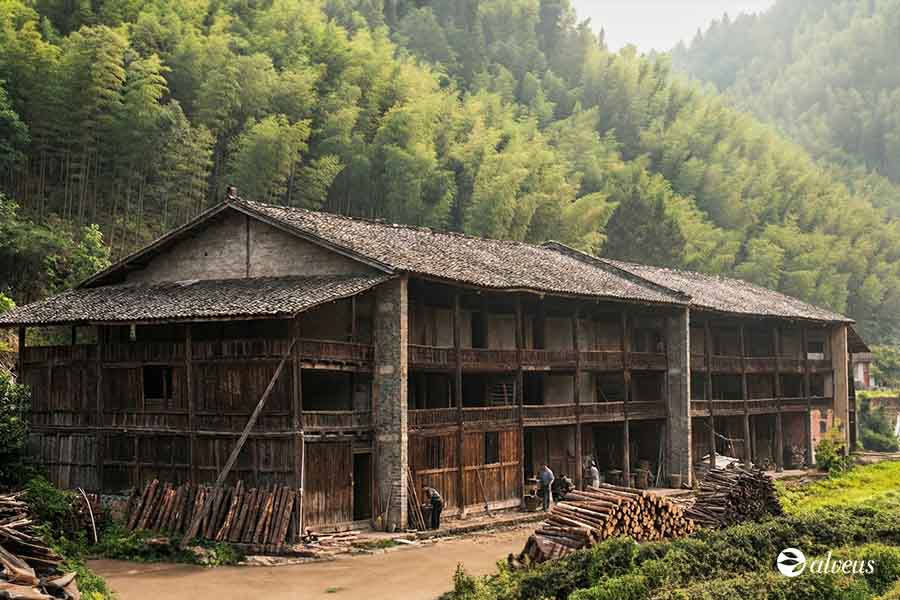
4. Second oxidation and fixing
After the initial smoking, the leaves undergo a short phase of controlled oxidation.
A quick roast is then applied to stop the process and fix the aromatic profile, preventing the smoky character from being overshadowed by the natural oxidation of black tea.
5. Final drying and aromatic refinement
In the final stage, the leaves are returned to the smokehouse for prolonged drying (with or without smoke, depending on the producer’s style), which stabilises the moisture content, evens out the aroma and ensures optimal preservation.
The result is a tea with a unique balance between the body of Fujian black tea and the smoky notes derived from the process, offering a powerful and refined sensory profile, appreciated both in pure infusions and in premium blends.
Sensory characteristics: Flavour and aroma of Lapsang tea
Lapsang Souchong stands out for its unmistakable sensory profile in the world of tea. Its most emblematic feature is its smoky aroma, often described as deep and resinous, with nuances evoking burnt wood, pine resin, smoked paprika and light hints of dried longan.
In the cup, it has a medium to full body, with a smooth entry despite its aromatic intensity. Unlike other more vigorous black teas, Lapsang Souchong has low astringency and virtually no bitterness, allowing the complexity of the smoke to be appreciated without distraction.
This smoothness makes it a tea that can be enjoyed without sugar or additives, as its natural balance does not require sweeteners. In terms of flavour, it offers a harmonious combination of smoky notes, spicy tones and a barely perceptible sweet undertone.
Most popular tea blends with Lapsang Souchong
Lapsang Souchong is a versatile tea that adds depth, body and a smoky touch to numerous blends.
Its intense profile allows for balanced combinations with black teas, other tea families and even spices. Here are some of the most popular blends:
Russian Caravan
A historic classic. This blend usually combines Keemun, Oolong and a small proportion of Lapsang Souchong.
The result is a full-bodied, smooth and slightly smoky tea, where Lapsang acts as an aromatic accent without dominating the blend.
Green tea with Lapsang Souchong
A less common blend, but highly appreciated by those seeking contrast.
The fresh vegetal notes of green tea are complemented by the smoky intensity of Lapsang, creating a light infusion with character. It works especially well with mild Chinese green teas.
Earl Grey with Lapsang Souchong
One of the most popular combinations. The citrus freshness of bergamot blends with the smoky character of Lapsang, resulting in a complex, elegant and surprisingly balanced tea.
It is ideal for those looking for a deeper Earl Grey with a greater presence on the palate.
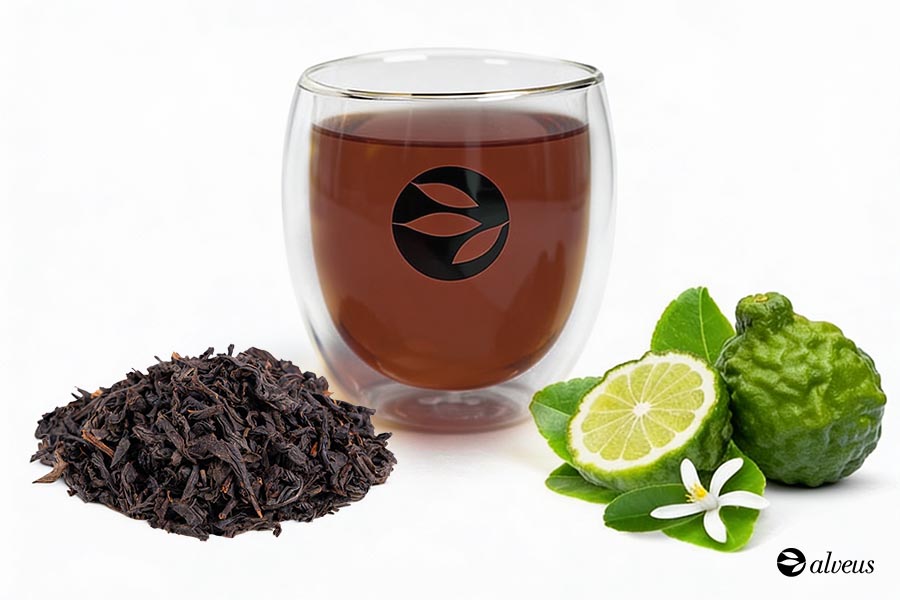
* Alveus Smoking Earl Grey Organic Black Tea, a tea blend made with Souchong black tea and bergamot.
Spiced chai with Lapsang Souchong
Lapsang enhances the warm notes of traditional chai spices (cardamom, cinnamon, cloves, ginger). Adding a small amount of this tea adds depth, an enveloping smoky nuance and a touch of sophistication to classic spiced tea.
Explore all the pure Lapsang Souchong teas and blends made with this smoked tea available for wholesale purchase in our B2B online shop.
How to prepare Lapsang Souchong tea
The preparation of Lapsang Souchong seeks to highlight its smoky character without losing its smoothness. For a balanced infusion, use water at 95-100 °C and adjust the time according to the desired intensity.
Standard preparation
- Quantity: 2–3 g per 150 ml of water.
- Infusion time: 2-3 minutes.
- Result: an intense, aromatic cup with no astringency.
This tea is best enjoyed on its own, although a touch of milk can be added to soften its smoky character.
Culinary uses of smoked tea
Lapsang Souchong is an increasingly valued ingredient in professional cooking thanks to its natural smoky aroma.
Its versatility allows it to be used in both savoury and sweet recipes, adding depth without resorting to artificial smoky flavours.
- Culinary infusions: Used to flavour broths, sauces, marinades and brines. The result is natural smoky notes without the need for artificial smoke.
- Baking and dairy products: It can be infused in milk or butter, or added ground to dough, biscuits and creams, adding depth and a distinctive aromatic touch.
- Smoked spice substitute: In barbecue spice mixes, a small amount of ground Lapsang Souchong provides a profile similar to smoked paprika, but with greater aromatic complexity.
- Cocktails: Ideal for syrups, cocktails and mocktails, adding a distinctive and sophisticated nuance.
The value of smoked tea for industry professionals
Lapsang Souchong is a unique black tea that combines tradition, aromatic complexity and versatility. Its characteristic flavour and balanced body make it a premium product for tea industry professionals, both for direct sale and for incorporation into blends, pairings and culinary uses.
Understanding its origin, growing areas, production process and sensory profiles allows tea businesses to offer differentiated experiences and satisfy a demanding public that seeks quality and authenticity.
Adding Lapsang Souchong to your catalogue not only enriches your tea selection and adds value, but also positions your business as an expert in specialised, high-end products.