


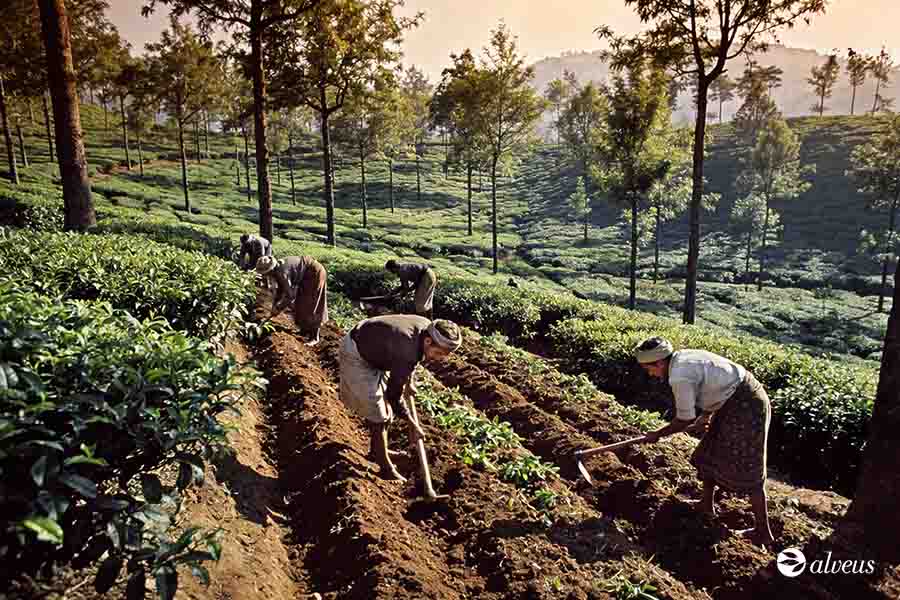
Imagine opening the gate to an organic tea plantation and walking silently between the rows. The ground crunches under the mulch, the shade trees filter the light, and the air smells of fresh leaves.
This visit, which we propose in this post, is not a tourist attraction. The aim is to build a bridge between that landscape and your business’s shelves.
We will see how altitude and pH are decided, why they are planted in curves, how the soil is nourished without haste, and how the leaves are kept healthy without herbicides or systemic pesticides.
At the end of the tour, every note in the cup, such as the clean sweetness, the long aftertaste, the regularity of the harvest, will tell you something about that geography. And you will have simple and precise words to explain it to your customers at the counter.
A demanding plant that prefers acidic soils
Tea (Camellia sinensis) loves acidic soils in just the right measure, hating alkaline ones. It feels comfortable at a pH of around 5.0–5.5. And if you’re wondering why you should care about this fact… It’s because in that range the plant absorbs certain minerals (such as iron and manganese) better and balances its phenolic metabolism. In the cup, this balance is perceived as a finer bitterness and a better integrated natural sweetness.
In organic farming, the producer does not ‘correct’ the soil with soluble mineral salts; they work with the living soil, adding mature compost, plant mulch and, sometimes, composted manure.
This slow process increases organic matter, improves water retention and feeds a community of fungi and bacteria that act as a bridge between the soil and the roots.
If the tea tastes clean and well-rounded, it is partly because there is microbiota working underneath and roots being fed at a good rate.
The landscape is also an "ingredient"
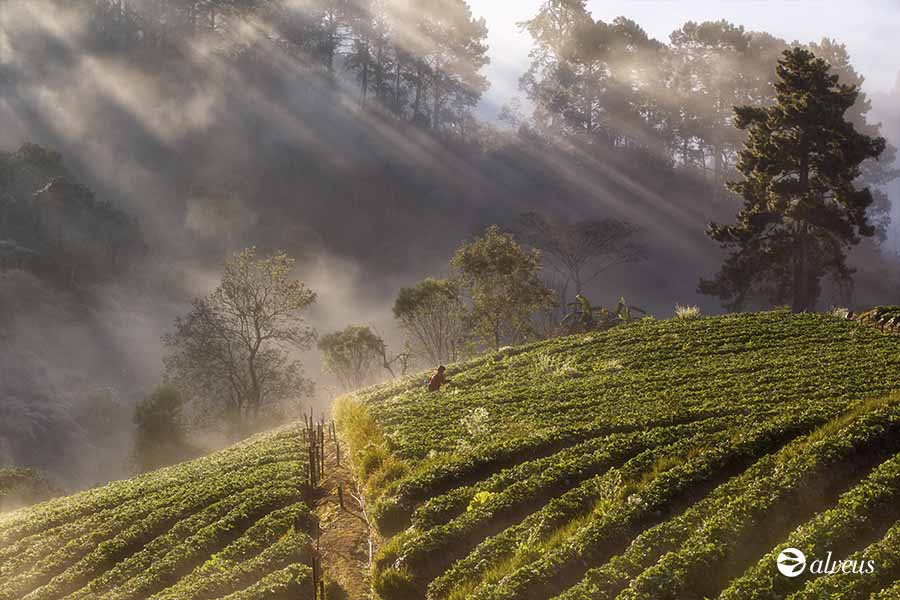
Many high-quality organic teas are grown on high-altitude slopes. There, lower temperatures slow down the plant’s growth, promoting a higher concentration of aromatic compounds responsible for “floral” profiles, “honey” notes and a deeper umami flavour.
Morning mist and shade (from trees or agroforestry) are allies: they reduce heat stress, protect chloroplasts and promote amino acids responsible for smooth, rounded flavours.
Shade for organic tea is not an aesthetic whim: it is designed with useful species (legumes that fix nitrogen, trees that provide habitat for birds and beneficial insects). This functional biodiversity is a sensory insurance policy that helps reduce burnt leaves, “dry” astringency and more defined aromas.
Terraces, curves and standing water
On sloping land, the great enemies of flavour are erosion and waterlogging. That is why, in organic farming, plantations are designed following the contour lines and terraces are built to slow down runoff. Water infiltrates the soil instead of washing it away, reducing water stress and resulting in more tender leaves and finer profiles.
Between rows, vegetation cover, green manure and local species are maintained to protect the soil, provide organic matter and feed micro-life. You will not find bare soil: you will see a living ecosystem that stabilises plant growth. The benefit for the professional channel? Greater regularity in production and more consistent harvests help to avoid stock shortages and guarantee stable quality throughout the year.
Organic nutrition: the art of feeding without saturating
Fertility in organic farming is not a one-off contribution, but a continuous and planned process. Compost, vermicompost, tea pruning debris and various types of mulch are slowly integrated into the soil, releasing small, constant doses of nitrogen, potassium and stable carbon. Microorganisms transform these nutrients at a natural rate, allowing the plant to absorb them gradually.
Unlike the “spikes” generated by synthetic fertilisers, this system creates plateau nutrition that is more predictable and balanced. The result? Sprouts that develop uniformly and with more stable sensory quality throughout the year.
For your business, this has two direct implications:
- Well-nourished organic green teas tend to have a more restrained bitterness and a more pleasant umami flavour.
- Organic black teas from good plantations maintain cleanliness and consistency batch after batch, without the quality “dip” that occurs when soils become depleted.
Pest prevention on organic tea plantations
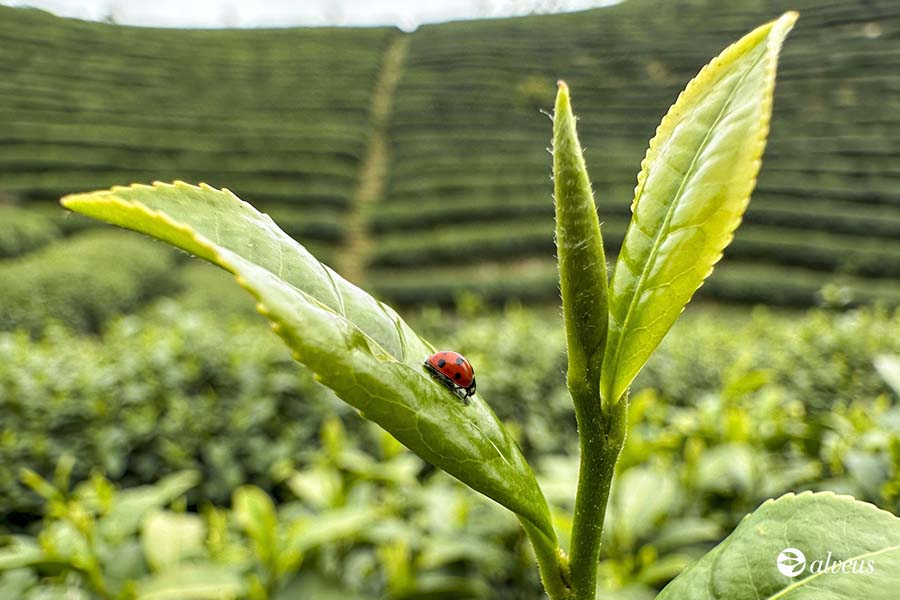
Without herbicides or systemic insecticides, organic farming works through prevention. Pruning is used to open up the canopy to facilitate dew drying, drainage to reduce fungal pressure, floral hedges to attract natural predators such as ladybirds and lacewings, as well as traps and, when necessary, microbial treatments such as Bacillus thuringiensis for caterpillars or potassium soap for sucking insects.
How does this translate into the cup? In two very specific ways:
- Healthier buds → clearer aromas, without notes “crushed” by stress.
- Less damaged leaves → finer astringency, because polyphenols do not shoot up in defence mode.
Safety barriers in organic plantations
In organic tea gardens, protective strips (hedges, strips of vegetation or uncultivated land) are created to separate organic tea from neighbouring plots that use chemicals.
This minimises the drift of products through the air or runoff. In addition, the most valuable plots are located in the area best protected from prevailing winds; in simple terms, they are planted where the air is ‘clean’ and far from possible contamination.
The other half is traceability. Each tea arrives at the importer with its complete history: field block, harvest date, processing line and batch number. The packaging will indicate that it is organic and the place of cultivation; behind the scenes, suppliers and retailers keep supporting documentation (technical data sheets, certificates, purchase invoices, analyses where applicable).
What is the purpose of all this? If an incident arises, the shop can identify the batch in minutes and, together with its supplier, trace it back to its origin. It is the most effective way to protect the brand and maintain customer confidence.