

Cumin has something special about it. It doesn’t need to be loud and overpowering to make its presence felt, because its aromatic character fills a dish with just a small amount. It is one of those spices that can transform a recipe or a herbal tea, making it deeper and warmer.
In cuisines as diverse as Indian, North African, Mediterranean and Latin American, cumin has occupied a central place for centuries.
This is no coincidence. Its earthy, warm and slightly bitter flavour makes it a seasoning capable of uniting humble ingredients with more complex dishes, from pulses to a curry, a stew or a spice blend.
En cocinas tan diversas como la india, la norteafricana, la mediterránea o la latinoamericana, el comino ocupa desde hace siglos un lugar central.
No es casualidad. Su sabor terroso, cálido y ligeramente amargo lo convierte en un condimento capaz de unir ingredientes humildes con preparaciones más complejas, desde unas legumbres hasta un curry, un guiso o una mezcla de especias.
What is cumin, and why is it still so important?
Cumin comes from the dried seed of Cuminum cyminum. It is an annual herbaceous plant belonging to the Apiaceae family, formerly known as the Umbelliferae.
It originates from the Nile Valley, although its cultivation spread long ago to the eastern Mediterranean, North Africa, India, China and the Americas, where it was taken by Spanish explorers.
In fact, the Romans used it much as we use pepper today, and over time, it became part of very different regional cuisines.
This explains one of its great commercial virtues. Cumin does not belong to a single culinary tradition, but to many. It works in herbal teas, as a spice in everyday recipes and also in more specialised dishes. This versatility makes it a very interesting addition to any product range.
What does cumin taste like?
It is sometimes described too simplistically, as if it merely added an ‘exotic touch’ or ‘spicy flavour’. That falls short. Its aromatic profile is richer.
That earthy nuance is precisely what makes it so useful. Cumin gives structure to the flavour. It rounds out pulses, enhances meats, pairs particularly well with onions, aubergines, rice, potatoes, lamb and lentils, and blends very well with other spices such as coriander, cinnamon, cloves, turmeric, ginger, paprika, fennel, garlic or oregano.
It is also a spice that calls for balance. If used in the right amount, it adds depth. If used in excess, it can overpower the other ingredients. It is a highly expressive spice, but it demands careful judgment in its use.
Which dishes does cumin work best in?
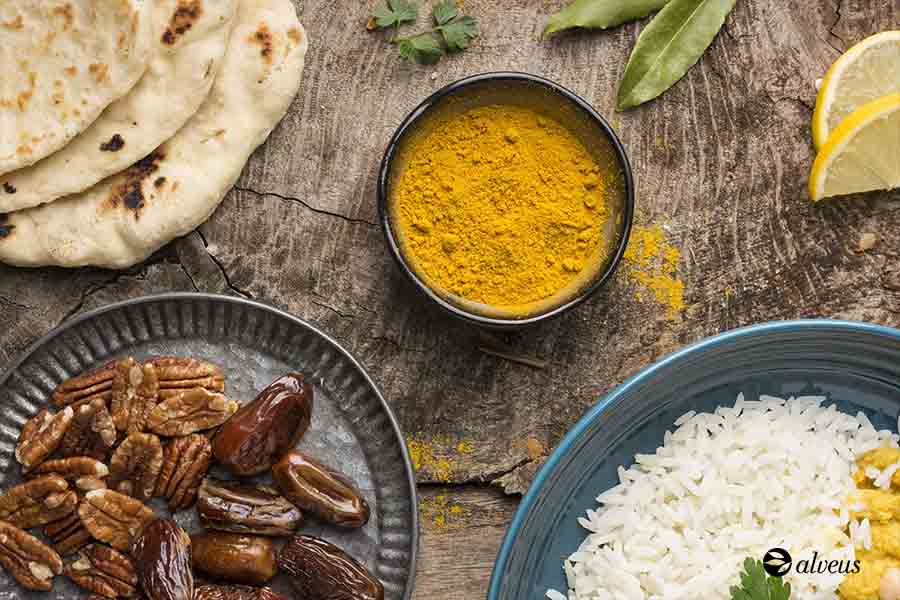
One of the strengths of cumin is that it is not limited to one type of cuisine. Cumin is frequently used in curries, masalas, baharat, berbere, harissa, dukkah, spice pastes, marinades, stews, breads, sausages, chutneys and rice dishes.
It is a common ingredient in the cuisines of Spain, Lebanon, Mexico and India.
In everyday cooking, cumin works very well in stews, roasted vegetables, hummus, marinades, stir-fries and minced meats.
In more adventurous cooking, it shines in curries, tagines, spiced rice dishes and traditional spice blends (Ras el Hanout, Masalas, Baharat…). It also has the virtue of evoking a sense of home cooking and world cuisine at the same time. Not all spices achieve that.
Whole cumin or ground cumin. When should you use one or the other?
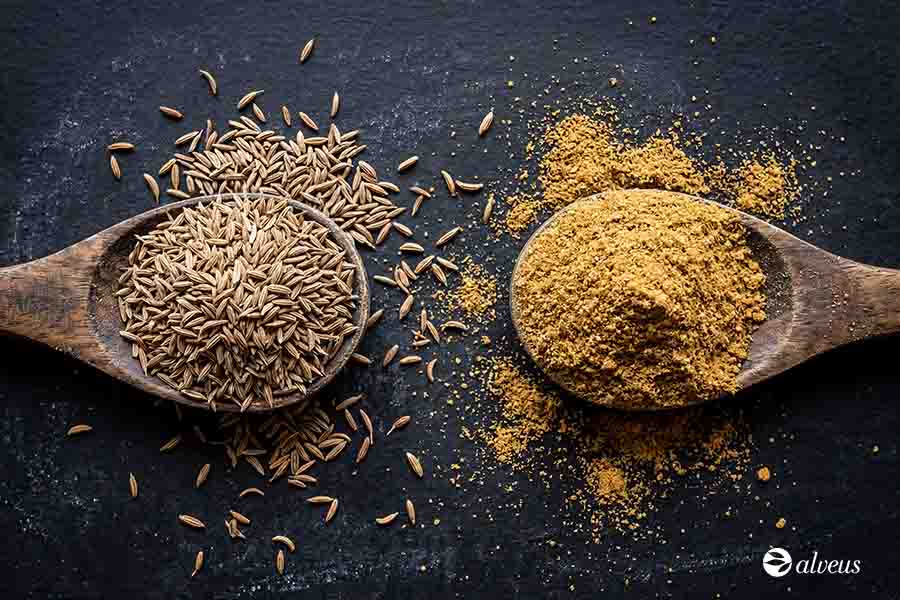
The same spice with different ways of building flavour. Cumin can be found in specialist shops in whole or ground form. Knowing the uses and the main differences between the two forms will enable you to advise your customers better.
When to choose whole cumin
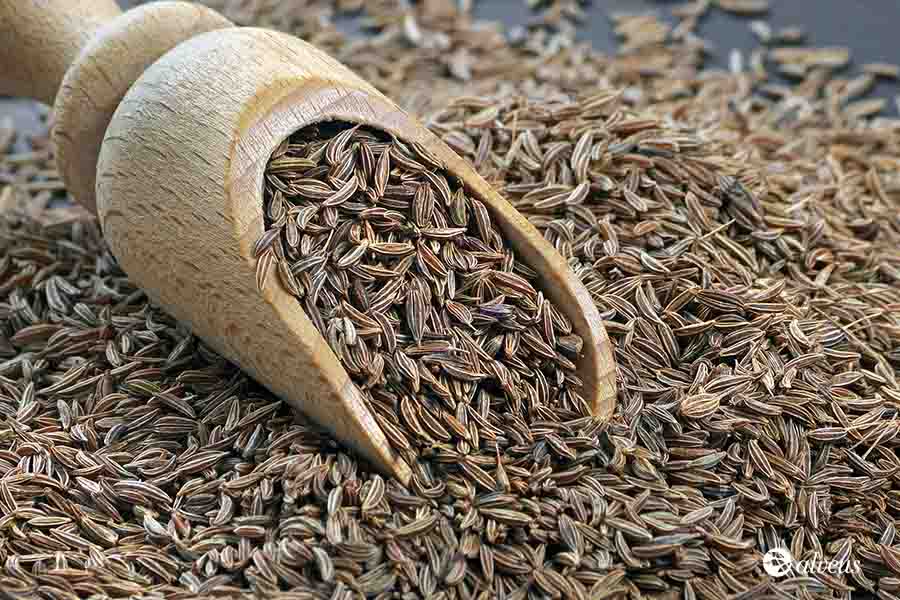
Wholesale cumin seeds – Alveus reference 50088
Whole cumin seeds are the best choice when seeking a more vibrant, fresher and longer-lasting aroma.
The seed retains its pungency for several months if stored in an airtight container, whereas ground cumin has a much shorter shelf life. It is therefore advisable to grind only the amount needed to achieve the best flavour.
In practice, the whole seed is ideal when you want to incorporate the spice right from the start of cooking or when you want it to appear in small aromatic bursts within the dish.
Lightly toasting it before use helps to intensify its flavour profile and develop a warmer, slightly drier note. Toasting adds a pleasant nutty note, particularly in certain black cumin varieties used in pilafs, breads and spice blends.
Whole cumin seeds tend to work particularly well in rice dishes, breads, stews, curries, legume dishes and stir-fries where you want the spice to develop during cooking.
It is also very useful when the cook wishes to infuse oil or fat at the start, as this is where the seed reveals a complexity that the powder does not always reproduce with the same clarity.
When to choose ground cumin
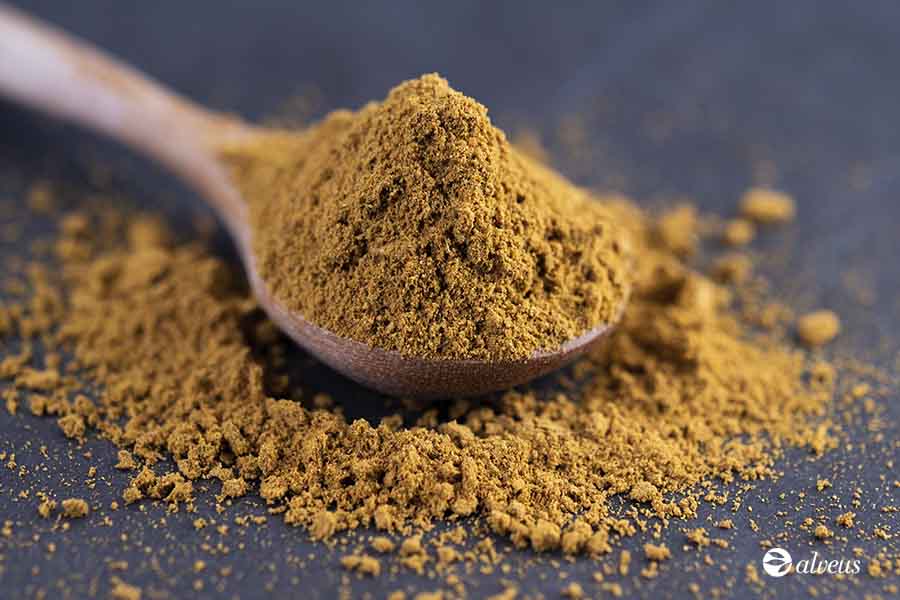
Wholesale ground cumin – Alveus reference 50116
Ground cumin, on the other hand, offers immediacy and consistency. It is the ideal format when seeking complete integration into the recipe, with no visible texture and an even distribution of flavour.
It is very practical in marinades, sauces, dry mixes, formulated products, fillings, seasoned doughs or preparations where the spice must be fully incorporated.
Another advantage of the powder is that it allows for quicker control in professional kitchens when dealing with large volumes and the need for exact repetition. In a meat mix, a marinade, a curry base or a dressing, ground cumin saves time and facilitates standardisation.
That said, there is a clear downside. As it is ground, it loses its aroma sooner than the whole seed. That is why it is advisable to offer it to the customer in slightly smaller quantities than other spices and to advise them on proper storage
A simple rule to ensure you choose the right format
If the aim is to achieve aromatic freshness, a toasted flavour, a light texture or a longer shelf life, it is best to opt for whole cumin seeds.
If speed, consistency and immediate incorporation into the recipe are what you’re after, ground cumin is usually the best option.
From a commercial perspective, offering both formats is not redundant. It is a way of better meeting different needs. The professional chef appreciates this difference. And the end customer, when it is explained properly, does too.
Uses of cumin
By now, you will have realised that the main use of cumin is in cooking. But this is not its only use, nor has it been throughout history. Health, superstition and even, as we saw at the beginning, a tithe; cumin has always been much more than just a spice.
As for popular superstition, cumin has been used in incense to ward off negative energies, protect against witches or prevent theft. In some North African countries, it was used as an aphrodisiac, mixed with honey and pepper.
It is also a spice used in perfumery, confectionery and liqueurs, bread-making, and to flavour cheeses such as Gouda.
In addition to its culinary value, cumin has been widely used in various traditions for its association with digestive well-being.
Traditionally, it has been associated with preparations designed to stimulate the appetite, aid digestion and relieve the feeling of heaviness after heavy meals, particularly due to its carminative properties.