

The filter is not just another accessory. It is the piece that determines how much the leaf unfolds, how the water moves and how clean and repeatable the cup is. Choosing well means less sediment and, above all, a smoother preparation, which in the case of hospitality services is an important factor to consider.
In a hotel, a tea room, the tasting area of a bulk store or your customer’s home, the filter is the silent part that brings order to the infusion.
And there is one point worth remembering:
That’s why talking about infusers isn’t just about “convenience”. It’s about experience, cost per cup, waste, speed of service, perception of quality and consistency.
The same recipe can seem flat or brilliant depending on the filter used. Water feels different when the material is paper, steel or bamboo; the pressure on the leaf changes and this greatly affects the liquor.
In this guide, we present the most commonly used filters and infusers in the world of tea, so you know when to choose each one.
Paper filters
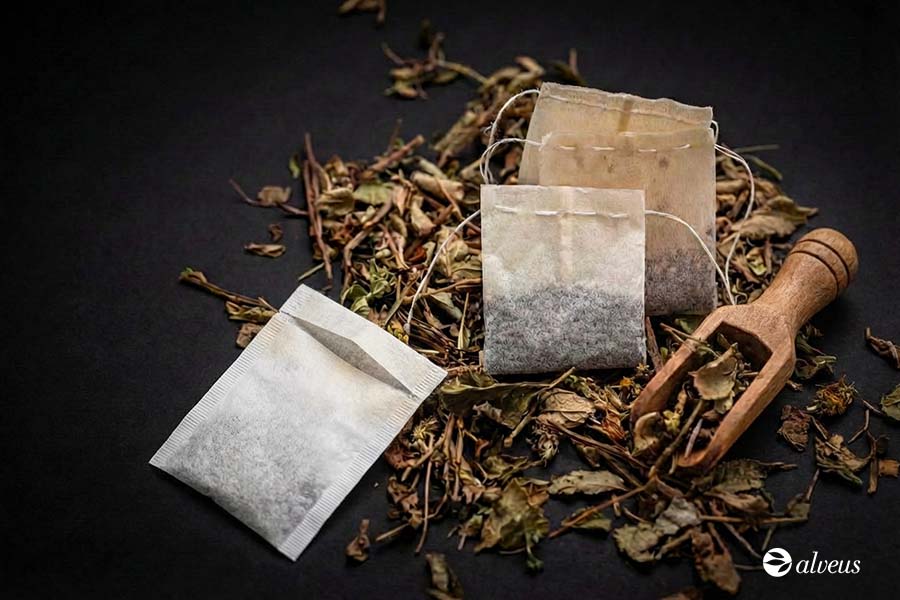
Paper is the universal language of fast service. It takes up little space, standardises and reduces the margin of error. Within this category, we highlight two types of filters: envelope-type filters and those that emulate the classic tea bag.
Flat "envelope-type" filter
This type of filter is ideal when you need to prepare a large volume of teas or infusions, for example, in cafés, tea rooms, events, etc. Not only does it speed up preparation, but as it is disposable, it also saves time washing it for reuse and prevents the sink from becoming clogged with tea leaves.
It provides predictable extraction, especially for fine cuts: CTC black teas, spiced teas, rooibos, chopped herbs… And best of all, its characteristics prevent leaf fragments from passing into the infusion.
Their physical limitations are their main drawback, despite the fact that they come in different sizes (from individual cups to large-capacity teapots). In this type of filter, large leaves open up less, and this is noticeable in delicate green teas, rolled Oolong teas or whole-bud white teas.
Japanese-style paper filter
This type of filter is a variation of the previous one. It is a paper bag with a built-in string that closes when pulled. Its design allows for more comfortable handling.
Metal filters
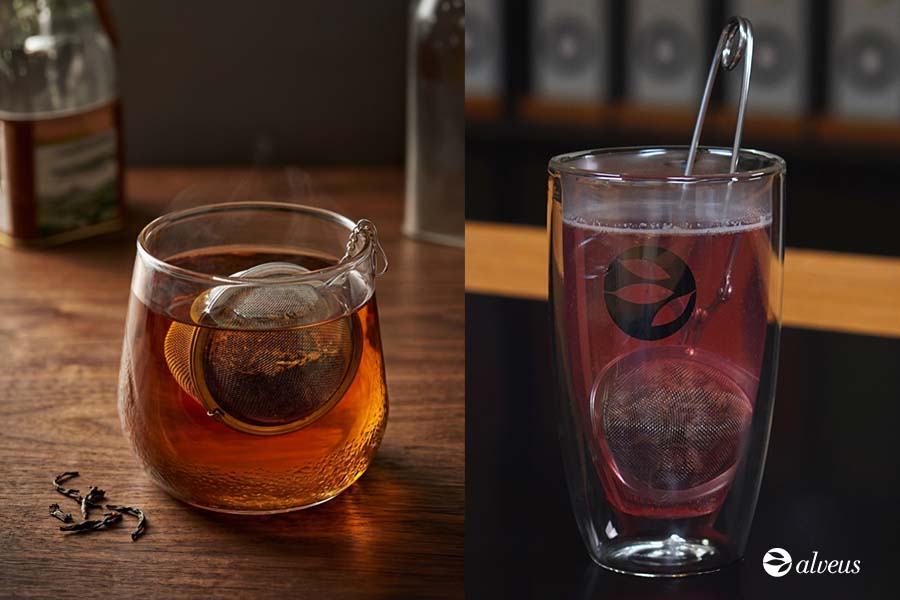
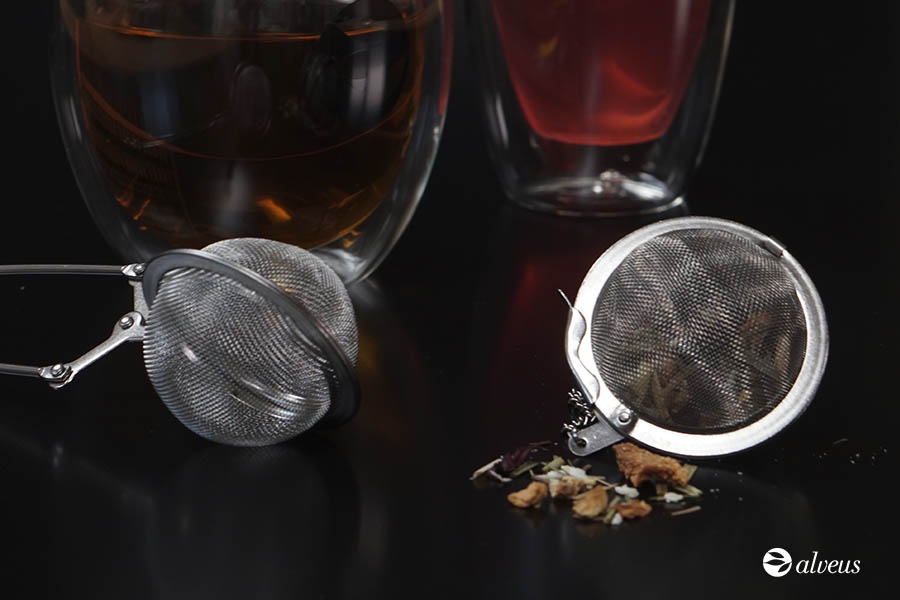
Metal ball filter with chain
The metal ball filter with a chain can be considered the icon of tea filters. It is simple, durable and reusable. It is the most common filter in millions of homes around the world, and at the same time, the one that is most often “misused” due to a lack of space.
This filter is ideal for teas and plants with medium-sized leaves. However, it is not suitable for large or rolled leaves, as they cannot unfold properly, nor for very chopped or fine leaves (such as rooibos), as they will escape from the filter.
If the mesh is not of good quality or the closure does not fit properly, tea particles can easily end up in the liquor.
Professional service requires hygiene and rotation, as some blends leave aromas that remain impregnated in the metal.
Clamp ball filter
The clip-on ball filter is a variation of the previous one. This type is designed for quick brewing: open, fill, immerse and remove.
Metal baskets for teapots or cups with lids
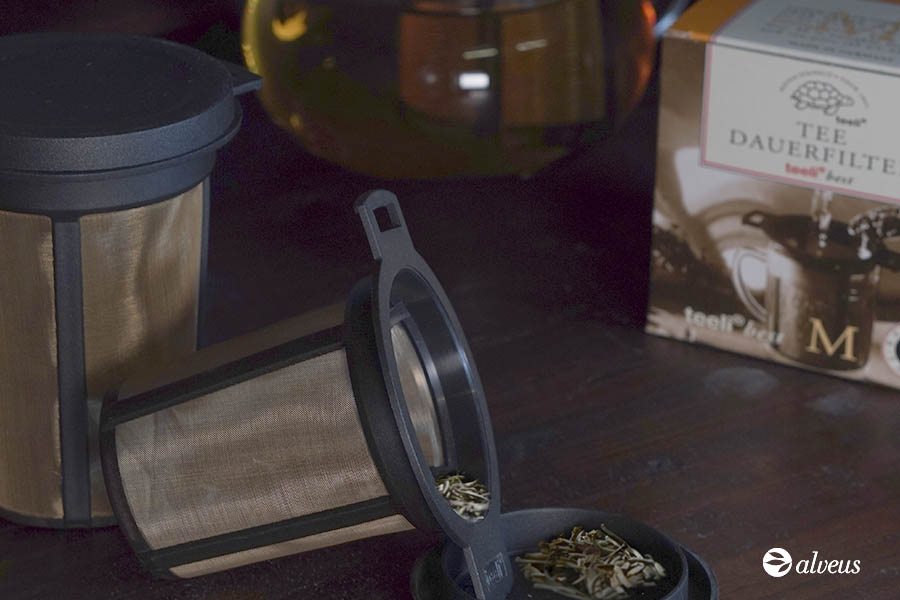
These types of infusers are large metal baskets, often cylindrical in shape, that fit inside a teapot or glass.
This format understands a basic truth about loose-leaf tea: the leaf needs space. When the leaf has space, the water circulates, the extraction becomes gradual and the liquor gains definition. Notes appear that remain dormant in narrow filters: delicate flowers, fresh fruit, light butter, nuts, clean umami, long finishes…
When served in a restaurant or café, the customer sees the leaves, sees the craftsmanship, and understands that what they are paying for makes sense. And the service team appreciates how easy it is to clean, because the infuser can be removed whole, emptied quickly and washed easily (if the design is good).
Models with lids are available; in these cases, the lid is not just for decoration. The lid serves to reduce temperature loss and prevent the escape of aromas.
Other types of tea filters
Bamboo filters
Bamboo filters are neutral if properly treated, but require careful handling. These filters must be thoroughly dried and kept away from odours.
Cloth filters
These are usually made of cotton and are reusable. They allow more oils to pass through and round off the flavour, but require strict hygiene. If they remain damp, they develop unpleasant odours and flavours. Useful in controlled contexts; risky in undisciplined service.
What is the best type of filter for making tea and infusions?
Many of your customers will surely have asked you: which filter is best for making tea? Here, the answer must be: it depends on the type of tea they want to use it for.
For broken leaf or small leaf teas, there is nothing like paper filters, always in the required size.
For medium-sized leaf teas, metal ball filters are more than suitable.
For large-leaf teas (such as Silverneedle or rolled teas like Tie Guan Yin) or blends with bulky ingredients (such as cardamom, raspberries, etc.), there is nothing like basket-type filters, which provide more space.
That’s why, for a tea business, having a wide range and different sizes is essential to offering the best experience to your customers. Find them all in our tea filter section of our online shop for professionals.