

For years, the word ‘premium’ has been used to denote products of superior quality, with more refined presentation or a more special consumer experience. In the tea industry, however, its use has become so widespread that it has often lost its impact.
Today, you can find the word ‘premium’ on packaging, in catalogues, on café menus, in online shops, and in launch campaigns. Occasionally, there is an excellent tea behind it. Other times, there is simply a stylish label, a higher price, and a promise that is difficult to verify.
The end customer is increasingly well-informed; they compare more, ask more questions, and quickly spot when a product does not live up to its promises. That is why working with genuinely premium-quality teas is not about selling something expensive, but about offering a product whose value is clearly perceived, can be explained, and defended.
A premium tea doesn’t need to shout about being premium. You can tell from the leaf, the aroma, the brew, the transparency of the information, and the confidence with which a professional can recommend it.
A premium tea begins at its source
The quality of a tea begins at its source, in the raw material, in the way the leaf is processed, and in all the decisions made before the product reaches a shop or a menu.
When professionals select a tea to sell under their own brand, they are buying into a story, a sensory experience, and a promise that they must then convey to their customers.
That is where the term ‘premium’ becomes demanding. If a tea is worth more than a standard variety, that value must be explained with clear reasoning.
The origin must be accurately described
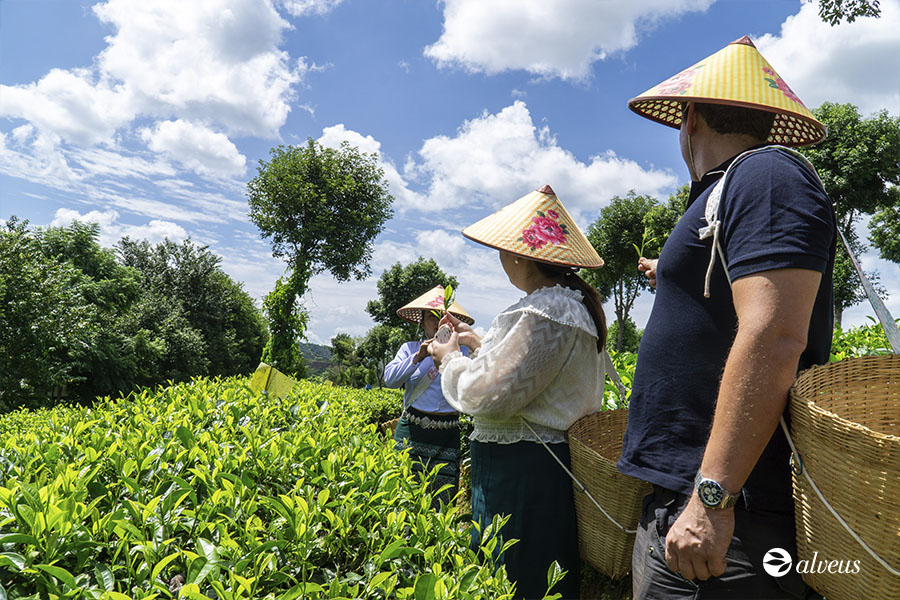
Saying that a tea comes from China, India, Japan, or Sri Lanka may be a starting point, but it is not always enough. For teas of greater economic value, the origin carries much more weight.
The region, the garden, the cooperative, the producer, the altitude, the harvest, or even the batch can help explain why that tea has a particular profile. A generic black tea from India is not the same as a Darjeeling first flush from a specific garden. A Japanese green tea with no further information is not the same as a sencha from a specific harvest, carefully processed and stored under the right conditions.
Origin provides context. It helps to explain the tea’s character, its rarity, its aromatic profile and its price. It also enables the professional to sell with greater confidence, as they can clearly explain what makes that tea special.
The importance of the harvest for tea
Often, the time of harvest is decisive. Early harvests, spring batches, first flushes, mountain teas or shaded teas can offer a more refined, fresh, sweet, or complex flavour profile.
This point is particularly important for professionals who wish to differentiate their product range. A product with a listed vintage of the highest quality allows for a more compelling sales pitch. You are not simply selling a green tea, a white tea, or a black tea. You are selling a selection with character, defined by a specific moment and by conditions that influence the final result.
Seasonality also helps to create desire. Some products are not available all year round or do not turn out the same in every batch. This variability, when well managed and clearly explained, can enhance the perception of value.
Traceability also builds trust
In the B2B market, traceability is important not only for technical reasons but also for its commercial value. A shop that can explain where a tea comes from conveys greater assurance than one that can only claim it is ‘premium’ because it says so on the label.
The end consumer won’t always ask for all the details, but they can sense when there’s genuine knowledge behind a recommendation. That perception influences purchasing decisions, customer loyalty, and trust in the brand.
The leaf remains at the heart of it all
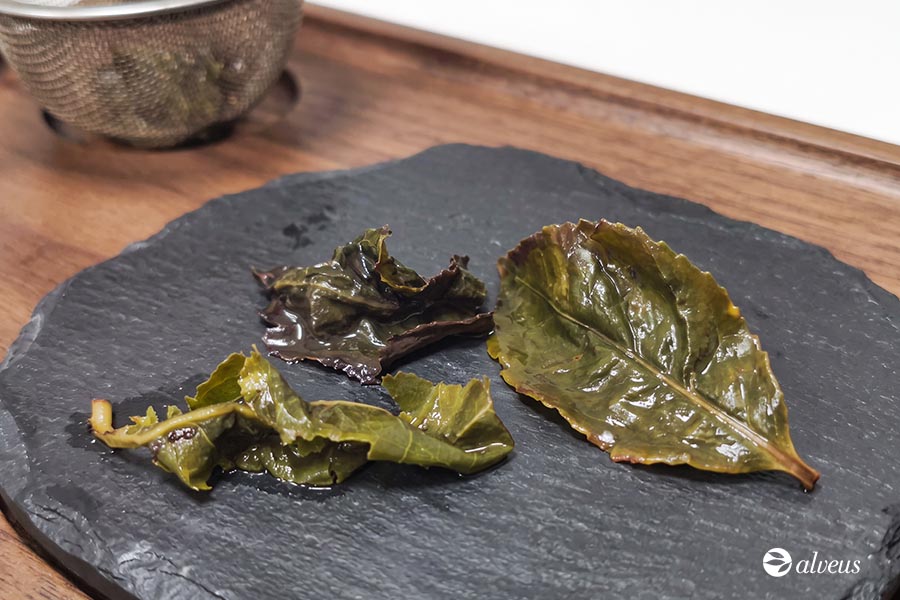
The quality of the leaf determines the aroma, texture, colour of the infusion, its ability to withstand multiple infusions, and the overall experience.
A premium tea is usually made from whole or carefully selected leaves, tender buds, higher grades, or more meticulously harvested standards. This does not mean that all broken-leaf teas are poor, nor that every entire leaf is excellent. There is a clear difference between carefully selected raw material and a blend made from dust, irregular fragments, or scraps with little aromatic character.
For the professional, this has a direct consequence. A tea with good-quality leaves sells better when the customer can see, smell, and taste it.
– In a physical shop, the appearance of the leaf greatly influences the perception of value.
– For own-brand products, carefully selected raw materials protect the product’s reputation.
– In the hospitality sector, a clean and consistent brew enhances the end customer’s experience.
It is during processing that the leaf demonstrates its potential
A good origin is no guarantee of a great tea. The leaves require precise processing to bring out their best qualities.
Poorly controlled oxidation can dull a black tea, whilst excessive drying can affect the tea’s stability. In the case of blends, inexperienced or careless flavouring can result in a taste that is overpowering and artificial.
That is why talking about premium tea also means talking about human craftsmanship. There is technique, experience, and judgement behind a well-balanced cup. This is why it is vital to work with suppliers who understand the production and quality control processes of the teas they sell.
Visual appeal is not enough
A blend may be very appealing to the eye yet fail to deliver a good cup of tea. Flowers, fruits, spices, and colours can help create a sensory experience, but they must not mask a poor base.
A premium tea maintains consistency between what it promises when dry and what it delivers when brewed. If it smells good, it must taste delicious. If it appears delicate, it must behave with finesse in the cup. If it comes with a higher price tag, it must offer an experience that justifies it.
With blends, quality also depends on the blend itself
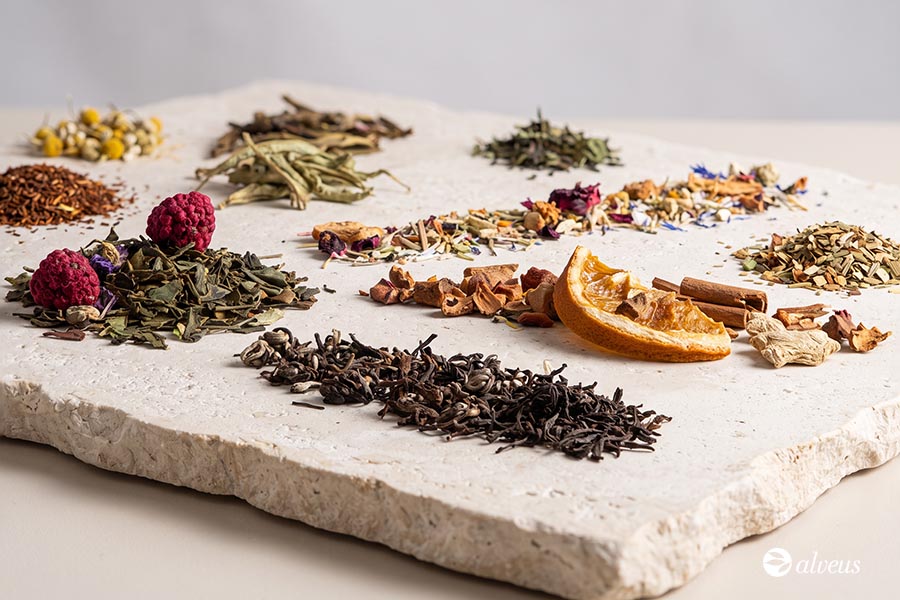
When we mention flavoured teas, herbal teas, or blends, the value doesn’t depend solely on the base. The selection of ingredients, the proportions, the aromatic stability, and the overall harmony are also important.
A premium blend shouldn’t be a random and haphazard collection of attractive ingredients. It must be purposeful. Each ingredient has to contribute something to the final result, be it body, freshness, sweetness, texture, aroma, or lingering flavour.
For tea retailers, this is fundamental. A well-designed blend makes it easier to sell because customers easily understand what they are buying and remember the experience after tasting it.
In a premium blend, no ingredient should be there merely for decoration. Everything must have a recognisable sensory function.
Tasting is the most honest way to classify a tea as premium
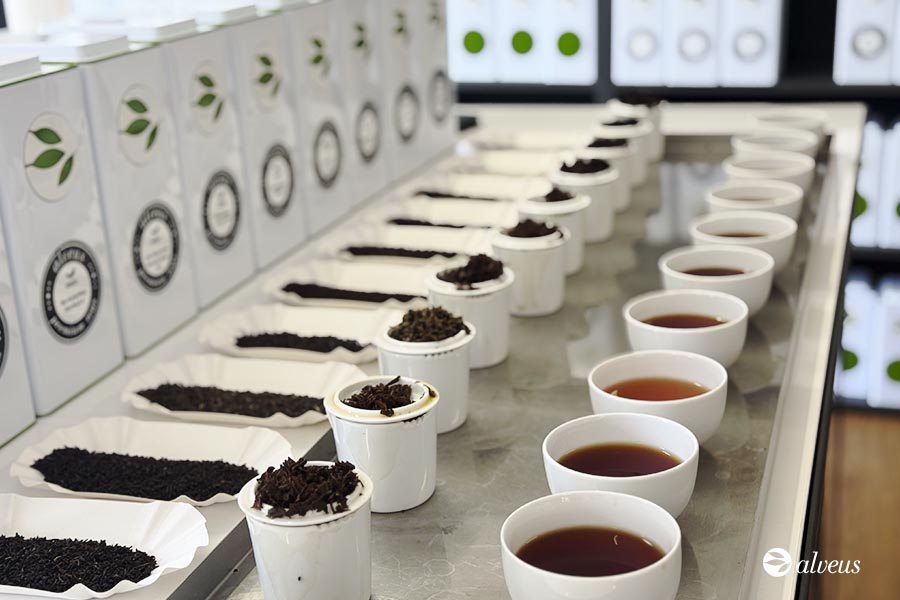
The term ‘premium’ stands or falls in the cup. There is no more direct way to verify it.
A tea of true value must offer balance, aromatic purity, good texture, persistence, and the absence of defects. It must also have a pleasant evolution on the palate. It may be intense or subtle, floral or toasty, sweet or herbaceous, but it must be coherent and well-crafted.
For a professional, tasting is a purchasing tool. It helps to make informed decisions, compare batches, detect problems early on, choose what will actually sell, and build a range that works.
Another quality that can be identified through tasting is consistency. A tea may surprise you once, but a business needs continuity. In the B2B sector, quality must be maintained batch after batch, especially when the product is sold under a private label or forms part of a permanent menu.
Consistency does not mean that the tea is artificially identical. Natural raw materials will always have slight variations. It means that the supplier knows how to control, select, and adjust the product so that the final experience retains its identity.
Freshness is one of the elements that adds the most value
An excellent tea can lose its quality if it is not stored properly. Humidity, light, oxygen, heat, and external odours can significantly affect the aroma and flavour.
This is particularly important for green teas, white teas, matcha, flavoured teas, and herbal infusions containing sensitive ingredients. In these categories, freshness can make a huge difference between a vibrant cup and a flat one.
Working with premium teas involves paying close attention to storage, packaging, stock rotation, and logistics. It is not enough simply to buy good raw materials; they must be protected until they reach the end customer.
Premium also means rigorous selection
A wide-ranging catalogue is not ‘premium’ simply because it is wide-ranging. A premium catalogue has undergone a rigorous selection process.
Professional selection involves testing, comparing, discarding, and deciding. It means not accepting bland, defective or inconsistent batches simply because they are fashionable. It also means knowing when a product has sales potential and when it merely attracts attention initially but does not sell well in the long term.
Organic certifications, fair trade, food safety standards… All of these can add value and boost customer confidence. But it is important not to confuse certification with sensory excellence. A tea can be organic and not taste good, and conversely, it can be conventionally produced and be superb.
Certification is valuable when it goes hand in hand with good raw materials, rigorous selection, and careful processing.
‘Premium’ is a promise that must be backed up by evidence
In the tea industry, ‘premium’ only makes sense when it can be backed up by real facts. Without clear evidence to support it, it becomes an empty label that adds no real value to either the professional or the end customer.
A premium tea must be justifiable on several levels: identifiable origin, high-quality raw materials, a meticulous production process, a clean and consistent sensory profile, and appropriate storage conditions. If any of these elements is lacking, the positioning loses its consistency.
For a business, this has direct implications. Working with genuinely premium teas reduces the risk of complaints, makes it easier to recommend them in-store or on the menu, and improves the repeat purchase rate. It also makes it easier to justify the price, as there are objective arguments to back up the proposition.
‘Premium’ is neither an aesthetic category nor a marketing term. It is a combination of selection, control, and consistency that translates into a consistent experience in the cup. If that experience is not sustained, the term loses its value.