

Ashwagandha does not captivate at first glance like a hibiscus flower, nor does it perfume a blend with the immediacy of mint. Its character manifests itself in a different way. It lies in the earthy notes at the bottom of the cup, in its connection to an ancient tradition, and in an idea that fits particularly well with today’s pace of life: setting aside a moment for calm.
This narrative has sparked the interest of tea shops, private labels and hospitality ventures seeking recognisable ingredients with a distinct identity. However, its growing popularity has also flooded the internet with claims that do not always distinguish between tradition, preliminary research and established evidence. To work with ashwagandha responsibly, it is best to start with the basics.
What is ashwagandha?
Ashwagandha is a plant whose botanical name is Withania somnifera. It belongs to the Solanaceae family, the same botanical family as tomatoes, aubergines and peppers, although its profile and uses are very different. It is a shrub with oval leaves, inconspicuous greenish flowers and small orange or reddish fruits protected by a calyx.
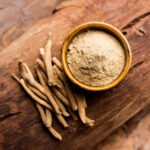
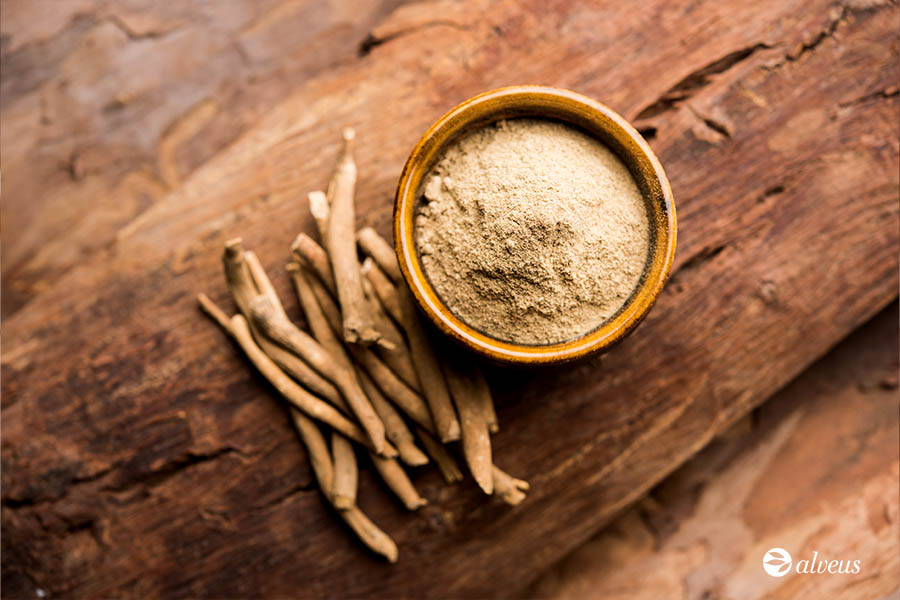
It grows and is cultivated in regions of Asia, Africa, and the Mediterranean. The part most commonly found in products intended for consumption is the root, which may be supplied chopped, powdered or processed into an extract. Not all these forms are equivalent. Chopped root for a herbal tea, whole-root powder and a standardised extract differ in concentration, behaviour in water and final composition.
In Sanskrit, its name is often linked to the words ‘ashwa’, meaning horse, and ‘gandha’, meaning scent. This refers to the root’s distinctive aroma and, according to traditional interpretation, also to the strength associated with the animal. In English, it is sometimes known as ‘winter cherry’ and in Spanish as ‘cereza de invierno’. It is also called ‘Indian ginseng’, although it is not a true ginseng and does not belong to the genus Panax.
Where does its popularity come from?
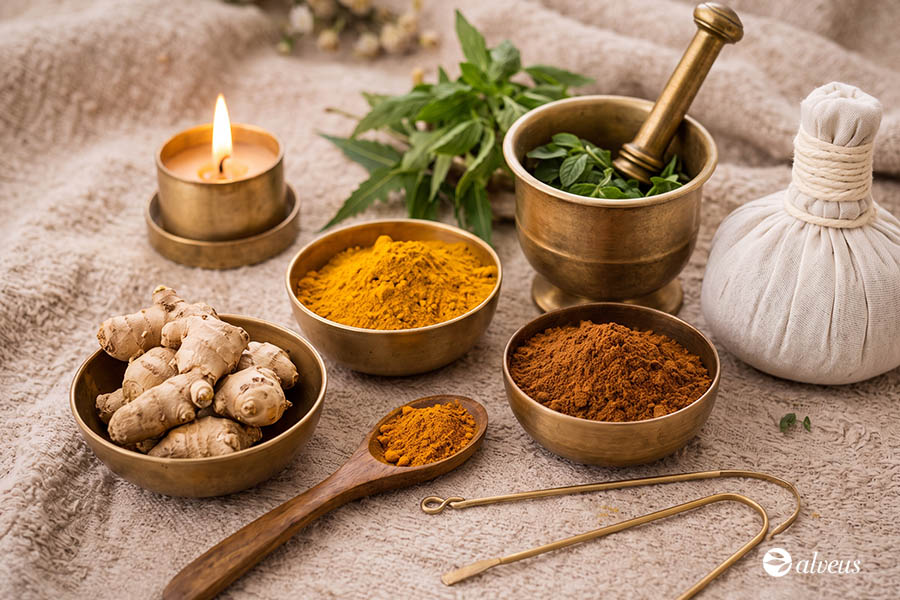
Ashwagandha occupies a prominent place in Ayurveda, the traditional Indian system of medicine. There, it has historically been valued as a rasayana, a category associated with restorative preparations and the general maintenance of vitality.
In contemporary discourse, it is often described as an adaptogen. The term is used to refer to certain plant-based ingredients associated with the ability to adapt to stressful situations. It is a popular term in the wellness market, but should not be confused with an authorised health claim.
The plant’s current popularity stems precisely from this combination of an ancient history and very contemporary concerns, such as rest, fatigue and the search for more leisurely routines. Its commercial value does not depend solely on a potential physiological function. It also lies in the ritual, the sensory profile and the narrative that help to shape a blend.
What are the main components of ashwagandha?
Among its most studied components are withanolides, a group of steroidal lactones. The plant also contains alkaloids and other phytochemicals. The proportions vary depending on the part used, the origin of the raw material, the harvest and the processing method.
This variability explains why it is advisable to read scientific studies carefully. Much of the clinical research has been carried out using specific, standardised extracts, often administered in capsule form. The results cannot automatically be applied to a herbal tea made from chopped root. A cup of tea and a concentrated extract are different products, even though they share the same botanical ingredient.
For the professional buyer, accuracy begins with the technical data sheet. The botanical name, the part of the plant, the format, the country of origin, microbiological and contaminant analyses and, where applicable, the standardisation of the extract, enable you to know exactly what you are purchasing.

What properties are attributed to ashwagandha?
Traditionally, ashwagandha has been associated with vitality, recovery and rest. Modern research has focused particularly on its potential effects on perceived stress, anxiety and sleep. A scientific review published in 2021 found promising results in these areas, although its authors noted that the variety of extracts studied prevents the establishment of a universal formulation or dosage.
With regard to rest, a systematic review and meta-analysis of five clinical trials observed a small but statistically significant effect on sleep quality. The results were most evident in people with insomnia, in treatments lasting at least eight weeks and with certain extracts. Other clinical trials have also investigated its potential effects on sleep in healthy people and patients with insomnia, and on sleep quality in healthy adults.
Nevertheless, the evidence should be interpreted with caution. Most of this research was carried out using standardised extracts administered in specific doses, not infusions made from chopped root. Therefore, the results cannot be directly applied to a herbal tea or a tea blend containing ashwagandha. The NIH’s Office of Dietary Supplements also warns that the available studies use very different preparations and quantities, making it difficult to formulate general recommendations.
In other areas, such as sporting performance, memory, diabetes or fertility, there is still insufficient evidence to draw firm conclusions. The US National Centre for Complementary and Integrative Health considers that some preparations may be useful for stress and insomnia, but emphasises that many studies have been small in size and of short duration.
For this reason, it is advisable to refer to traditional uses and potential effects that have been researched, without presenting ashwagandha as a treatment for a disease. Expressions such as ‘cures anxiety’, ‘reduces cortisol’ or ‘treats insomnia’ not only oversimplify the available evidence, but may also constitute unauthorised health or medical claims.
What does ashwagandha contribute to herbal tea and tea blends?
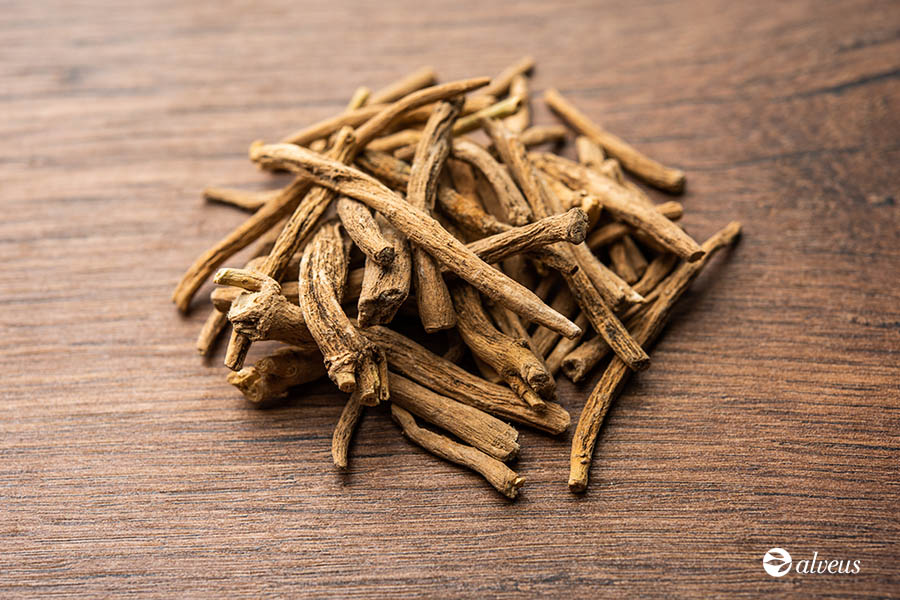
In formulations, ashwagandha offers much more than just a name recognition factor. Its root has an earthy, dry and slightly bitter flavour, with a warm undertone that may be reminiscent of wood and certain grains. It does not usually take centre stage aromatically. It works best as a base that adds depth and brings other ingredients together.
In caffeine-free herbal teas, it finds a natural companion in warming spices such as cinnamon, cardamom, ginger or cloves. This combination creates enveloping flavour profiles, particularly suited to afternoon or after-dinner blends. Milder ingredients, such as rooibos, apple, cocoa or vanilla, round out the root and temper its bitterness. Liquorice root can add sweetness and a refreshing finish.
In a tea blend, ashwagandha adds body and a root-like note that can harmonise with malty black teas such as Assam, with pu-erh or with roasted bases. The presence of Camellia sinensis introduces caffeine, so the blend should not be marketed as a stimulant-free option or as a drink intended specifically for before bedtime. A tea containing ashwagandha is better suited to a concept of daily balance or a mindful break.
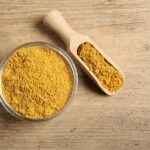
The choice of cut is important. A root that is too thick may require a longer steeping time than the accompanying leaves or flowers. Powder, on the other hand, increases cloudiness, leaves sediment and may pass through some filters.
Frequently asked questions about ashwagandha
Does ashwagandha contain caffeine?
Ashwagandha does not naturally contain caffeine. A blend containing ashwagandha made with black tea, green tea, white tea, oolong, matcha or any other form of Camellia sinensis does contain caffeine. The presence of ashwagandha does not neutralise it. This distinction is particularly important when the name or presentation of the blend suggests relaxation or rest.
What does ashwagandha taste like?
It has an earthy, bitter and somewhat astringent flavour. It may have notes of dried root, hay or wood. It is neither sweet nor intensely aromatic, and is rarely chosen as the star ingredient for sensory pleasure. Its appeal lies in blending it with other ingredients and in its health benefits.
Can ashwagandha be taken every day?
There is no one-size-fits-all answer. Health authorities indicate that some preparations appear to be well tolerated for short periods, of up to around three months, but there is a lack of robust data on long-term use. Consumers should consult a healthcare professional if they have any medical conditions, are undergoing drug treatment or have any concerns about their personal circumstances.
Who should not take ashwagandha?
Ashwagandha is not suitable for everyone. The NCCIH recommends avoiding it during pregnancy and whilst breastfeeding. It also advises against its use in people due to undergo surgery and in those with thyroid or autoimmune disorders without professional assessment.
It may interact with medicines for diabetes or high blood pressure, immunosuppressants, sedatives, anticonvulsants, and thyroid hormone treatments. Reported side effects include drowsiness and digestive discomfort. Rare cases of liver damage associated with ashwagandha supplements have also been reported.
Is ashwagandha root the same as its extract?
No. The root is the plant material, whether whole, cut or ground. An extract is obtained through a process that concentrates specific components. Nor are two extracts necessarily the same, as they may use different solvents, extraction ratios and standardisation levels.
This difference affects the flavour, dosage, solubility and interpretation of the scientific evidence. If a study uses a specific extract, its results do not prove that any form of ashwagandha produces the same effect. For blends intended for infusion, chopped root tends to fit more naturally into the product’s description, whilst an extract requires a specific technical and regulatory assessment.