

There are spices that simply season, and there are others that rewrite history. Clove belongs to the latter category. For the sake of one of those tiny dried buds, trade routes were charted across half the world, expeditions were funded that redrew maps, and wars were waged that reshaped empires.
What remains of all that today is simpler and far more enduring: an unmistakable aroma, a chemical complexity that few spices can match, and a versatility that makes it just as valuable in a spice blend for meat as in a spiced winter tea.
It behaves differently when whole compared to when ground, and it contributes differently to a tea blend than it does to a cooking spice mix. In this post, we’ll tell you everything you need to know to explain this to your customers.
What is a clove?
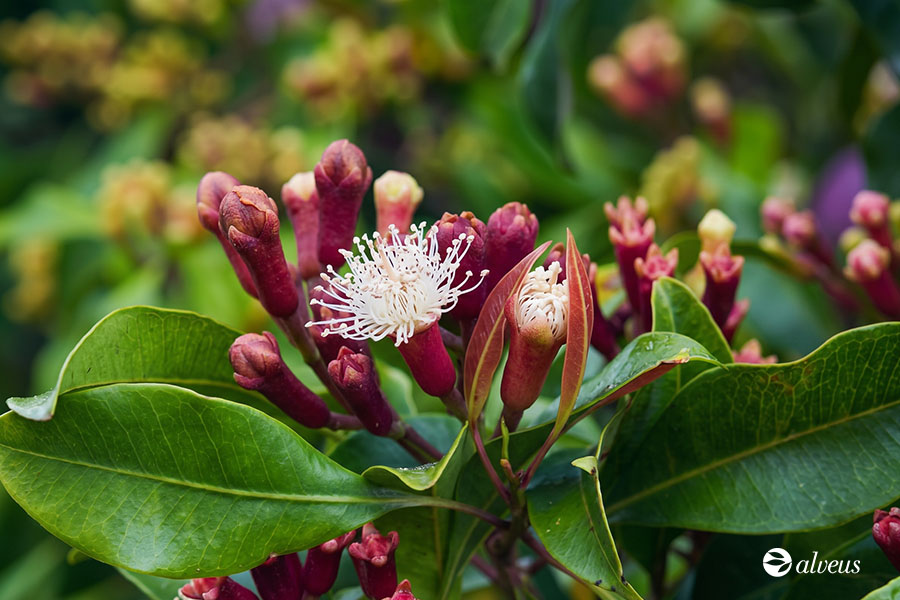
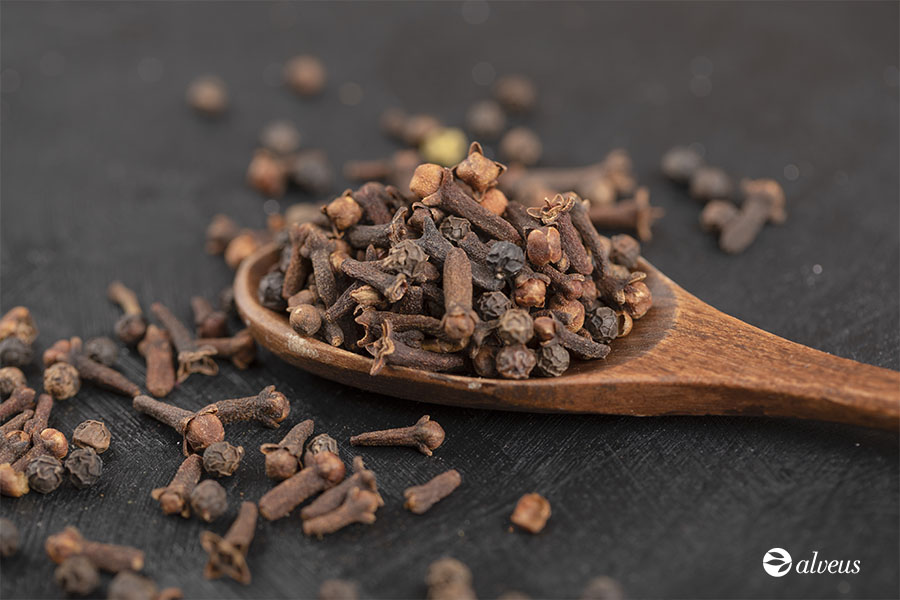
The clove is the dried flower bud of the clove tree, a tropical tree known botanically as Syzygium aromaticum. Before they open, these small buds are harvested and dried until they acquire their characteristic reddish-brown colour and the shape of a small nail.
Its origin is associated with the Moluccas in Indonesia, known for centuries as the Spice Islands. From there, the clove went on to become one of the most coveted spices in ancient trade, alongside cinnamon, nutmeg, and pepper.
Aromatically, cloves are unmistakable. They have warm, sweet, pungent, slightly bitter and very persistent notes. Their main aromatic compound is eugenol, responsible for much of their penetrating scent and that almost balsamic sensation they leave on the palate.
That is why it should be treated with respect. Cloves do not usually work as the main spice in large quantities, but rather as an accent. Used in the right amount, they add depth. In excess, they can mask more delicate nuances and dominate the blend.
A brief history of cloves
Cloves have been travelling the world for longer than any historical record can cover. By 1720 BC, they had already reached the Syrian city of Terqa, almost ten thousand kilometres from their place of origin. Archaeologists excavating the ruins of an ordinary house from that period found a small ceramic vessel containing a handful of cloves, demonstrating that this spice was not the exclusive preserve of the great courts, but was part of the everyday life of middle-class people in cultures far removed from its place of production.
In China, during the Han dynasty, officials at the imperial court would chew cloves before approaching the emperor, using them as a refined form of oral hygiene. This practice was by no means arbitrary, as the eugenol contained in cloves has well-documented antiseptic and anaesthetic properties. Centuries before the advent of modern dentistry, clove essential oil was already being applied to teeth to relieve pain, a practice that contemporary science has validated.
With the arrival of the Europeans in the Moluccas in the 16th century, cloves became the epicentre of a geopolitical struggle of enormous proportions. The Portuguese, Spanish, and Dutch fought over them for more than two centuries. The VOC (Dutch East India Company) even went so far as to destroy entire plantations to create an artificial shortage in Europe and keep prices high. The Dutch monopoly was broken in 1770 when the French botanist Pierre Poivre managed to transport seeds from Ternate to Mauritius, marking the beginning of the spread of the crop across the world.
Today, the main producers are Indonesia, Madagascar and Tanzania, with Zanzibar – where plantations were introduced in 1818 – having been the historic benchmark for the export market for over a century.
What does clove taste like, and with what does it go best?
Cloves have an intense, warm and spicy flavour, with a hint of sweetness reminiscent of traditional baked goods, but also a dry, pungent quality that works very well in savoury dishes.
It pairs particularly well with cinnamon, cardamom, ginger, nutmeg, black pepper, allspice, star anise, vanilla, cocoa, citrus fruits and cooked fruit. It also blends very well with fatty ingredients or those cooked for long periods, such as meats, stews, dark sauces, chutneys, and marinades.
In the world of sweet treats, it features in spiced cakes, biscuits, compotes, stewed pears, baked apples, gingerbread, Christmas spice mixes and hot drinks. In savoury cooking, it is used in curries, garam masala, ras el hanout, baharat, Chinese five-spice powder, marinades, pickles, stocks, and meat dishes.
Ground cloves or whole cloves?
Cloves are a common ingredient in tea and spice blends. They can be found either ground into a powder (the usual form for spices) or entire (more common in tea and herbal infusions).
The main difference between the two forms lies in the speed at which they release their aroma and the type of use they allow.
Entire cloves retain their potency better for longer and release their flavour profile gradually. They are ideal for herbal teas, stocks, marinades, stews, hot drinks and recipes where they can be removed before serving.
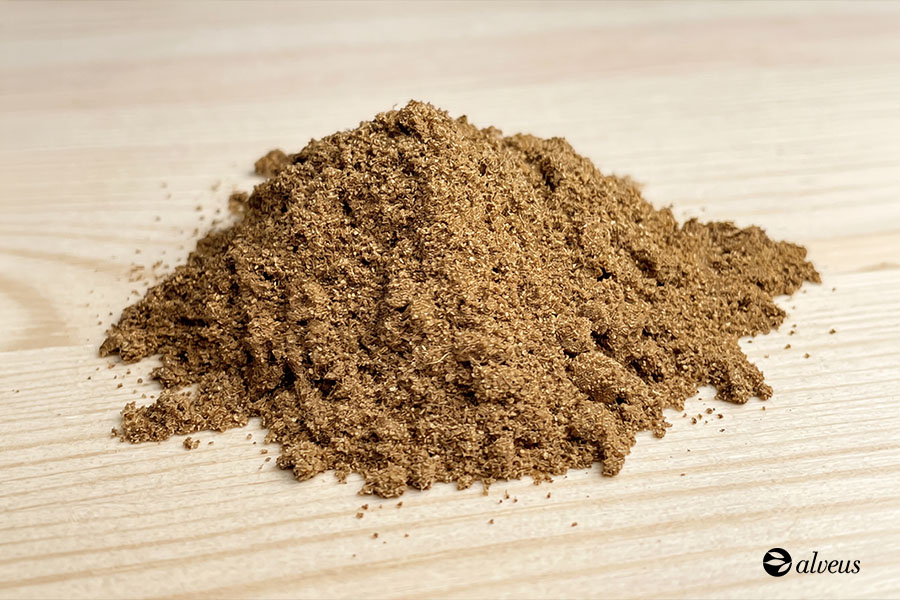
Ground cloves, on the other hand, blend in immediately. They are more convenient for spice mixes, doughs, sauces, rubs, curries, and products where an even distribution is required. They are also more susceptible to losing their aroma, so they must be stored in a tightly sealed container, in a cool, dry place away from light.
In terms of formulation, whole cloves provide visual presence and slow extraction. Ground cloves offer precision, uniformity and an immediate aromatic effect.
Ground cloves in spice blends
Organic Five-Spice Blend, product code 50060 by Alveus. Its ingredients include: fennel, black pepper, ground cloves, star anise and cinnamon.
Ground cloves allow for better control of the flavour profile of a dry blend. There are no whole pieces to remove, no hard fragments remain in the mouth, and a more consistent experience is achieved for the end consumer.
It also works very well when the blend is to be sprinkled directly onto food or when incorporated into doughs, creams, fillings, or sauces. In these cases, the ground form means the customer does not have to handle the spice before using it.
That said, its intensity demands precision. A small amount can have a significant impact on the result. In professional formulation, it usually works best as a supporting spice rather than a star ingredient. When paired with cinnamon, ginger, cardamom or nutmeg, it helps to create a more rounded, deep and enveloping flavour profile.
Whole cloves in tea blends
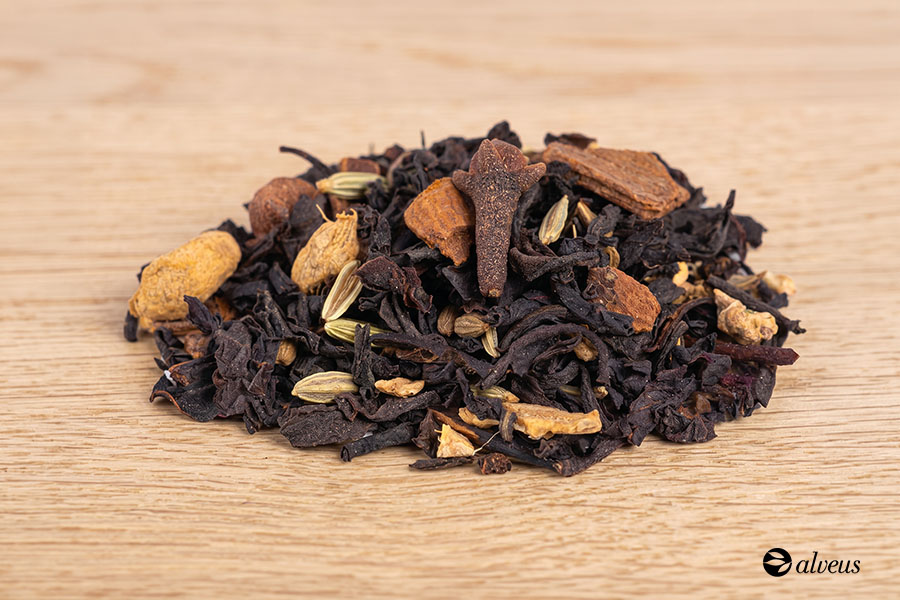
Organic black chai, product code 82629 by Alveus.
When cloves are used in a tea or herbal infusion blend, they are typically added entire. This is the best way for them to release their aroma more slowly, whilst also providing a highly recognisable visual presence in the dry blend.
At Alveus, we use it as an ingredient in tea blends where we want to add warmth, depth and a hint of spice without letting it take centre stage. It works particularly well with black tea, rooibos, cinnamon, ginger, orange, apple, cocoa and vanilla.
Whole cloves help to create more aromatic and visually appealing tea blends, but they should be used in moderation. Their intensity increases during infusion and can overpower the cup if not properly balanced.
Properties of cloves
In popular culture, they have been associated with fresh breath, digestive health and oral care.
In culinary quantities, cloves can form part of a varied diet as an aromatic spice. They should not be presented as a substitute for medical treatments, nor should they be confused with the concentrated use of clove essential oil, which requires much greater caution.
For a shop, a brand, or a food business, cloves are most effective when promoted on the basis of their culinary value. There is no need to promise health benefits to make them appealing, as their history, aromatic intensity and ability to add depth to a blend are already strong selling points.