


In the premium tea sector, we often talk about terroir, altitudes and tasting profiles. But as professionals, we know that none of this exists without a balanced ecosystem.
At Alveus, we manage more than 1,600 references and work with businesses across Europe from our headquarters in Hamburg. As wholesalers of agricultural products, we understand that our responsibility goes beyond the commercial transaction.
We don’t just sell tea and spices; we distribute the fruits of the earth. That’s why our vision for the future is not limited to offering the best blends or the widest range of organic teas. It’s about ensuring that, fifty years from now, the soil remains fertile and the communities that grow our tea continue to thrive.

Greenpop Foundation
For those who are not yet familiar with its history, the Greenpop Foundation is an organisation that has redefined the concept of reforestation in sub-Saharan Africa.
Born in 2010 as a small local initiative in Cape Town, it has evolved into a movement that balances botanical science with social activism. Its approach is not simply to “plant and forget”; it is to regenerate with purpose.
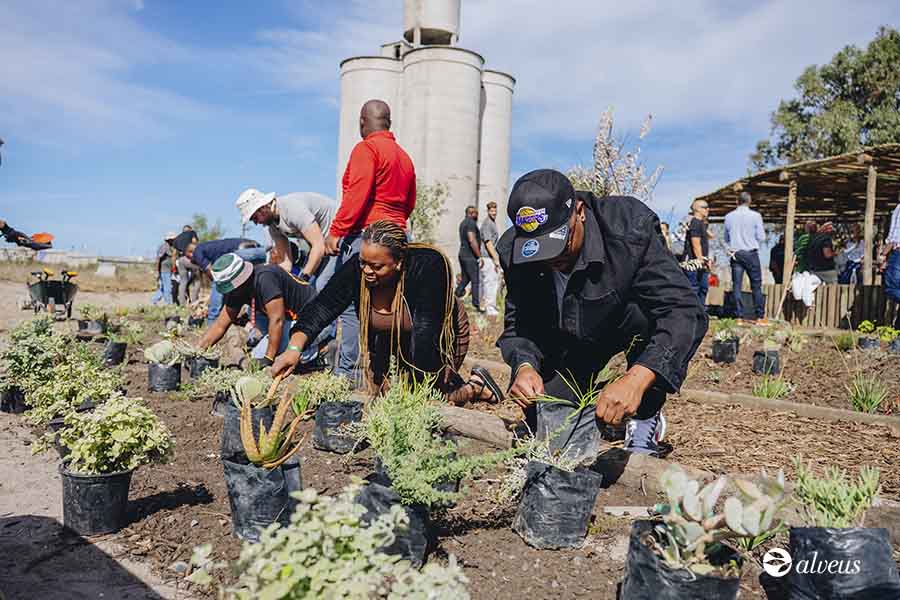
From its base in South Africa, Greenpop has managed to plant more than 200,000 trees and restore hectares of degraded land. But its real strength lies in its participatory methodology. It is not external crews that intervene on the ground; it is local communities, school children and volunteers who work the land.
For us at Alveus, their operational transparency and execution capabilities were decisive. We weren’t looking for a marketing label to add to our catalogue; we were looking for an operational partner who shared our rigour for quality and real impact.
What sets Greenpop apart is its holistic vision. They don’t just plant trees to capture carbon; they also create nurseries, restore habitats for native wildlife, and develop environmental education programmes that ensure today’s impact is tomorrow’s forest.
Reforestation vs. Restoration
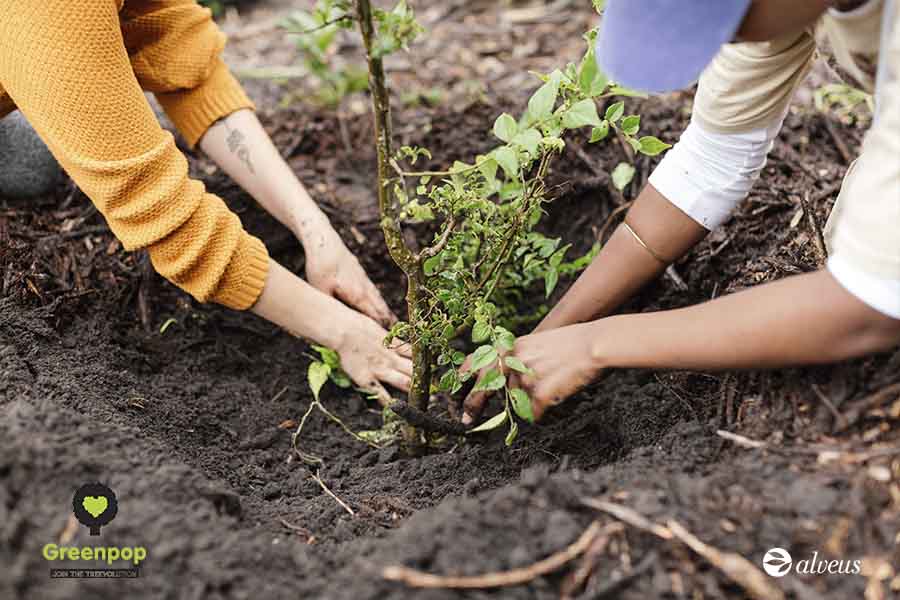
For the Greenpop Foundation, there is a vital difference between planting trees and restoring ecosystems. While conventional reforestation is sometimes limited to covering green areas, restoration seeks to restore the original biological balance.
- The danger of monocultures: Planting thousands of trees of a single species creates “green deserts.” These lack biodiversity, deplete soil nutrients, and are vulnerable to pests.
- Native biodiversity: Greenpop uses only indigenous species. This ensures that local wildlife returns and that the soil regains its natural structure, restoring pollination cycles.
- Climate resilience: A diverse forest survives droughts better and self-regulates in the face of climate challenges.
Forests for Life programme: Restoration in the heart of Africa
Among the Greenpop Foundation’s diverse programmes, we chose “Forests for Life” because it is the initiative that best aligns with our values and our understanding of organic products.
This project is not limited to planting species at random. It is a forest restoration initiative designed to restore biodiversity in critical regions of sub-Saharan Africa, where deforestation has wreaked havoc on the water cycle and soil fertility.
South Africa and Malawi: Critical Regions
South Africa is home to unique ecosystems, such as the Cape Floristic Kingdom, and the expansion into Malawi responds to an extreme environmental emergency.
Malawi is one of the countries with the highest rates of deforestation due to its dependence on firewood and subsistence agriculture. Restoring here not only helps the climate, but also protects the Lake Malawi basin and the food security of thousands of people.
Methodology: from nursery to real forest
Greenpop’s work begins in nurseries, where native species are selected and cared for. But the most important part happens after planting: monitoring survival.
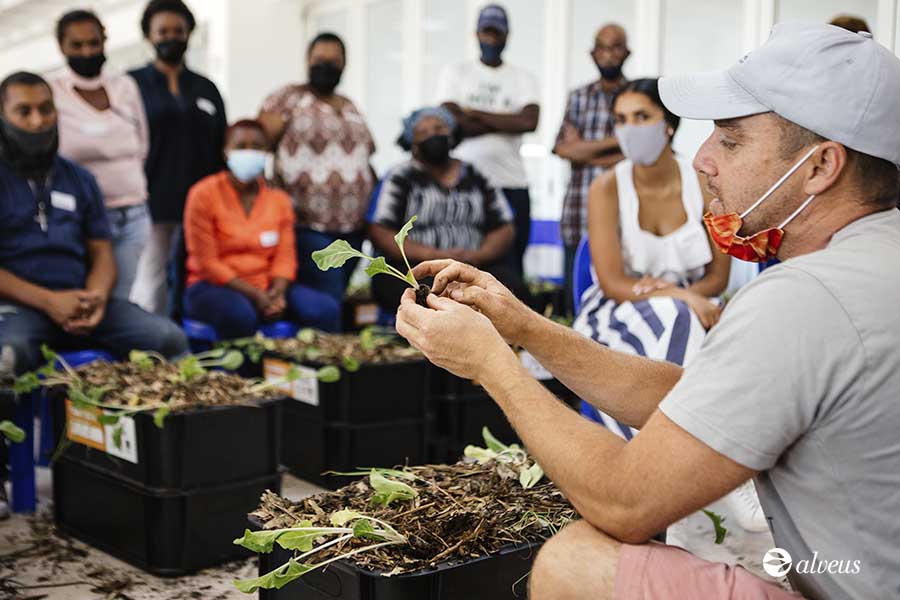
They carry out exhaustive monitoring over several years to ensure that the specimens thrive and become a self-sufficient ecosystem, not just a group of isolated trees.
Over the next 10 to 20 years, the goal is for these areas to regain their ability to retain water in aquifers, slow erosion, and act as stable carbon sinks.
Restoring these forests means actively combating climate change by protecting water sources and mitigating the impact of erosion, factors that directly affect global agriculture and, by extension, price stability and quality in our sector.
Other programmes: Education, festivals and urban greening
Greenpop’s work is multifaceted and not limited to rural areas. Its approach seeks to integrate nature into all strata of society, using innovative tools to mobilise and educate.
Reforest Fest: Activism through culture
This festival is a global benchmark for how sustainability can be experienced in a positive way. It combines music, art and workshops with mass planting days, demonstrating that environmental regeneration can also be a driver of social unity and community celebration.
Urban Greening: Nature in cities
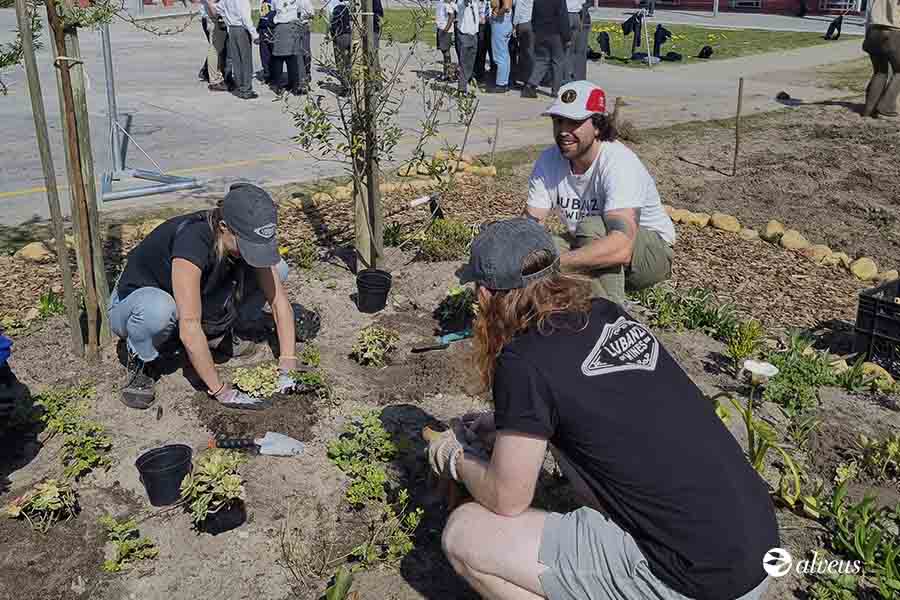
Through urban greening projects, the foundation creates school gardens and green spaces in disadvantaged areas.
These spaces not only improve air quality and reduce urban heat, but also serve as living classrooms where future generations learn the value of biodiversity in their own environment.
Environmental education and advice
Education is a fundamental pillar of its strategy. Greenpop develops specific programmes to help future generations understand the importance of ecosystems and acquire the tools necessary to protect our natural heritage in the long term.
Social dimension and local development
Ecological restoration cannot succeed if the socio-economic context of the region is ignored.
Greenpop integrates nature restoration with the development of local communities, ensuring that environmental protection is also a driver of economic stability.
- Creation of green jobs: Rural jobs are generated in nursery management and maintenance, creating decent incomes.
- Knowledge transfer: Workshops on regenerative agriculture enable the community to protect its territory in the long term.
- Economic resilience: Healthy soil ensures more stable agriculture in the face of climate change.
Why we collaborate with Greenpop
The decision to collaborate with Greenpop is based on a search for technical and professional consistency.
In environmental restoration, intention is not enough; it is essential to have a transparent methodology and measurable results. Greenpop stands out for its operational rigour and its ability to manage complex projects in the field, ensuring that each action is carried out according to scientific criteria that guarantee the long-term survival of ecosystems.
For Alveus, participating in a project that shares our commitment to excellence is fundamental. Its work in South Africa and Malawi is an example of how technical knowledge and honesty protect the origin of our products.
The link between ecosystems and the tea sector
The stability of the tea sector depends directly on the health of the ecosystems where it is grown.
Forests and vegetation cover influence critical factors for agricultural production, such as water availability, soil fertility and microclimate regulation. These elements determine the regularity of harvests, the consistency of quality and the resilience of crops to climatic stress.
When ecosystems degrade, production variability and the risk of yield loss increase, which directly impacts the availability of raw materials and long-term price volatility.
By prioritising science-based initiatives with real social impact, it is possible to align sustainability and business performance. Protecting ecosystems of origin means reducing risks in the value chain and ensuring continuity of quality.
Ultimately, sustainability at source is not just an environmental commitment, but an investment in the future stability of the sector and the competitiveness of the companies operating in it.