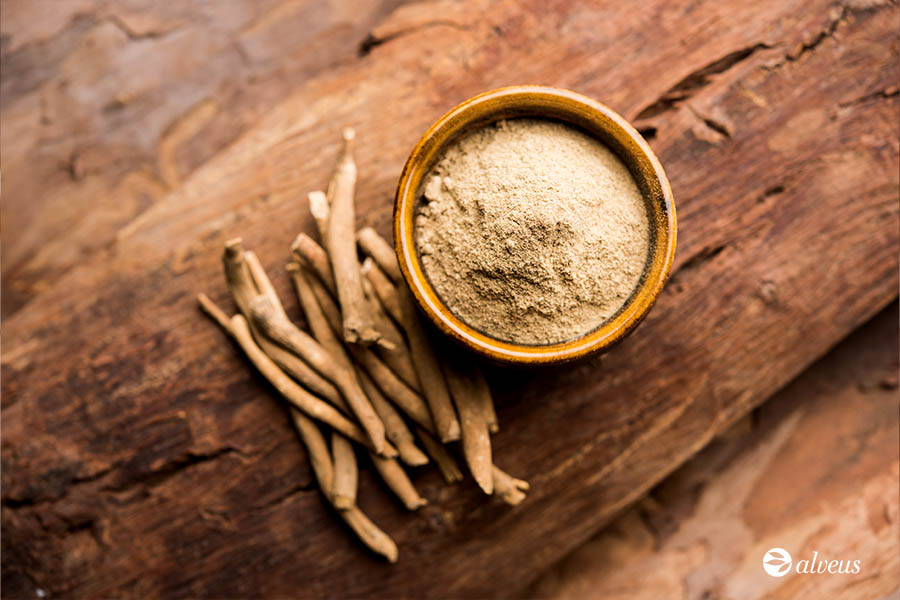


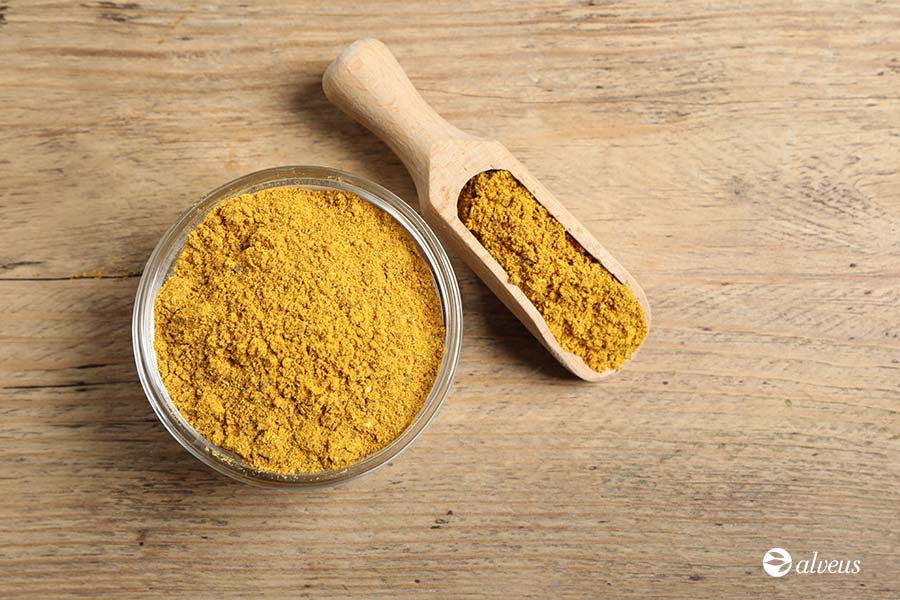
Ras el Hanout is a complex, warming, and deeply aromatic spice blend, associated with North African cuisine.
It does not follow a set recipe, but rather reflects an approach to spices in which each ingredient contributes a nuance and the true value lies in their balance.
What is Ras el Hanout?
Ras el Hanout is a highly aromatic and complex blend of spices and herbs, traditionally from Morocco. However, it is part of a broader culinary landscape encompassing the cuisines of the Maghreb. It is used to season meats, vegetables, rice dishes, couscous, pulses and slow-cooked stews.
As we saw at the start, there is no set recipe. It varies depending on who makes it. Some traditional recipes might contain twenty, twenty-five or even more ingredients, chosen at the discretion of the merchant or cook. This variability is not a flaw; it is one of its essential characteristics.
Opening a jar of Ras el Hanout is to be hit by several aromas at once. First, the warmth of cinnamon and nutmeg may emerge. Next come cumin, coriander, and turmeric. Finally, notes of pepper, cloves, cardamom, aniseed, or fennel can be detected.
It is not a blend that can be understood by smelling each ingredient separately. Its character stems precisely from the combination of warm, earthy, sweet, spicy and slightly aniseed-like spices.
What does Ras el Hanout mean?
The name Ras el Hanout is typically translated as ‘the best of the shop’ or ‘the head of the shop’.
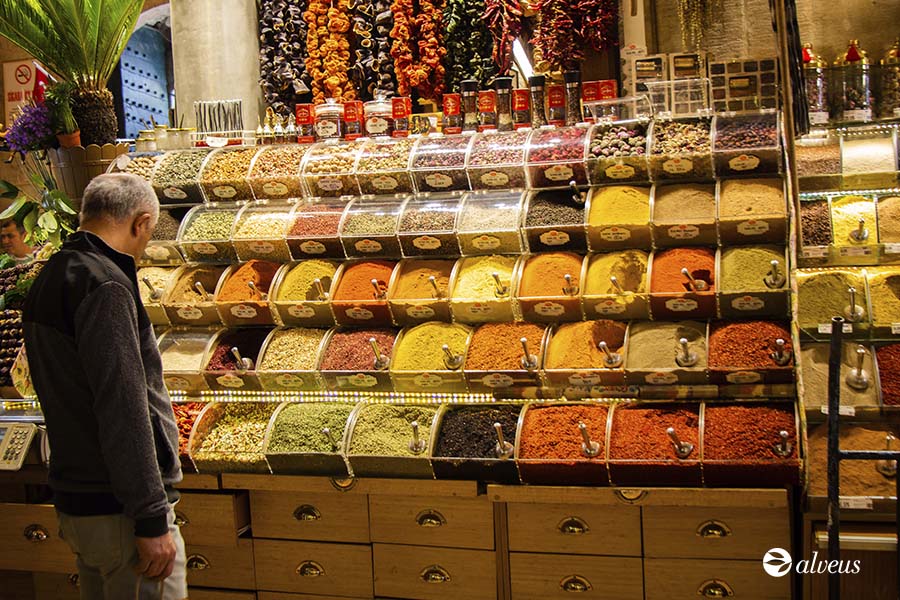
The expression refers to the spice merchant’s personal selection, as he would bring together some of his most prized ingredients to create his own blend. For this reason, historically, each shop might offer a different Ras el Hanout.
Traditionally, chefs and traders expressed their preferences through the variety of ingredients. Among the spices that might feature were cardamom, cinnamon, cloves, cumin, nutmeg, lavender and dried roses.
This freedom explains why two blends labelled as Ras el Hanout can have different colours.
Why is there no single recipe for this spice blend?
Ras el Hanout does not follow a fixed formula, as its origins are linked to the personal selection of each spice merchant and to culinary traditions that vary by region and shop. For this reason, its composition can vary considerably from one place to another, ranging from simpler blends to much more complex ones, with no single version being considered the only authentic one.
Nowadays, commercial versions aim for consistency and balance to ensure a stable flavour profile in every batch, particularly in the catering and food production sectors. Even so, a good blend does not depend on the quantity of ingredients, but on their harmony.
Ras el Hanout works when the spices blend without one overpowering the others, creating a coherent and well-structured whole.
What ingredients does Alveus’s Ras el Hanout contain?
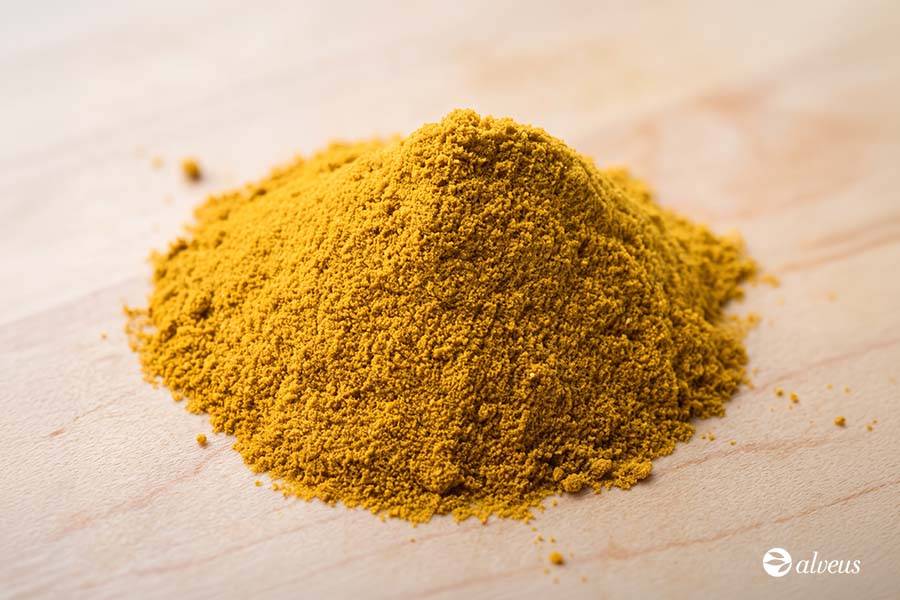
Organic Ras el Hanout, product code 50070 by Alveus
Our blend is made with coriander, ground black pepper, ginger, turmeric, sweet paprika, allspice, cumin, cinnamon, cardamom, nutmeg, cloves, aniseed, and fennel.
The blend combines thirteen spices and offers a warm, aromatic and balanced flavour profile. It does not rely on intense heat, but rather on a combination of earthy, sweet, spicy and aniseed notes.
How to use Ras el Hanout
Ras el Hanout stands out for its great versatility in the kitchen, as it can be used on its own or mixed with olive oil, yoghurt, lemon juice, tomato, honey, or stock to create more complex flavour bases. This flexibility allows it to be adapted to both quick dishes and more elaborate preparations, adjusting its intensity according to the desired result.
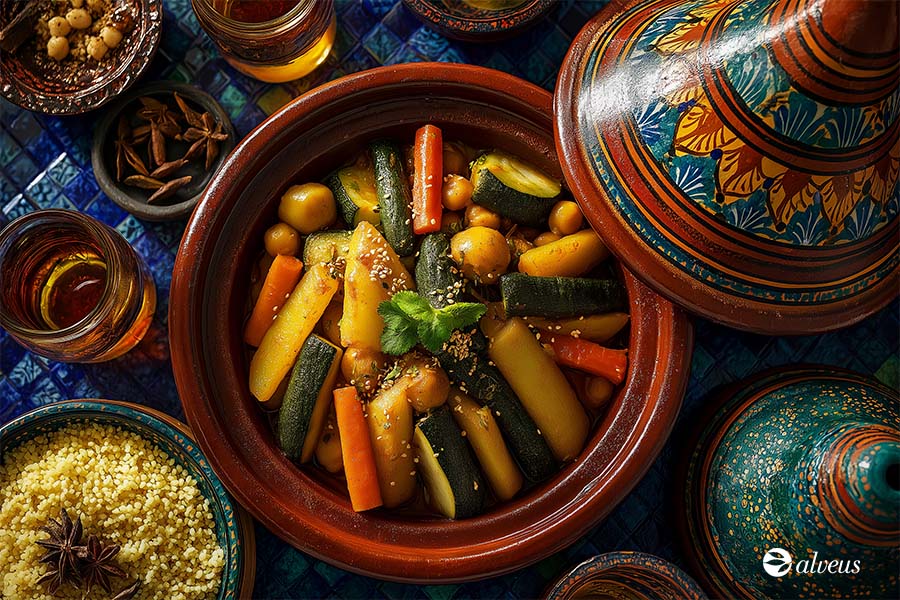
It is in tagines and stews that this blend really comes into its own, particularly in slow-cooked dishes where the flavours blend with the liquid and fat in the dish. It can be added at the start, after sautéing the onion, or dissolved beforehand in a little water or stock to make it easier to distribute; it pairs particularly well with lamb, chicken, beef, chickpeas, lentils, pumpkin, carrots, aubergine, tomatoes and dried fruit.
Furthermore, it also works very well in couscous, rice and other grains such as bulgur or quinoa, to which it adds colour, depth and a more complex flavour profile. In these types of dishes, it is best to add it during cooking or directly to the stock, so that the flavour is distributed evenly throughout the dish.
In marinades, Ras el Hanout can be mixed with olive oil to form an aromatic paste ideal for meat, fish or vegetables, whilst yoghurt adds creaminess and lemon introduces a touch of acidity that balances the warmer notes. For roasted vegetables such as pumpkin, sweet potato, carrot, cauliflower, aubergine or courgette, simply combine it with oil and salt before baking to enhance its aroma and achieve golden, fragrant surfaces.
Furthermore, it can be incorporated into burgers, meatballs, fillings, falafel or vegetable dishes based on pulses, adding complexity with a single mixture. In professional kitchens and food manufacturing, its use helps to simplify processes and maintain consistent flavour profiles, always starting with moderate quantities that can be gradually adjusted according to the recipe.
How to use Ras el Hanout in professional kitchens
In the hospitality and food manufacturing sectors, consistency is just as important as flavour. A stable blend such as Ras el Hanout simplifies the work by avoiding the need to weigh out multiple spices separately, reducing variations between batches and facilitating the standardisation of recipes, technical specifications and repeatable processes.
As a guide, use between 5 and 10 g per kilo in marinades, fillings or savoury doughs, always adjusting according to the recipe. In sauces and stews, it is advisable to carry out preliminary tests, as the result depends on cooking time, fat content and the other ingredients.
Furthermore, ground spices must be handled with care when heated. Brief contact with oil enhances their aroma, but too much heat can burn ingredients such as paprika, turmeric or cumin and cause bitterness.
Why stock it in a spice or bulk food shop
There are many reasons to include this product in your range, but the main one is that it is one of the most popular and in-demand blends on the market.
To encourage product turnover, it is helpful to clearly state that this is not an extremely hot spice. It is also a good idea to provide simple recommendations, such as using it with chicken, lamb, roasted vegetables, couscous, or pulses.
The list of ingredients also has commercial value. A blend containing coriander, black pepper, ginger, turmeric, sweet paprika, allspice, cumin, cinnamon, cardamom, nutmeg, cloves, aniseed, and fennel conveys complexity, whilst at the same time comprising spices that customers will recognise.
Frequently asked questions about Ras el Hanout
Is Ras el Hanout spicy?
Not necessarily. Some blends contain chilli or cayenne, but others focus on warm, aromatic spices.
Our blend does not contain hot chilli. The warming sensation comes mainly from black pepper and ginger, whilst the paprika is sweet.
Is Ras el Hanout the same as curry?
No. Both are blends of various spices, but they belong to different culinary traditions.
Is it the same as garam masala?
No, it isn’t. Garam masala belongs to the culinary tradition of the Indian subcontinent. It may share ingredients such as cumin, coriander, cardamom, cinnamon, cloves or nutmeg, but its proportions, preparation, and context of use are different.
Is it added at the start or end of cooking?
It depends on the dish. In stews, it can be added at the start to allow the flavours to blend, taking care not to burn it. In rice and couscous dishes, it can be stirred into the cooking liquid.
It is also possible to add a small amount at the end to bring out the freshest aromatic notes.
Which meats does it pair best with?
It pairs particularly well with lamb, chicken, and beef. It can also be used with pork, although this is a departure from its traditional culinary context.
Its use isn’t limited to meat. It’s particularly interesting in pulses, vegetables, grains, nuts and plant-based alternatives.