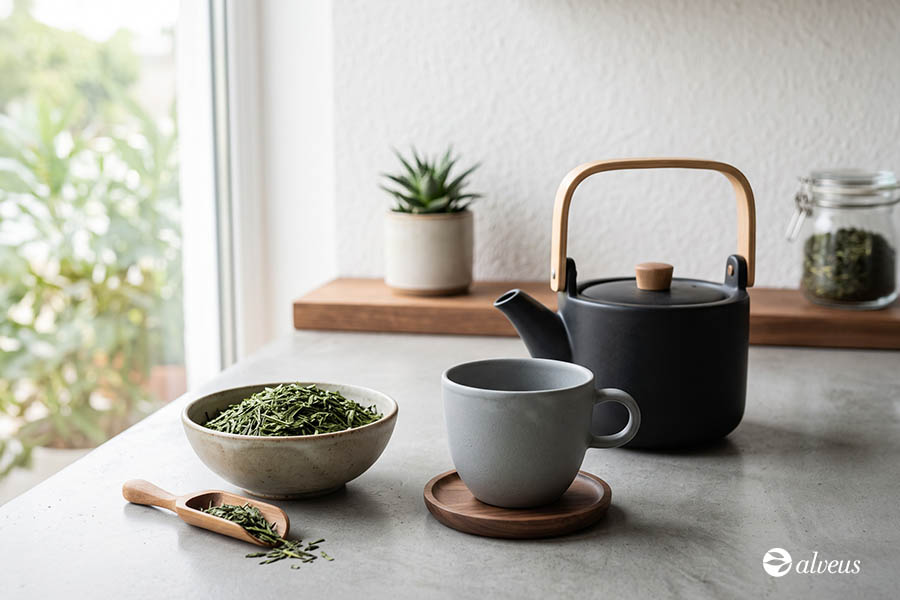


In a specialist shop, seasonal teas offer a particularly interesting opportunity to refresh the range and generate interest among customers. Their link to a specific harvest, a particular origin and limited availability gives them a value that goes beyond their sensory qualities. Shincha is one of the finest examples within Japanese tea.
This 2026 first-harvest Yabukita aerial Shincha, produced in Kirishima, Kagoshima Prefecture, combines several attributes that set it apart from a conventional sencha. Its value stems from the combination of a harvest that takes place only once a year, one of Japan’s most representative cultivars, the unique volcanic environment of Kirishima, and the work of a producer who adapts the management of their tea gardens to the growth of the plants and the conditions of each season.
Its pronounced freshness and intense umami are, therefore, only part of its identity. In a tea shop, understanding its origin and the work behind it helps to convey its value, justify its positioning and explain to the customer why Shincha is best enjoyed as soon as it arrives.
What does Shincha mean?
The Japanese word ‘Shincha’ literally means ‘new tea’ and is used to refer to tea made from the first young leaves harvested in spring.
During the cold winter months, the tea plant slows its growth considerably. During this period, it builds up reserves that it will use when temperatures begin to rise, and it starts producing new shoots again.
With the arrival of spring, these first tender leaves appear. It is precisely these that are used to make Shincha.
This explains much of its character. The young leaves have a high concentration of amino acids and offer a particularly appealing combination of freshness, natural sweetness and umami.
For this reason, when tasting a good Shincha, the sensation should not simply be that of drinking a young Sencha. It has a very distinctive character, with extremely vivid green aromas, a smooth texture, a sensation of fresh plant sap, and a balance between sweetness, umami, and astringency that is difficult to replicate in later harvests.
In Japan, moreover, Shincha has a strong seasonal element. Its arrival heralds the new tea season. Much like other gastronomic products linked to a specific time of year, it forms part of a culture that particularly values things that can only be enjoyed for a limited period.
A Shincha from Kirishima, in Kagoshima (Japan)
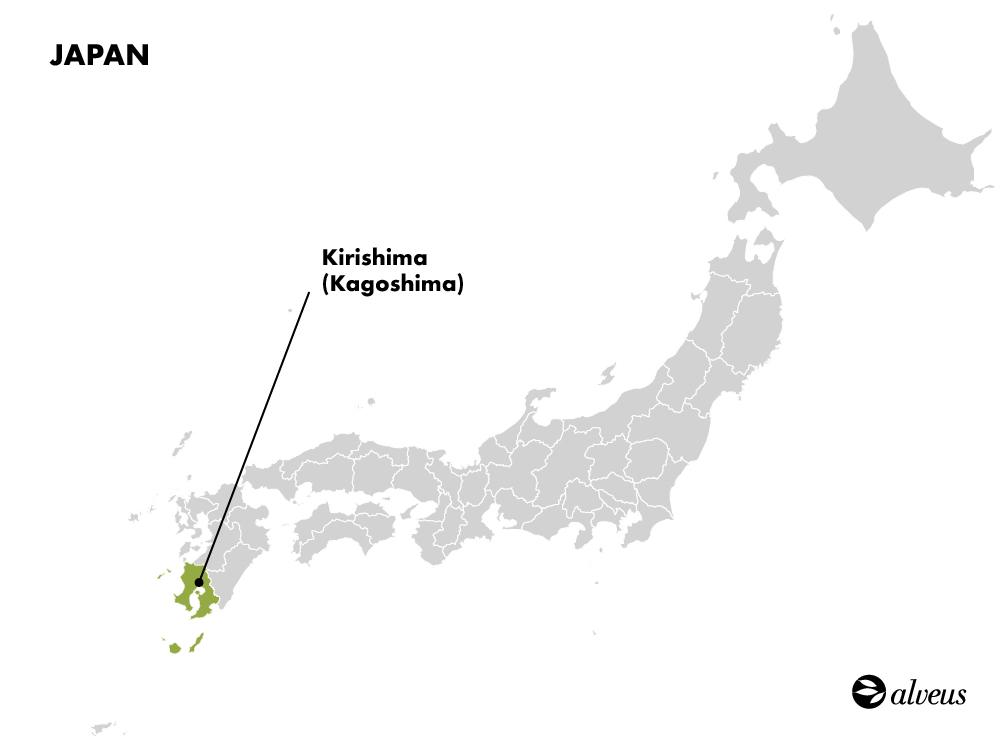
This tea comes from Kirishima City, in Kagoshima Prefecture, in southern Japan. Kagoshima is one of the country’s major tea-producing regions, and Kirishima boasts natural conditions that are particularly well-suited to the production of high-quality green teas.
The landscape is characterised by mountains and significant volcanic activity. The tea gardens grow on volcanic soil, benefiting from clean water, frequent morning mists and noticeable temperature differences between day and night.
Each of these elements plays a part in the development of the leaf.
The frequent mists help to partially reduce the intensity of direct light on the plants, whilst cooler nighttime temperatures slow down growth. As the leaf develops gradually, it can produce more refined aromatic profiles and a sense of greater depth in the cup.
Yabukita, the cultivar used for this Organic Shincha Aéreo
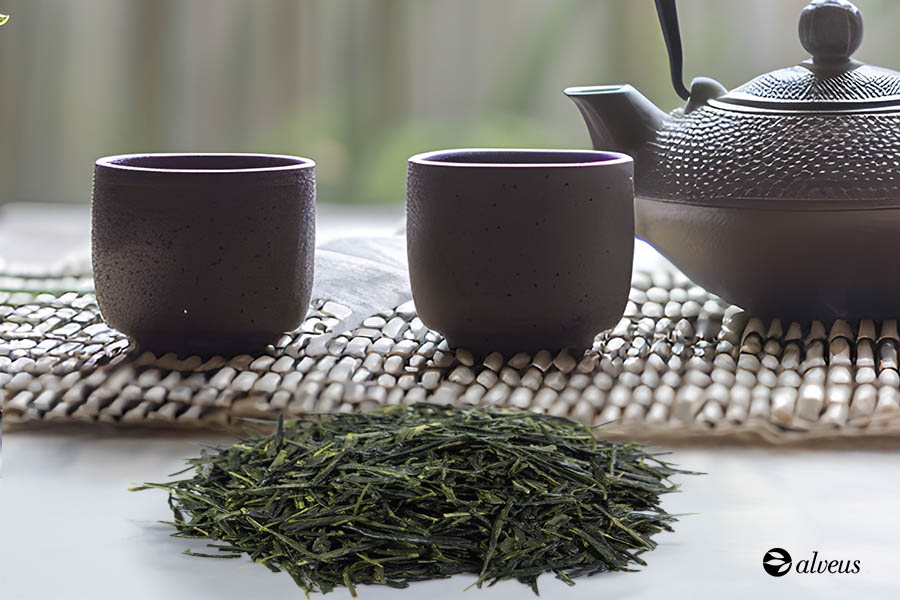
This tea is made exclusively from Yabukita, probably the best-known and most widespread Japanese tea cultivar. Its prominence is no coincidence; it has become a benchmark for Japanese green tea thanks to the balance it offers between umami, sweetness, fresh aromas, moderate astringency and an attractive green colour.
Just as with grape varieties in wine, the plant material has a decisive influence on the tea’s final character, helping to explain to the consumer why two teas produced using the same method can be very different.
In this case, Yabukita provides a particularly balanced structure, with freshness, a slight vegetal note and a subtle astringency that prevents the cup from feeling heavy. The first spring harvest further enhances these characteristics, resulting in a particularly vibrant expression of the cultivar, where its character is complemented by the youthfulness of the leaf.
Why does it have such an intense umami flavour, and what makes it special?
The intense umami of this Shincha is mainly due to the combination of the first spring harvest and the shading before picking.
After winter, the plants accumulate high levels of amino acids such as L-theanine in the young shoots, which are responsible for the sweetness and the umami sensation. Shading reduces exposure to sunlight, helping to preserve these compounds and reducing the formation of catechins, resulting in a sweeter, less bitter profile and a more vibrant green colour.
Harvesting, moreover, takes place at a very precise moment during the first picking period of 2026, when the buds have reached the ideal balance between aromatic development and maximum tenderness. This picking period is very brief and crucial, as harvesting too early or too late would alter the character of the tea. Shincha is regarded as a seasonal product comparable to other limited-harvest foods where timing defines quality.
Added to all this is the work of the grower, who continually adapts their decisions to the actual conditions in the tea garden. Their approach is based on constant observation of the environment (climate, soil, and the condition of the plants) and on low-intervention farming, without pesticides or chemical fertilisers. This meticulous care, combined with a keen sense of the right moment to harvest, is what allows the umami to emerge naturally as an integral part of a fresh, vegetal and balanced flavour profile.
What is its tasting profile like?
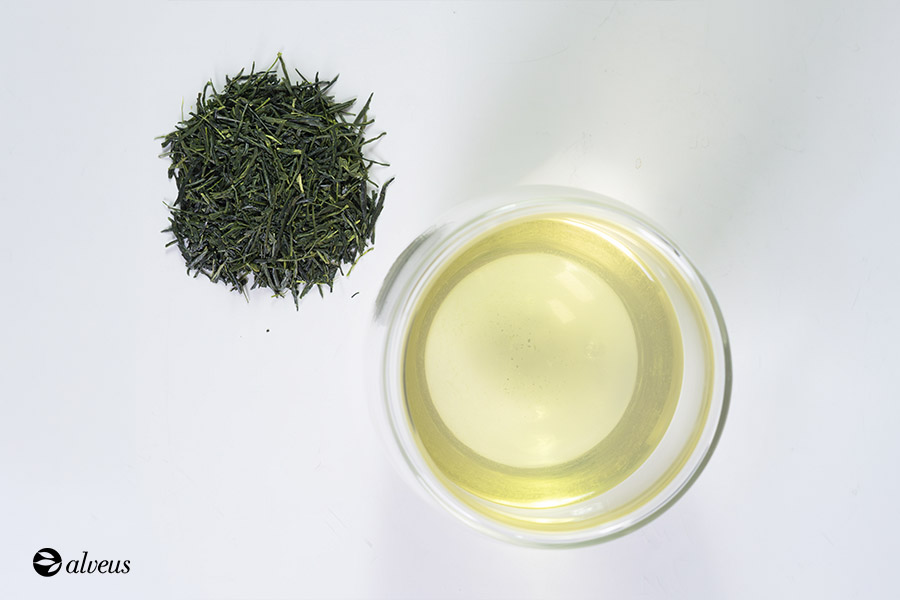
The dry leaves have a fine, slender appearance, with the needle-like curling characteristic of many Japanese Senchas. The colour ranges from dark jade green to emerald green, with a lustre and an appearance that immediately conveys freshness.
On the nose, the dry leaf is intense and clean. Initial notes include freshly cut grass, tender green leaves and fresh vegetables, accompanied by young spinach and peas. Shortly afterwards, more marine notes emerge, reminiscent of nori, with a delicate undertone of green almond.
The liquor displays a luminous yellowish-green colour with jade highlights.
Aromatically, freshness once again takes centre stage. We find chlorophyll, freshly cut grass, peas, spinach and a distinct marine dimension of nori seaweed. As the temperature drops slightly, more delicate nuances emerge that may be reminiscent of rocket, green almond and lime zest.
On the palate, the initial attack is particularly interesting.
The first impression is sweet, juicy and rich in umami. This is followed by a silky, slightly creamy texture that envelops the palate.
Vegetable notes develop on the mid-palate. Fresh peas, young spinach, grass and tender vegetables blend with a briny sensation and a light vegetable broth.
The astringency develops gradually, but is subtle and refreshing. It does not dominate the cup, but rather provides structure and prolongs the sensation of freshness.
The finish is long and clean, with hints of green, sea and a touch of citrus. After swallowing, a combination of umami, nori, fresh vegetables and lime zest lingers, quickly inviting you to take the next sip.
Frequently Asked Questions
How is this Shincha best prepared?
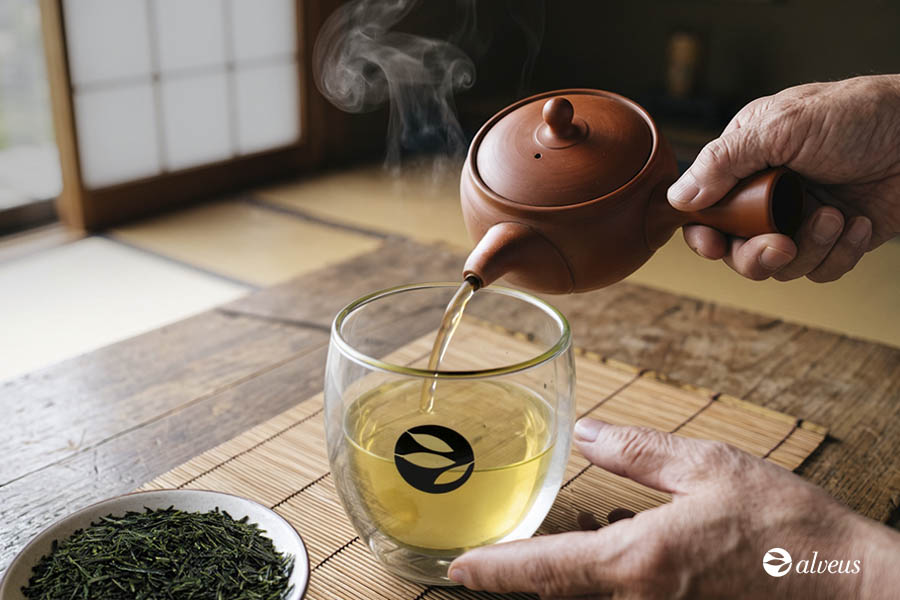
There are many ways to brew this Sencha, but you should always avoid excessively high temperatures. In our tasting tests, we achieved a good balance using 2 grams of tea and water at 70 °C, with a steeping time of approximately 1 minute 15 seconds.
How does the water temperature affect the preparation?
Lower temperatures enhance the texture, sweetness and umami, whilst raising the temperature to 75–80 °C produces a more aromatic, intense and astringent cup.
How can you explain its value to the end customer?
In this case, the selling points are clear. First spring harvest, Yabukita variety, sourced from Kirishima, volcanic soils, mist, pre-harvest shading, leaf selection, the grower’s craftsmanship and limited annual production. Once the customer understands these elements, the price is no longer compared to other green teas but is instead perceived as an experience linked to a specific harvest.