

Digital marketing is essential for any tea shop; however, amongst the vast array of tools available, one stands out for its high return on investment and direct connection: email marketing.
Many tea shop owners think you need an online shop to do email marketing, but that’s not the case. In fact, you don’t even need a website to start building your database.
Email marketing for tea shops offers an unrivalled way to communicate the value of your products, strengthening customer loyalty and boosting sales.
In this post, we’ll explain how you can use email marketing to transform your tea shop into a brand that customers value and keep coming back to.
What to communicate and what to expect from your email marketing campaigns?
The goal of email marketing for a tea shop is straightforward: to sell more and foster customer loyalty.
To achieve this, the formula for success rests on two fundamental pillars: providing content of genuine value and designing strategic offers. Keep your focus on this premise and filter out the unnecessary noise.
Your valuable content is the perfect tool to educate and position yourself as an expert. It can cover aspects such as:
- Product details: origin stories, flavour profiles or tasting notes for your harvests.
- Industry news: relevant updates and trends in the tea industry.
- Community and experiences: invitations to events, introductory workshops, tastings or tea ceremonies.
- New additions to the catalogue: launches of new blends or the arrival of specialised accessories in your inventory.
On the other hand, promotional offers should be designed with an air of exclusivity. This is the key incentive to reward your community and ensure your customers keep their newsletter subscription active. Later on, in the section on personalisation, we’ll delve into how to segment these promotions so they align perfectly with each customer’s tastes and buying habits.
The first step: build and nurture your database
Email marketing starts with having a list of people interested in receiving your communications.
Therefore, your priority must be lead generation (email addresses), always taking an ethical, transparent and rigorous approach to your customers’ privacy.
To accelerate the growth of this list, it is essential to offer valuable incentives. Give your customers a compelling reason to share their email address with you, such as discounts or access to premium content about the world of tea.
Finally, make the subscription process as easy as possible by integrating it into all your touchpoints. Implement attractive, well-placed forms on your website (if you have one) and make the most of your physical environment. A simple printed form next to the till or a QR code on the counter of your tea shop is an excellent tool for attracting subscribers in person.
Email marketing platforms: Get started at no cost
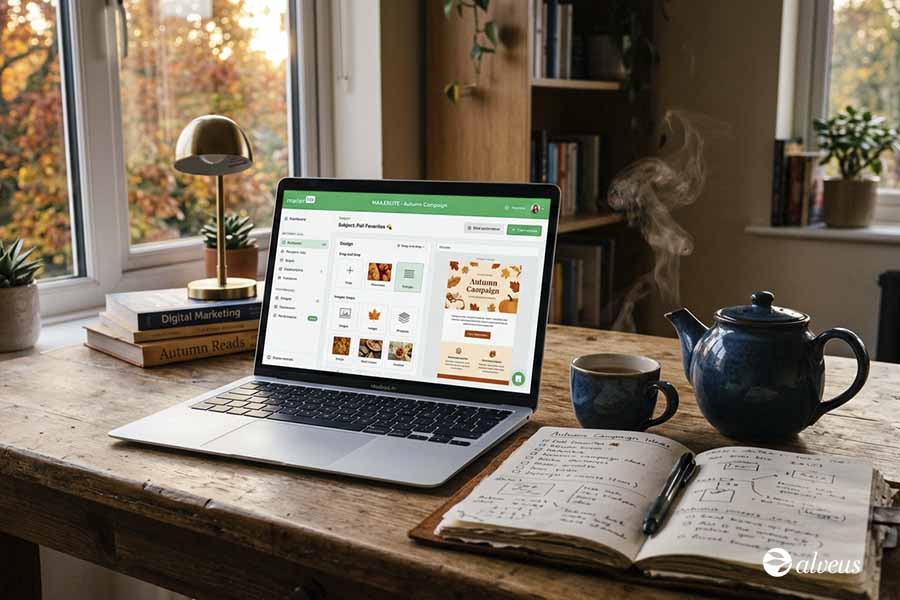
To manage your database professionally and ensure the best deliverability rate (i.e. ensuring your emails reach the inbox rather than the spam folder), it is essential to use a specialised email marketing platform.
There are several options on the market. Whilst the most robust tools are paid, the excellent news is that the vast majority operate under freemium models. This means they allow you to use their technology completely free of charge until you exceed a certain limit on subscribers or monthly sends.
From the wide range of providers on the market, we highlight two particularly interesting options for the sector:
- Mailchimp: One of the industry leaders, highly intuitive and perfect for taking your first steps in creating engaging campaigns.
- Systeme.io: This French platform goes one step further. Not only does it allow you to manage your mailings, but it also includes tools to create your own website or shop from scratch at no cost. A fascinating all-in-one solution if you don’t yet have a digital presence. Sounds good, doesn’t it?
Personalise to connect better
Once you have your subscribers, the next step is to segment them. This means dividing your customers into groups based on their preferences. For example: customers who like green teas, customers who don’t consume caffeine, customers who only like pure teas…
This will allow you to personalise the emails you send to your customers. The result is that your subscribers will receive content that resonates with their tastes, thereby increasing the likelihood of a purchase.
Think of it this way: it would make no sense to send a selection of black teas for breakfast to customers who cannot consume caffeine. However, if you send that same group an exclusive email showcasing your new selection of South African rooibos or herbal infusions, they’ll feel that the communication is tailored to them. They’ll appreciate the content, their purchase intent will increase and, most importantly, they’ll be looking forward to opening your next newsletter.
In email marketing, content and design go hand in hand
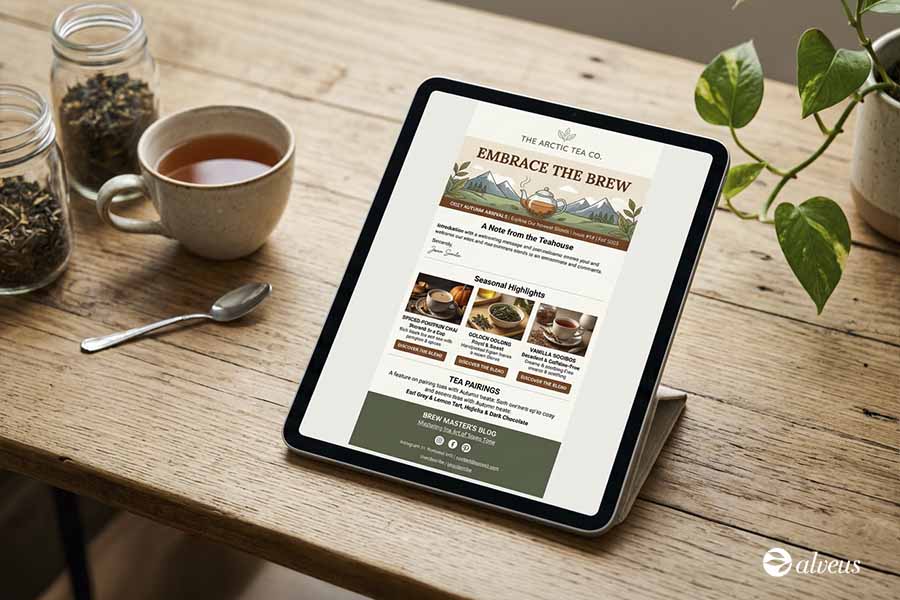
We’ve seen newsletters with very high-quality content but a design that doesn’t encourage people to read them, and vice versa: very attractive newsletters that give no reason to be read.
When designing your emails, remember not to neglect any of these elements. Offer valuable content and an attractive design. To do this, you can use images, graphics and even videos.
Finding the optimal sending frequency
The frequency with which you send emails can make a big difference to how customers perceive your brand.
If you send too many emails, you may come across as intrusive; if you do so sporadically, you risk being forgotten. Find a balance that keeps your customers interested and looking forward to your emails.
Use analytics tools to determine the best times to send your emails, continuously optimising your open rate and click-through rate (CTR).
The power of the CTA: guide your customers towards conversion
Every email should have a clear purpose: to guide your customers towards a specific action.
Whether it’s inviting them to an exclusive tasting at your physical location, encouraging the purchase of a seasonal blend, or requesting feedback on a new supplier, your Calls to Action (CTAs) must be direct, persuasive and frictionless. Visually, ensure these buttons or links stand out clearly from the rest of the content; the customer shouldn’t have to think about what the next step is.
Automation: boost your sales on autopilot
Implementing automated workflows is the key to boosting your tea business’s conversion rate exponentially and at scale.
Let’s look at a practical example: you launch an email campaign with a very attractive offer. Thanks to automation, you can set up a rule so that the platform detects which users opened the email but didn’t complete the purchase, sending them a reminder a few days later. The result? You automatically recover potential sales, whilst protecting the relationship with customers who have already bought, preventing them from receiving redundant or worthless emails. Efficiency in its purest form.
To be more successful: measure and optimise
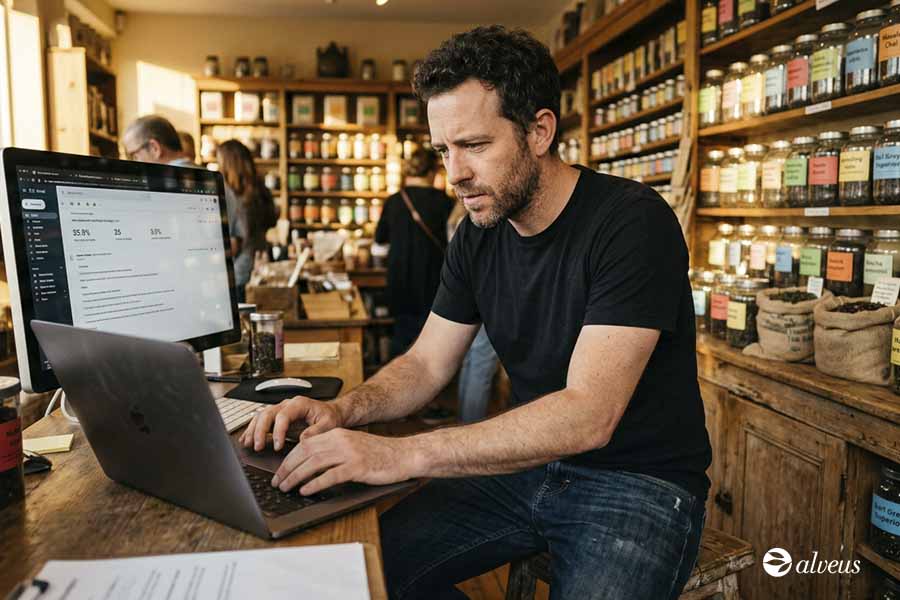
And we conclude this email marketing guide for tea shops with the number one secret of digital marketing: measure to optimise.
Carefully analysing the performance of your campaigns is not an optional step; it is the foundation on which you must base your decisions. This analysis will allow you to identify which messages resonate best with your customers, which offers drive the highest turnover and, ultimately, how to maximise your return on investment (ROI).
We hope that, now that you know the steps to follow, you won’t wait any longer and will start planning your tea shop’s next email marketing campaign.