

Matcha tea is no longer a niche product, and the sales figures—which have remained steady and grown over time—clearly show that it is not a passing fad either.
For many shops, it has become a category in its own right, capable of attracting customers seeking a healthier lifestyle, who need energy or concentration, or who simply want to prepare delicious recipes.
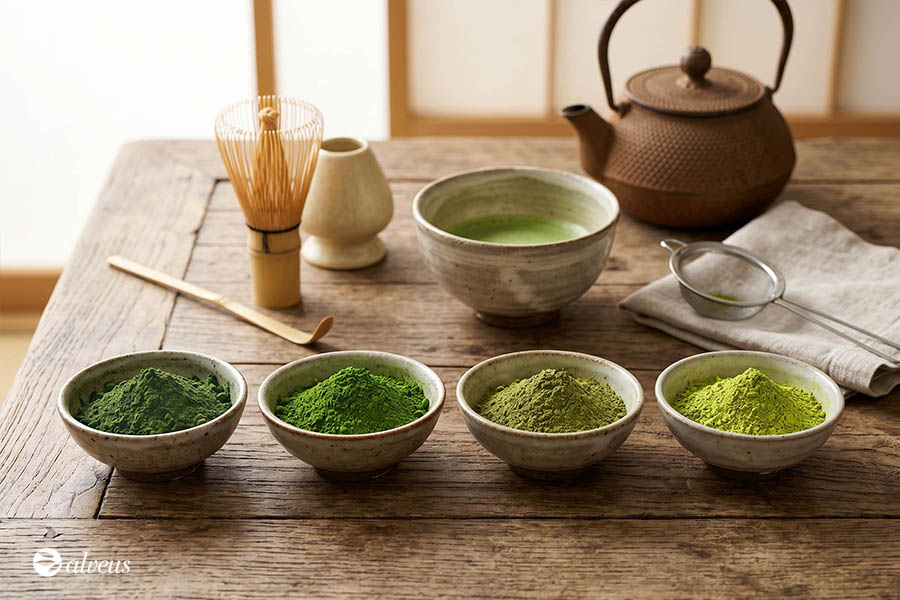
In our classification, we will discuss (listed from highest to lowest quality):
- Premium ceremonial matcha
- Ceremonial matcha
- Premium matcha
- Culinary matcha
Understanding how matcha is graded will help you better curate your range, sell each product more effectively, and prevent all your matcha varieties from competing with one another for the same use. Below, we’ll tell you everything you need to know about matcha grades.
What is meant by Matcha grades
Before discussing ceremonial, premium ceremonial or culinary matcha, it is worth clarifying an important point: these names are not part of an official, universal Japanese classification system. They are terms that have become established primarily in the Western and international markets to categorise matcha according to its perceived quality, sensory profile and recommended use.
In Japan, when assessing Matcha, factors such as the origin of the tencha, the producer, the cultivar, the type and duration of shading, the harvest, the selection of the leaves, the grinding process, freshness, colour, texture and the result in the cup are taken into account. Consideration may also be given to whether a Matcha is intended for lighter preparations, such as usucha, or for denser, more intense preparations, such as koicha.
This does not mean that talking about grades of Matcha is incorrect. On the contrary. For a tea shop, this classification is very useful because it helps to explain the product to the end customer in a simple way. Not all customers are familiar with the world of tencha, Japanese cultivars or the differences between harvests. However, they can understand whether a Matcha is intended to be drunk on its own, for everyday consumption, to make a latte, or for cooking.
Therefore, rather than viewing these grades as rigid categories, it is better to see them as commercial families. Each supplier may use the names with certain nuances, and one brand’s ceremonial Matcha may be very different from another’s. What really matters is the quality of the tea, its freshness, colour, aroma, texture, how it behaves when whisked, and the intended use for which it is recommended.
It is also worth noting that not all Matcha comes from a single cultivar or a single batch. There are Matcha blends made from different cultivars, harvests or tencha, selected to achieve a specific profile in terms of colour, aroma, umami, sweetness, intensity or stability. Whilst this might at first glance seem like a drawback, it is in fact quite the opposite, as it allows for balance to be achieved and consistent quality to be maintained.
In-store, Matcha sells best when explained in terms of its intended use. Asking “how are you going to prepare it?” usually guides the sale more effectively than simply asking about the budget.
Premium ceremonial-grade matcha
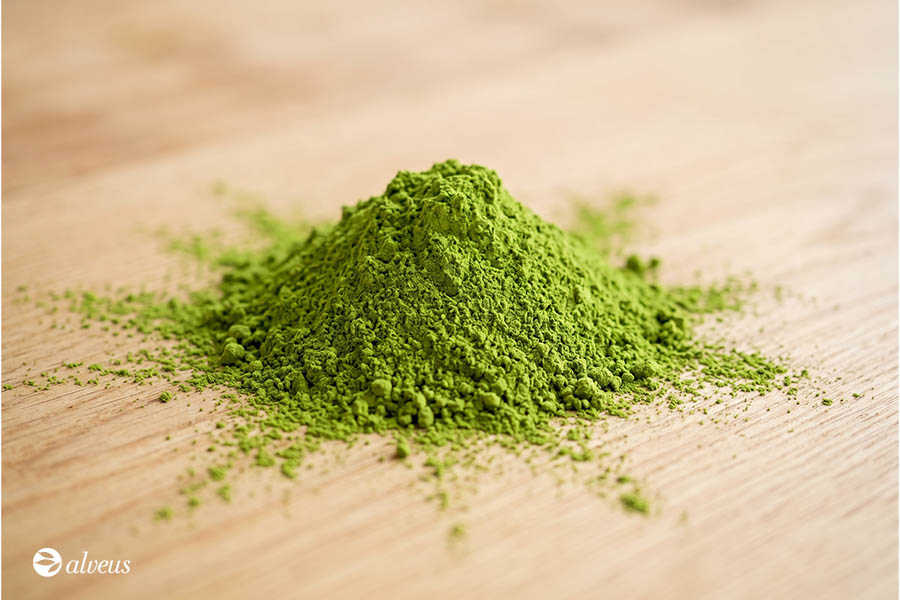
Alveus Organic Imperial Japanese Matcha, product code 80061
Premium ceremonial matcha represents the highest tier within this classification. It is the matcha designed for customers seeking a superior, more refined experience with greater sensory depth.
It is not simply a ‘more expensive’ Matcha. Its value lies in the quality of the raw material, the intensity and clarity of its colour, the fineness of the grind, its silky texture and the complexity of its notes. A good premium ceremonial Matcha typically offers a very vivid green colour, a fresh and elegant aroma, a very controlled bitterness and a rounder, sweeter and more persistent mouthfeel.
In the cup, it may reveal subtle vegetal notes, deep umami, hints of mild seaweed, tender spinach, delicate nuts, a creamy vegetable flavour, or even sweet nuances reminiscent of vanilla, white cocoa or a mild broth. The difference compared to other grades is particularly noticeable when prepared with water alone, without milk or sugar, as there are no other ingredients to mask its virtues or flaws.
This grade is designed for customers who are already familiar with Matcha and want to take it a step further. It also works very well as a gift or gourmet item.
When to recommend premium ceremonial Matcha
Recommend it to customers who already drink Matcha with just water and are looking for a higher quality. It is also a good choice for discerning customers, consumers of gourmet products or people who value the origin, the production process and the sensory experience.
It is not the most suitable grade for cooking or mixing with strong-flavoured ingredients. Using it in baking or in recipes with a lot of sugar would be a waste of some of its delicacy.
Ceremonial Matcha grade
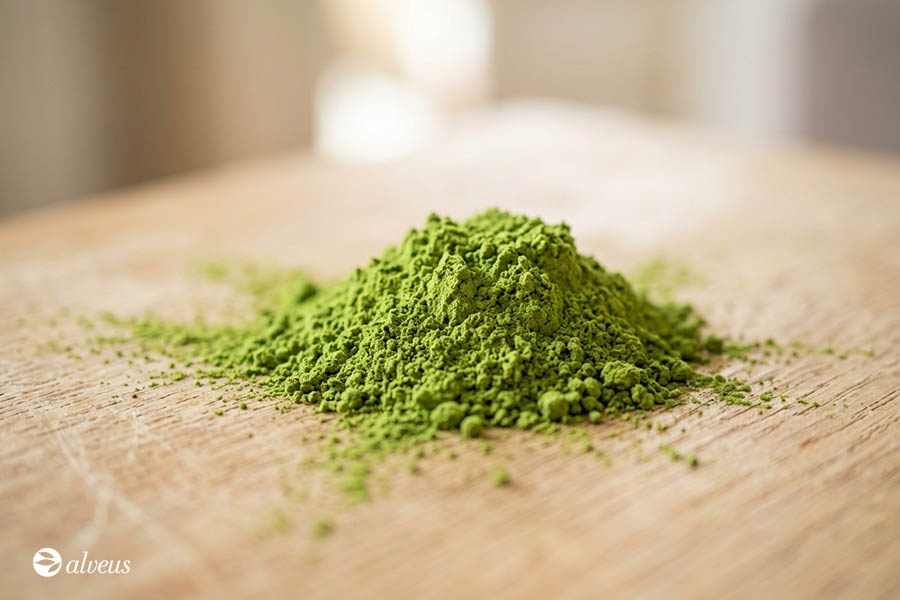
Hisui Organic Ceremonial Matcha, Alveus product code 89108
Ceremonial Matcha is the grade intended to be drunk with water alone, prepared in the traditional way with a chasen and chawan, or using any domestic method that treats the product with due respect. It is a high-quality option, yet more affordable than a premium ceremonial grade.
Its main virtue is balance. It should have a vibrant green colour, a fine texture, good suspension properties and a pleasant mouthfeel. It may exhibit fresh vegetal notes, tender grass, mild seaweed, nuts or a slightly sweet undertone. It may also have umami, although it will not usually reach the depth or elegance of a premium ceremonial grade.
For a shop, this grade is usually one of the most important staples. It is the Matcha you can recommend to a customer who asks: ‘I want a good Matcha to drink at home – which one would you recommend?’ It must be reliable, easy to recommend and good enough for the customer to understand the difference between a quality Matcha and a more basic one.
Ceremonial Matcha does not need milk or sugar to be enjoyed. In fact, the best way to appreciate it is whisked with hot water only – never boiling – to appreciate its colour, aroma, texture and balance. If the customer prepares it correctly, they should find a cup that is intense but not aggressive; vegetal but not harsh; with character but without overpowering bitterness.
When to recommend ceremonial Matcha
It is the right choice for customers who want to drink Matcha with water alone, to try a higher quality for the first time, or to establish a regular drinking habit. It is also suitable for those looking for a good-quality Matcha without paying the price of a premium ceremonial grade.
It can be used in lattes if the customer wants a more delicate result, but it should not be the first recommendation for cooking or baking. There are more suitable grades for those uses.
Premium Matcha Grade
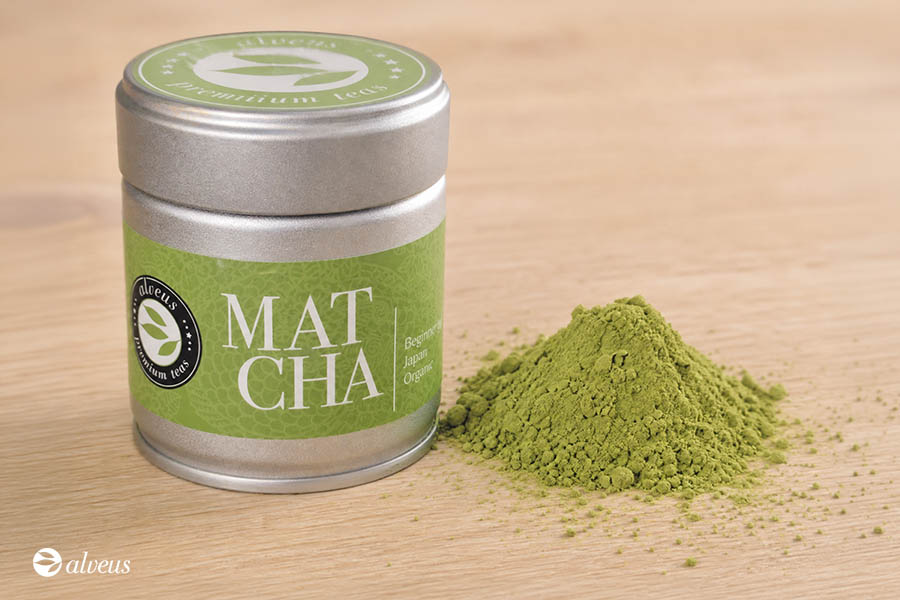
Alveus’s Japan Beginner’s Matcha BIO, product code 82934
This premium Matcha occupies a middle ground between ceremonial and culinary grades. It is a particularly interesting grade for shops as it meets a very common need among many customers who are looking for good-quality Matcha, but who will not necessarily always drink it with just water.
This grade works very well for daily consumption, for high-quality matcha lattes, for cold drinks, for simple recipes, or even for customers who are just starting to drink it on its own and are not yet looking for a cup as refined as a ceremonial one. For this reason, in some catalogues or brands it may appear under names such as ‘Beginner’, ‘Daily Matcha’, ‘premium grade’, ‘classic grade’ or ‘latte grade’.
It should not be confused with premium ceremonial matcha. Although both include the word ‘premium’, they serve different purposes. Premium ceremonial matcha is a higher-end variety intended for drinking on its own and appreciating finer nuances. Premium matcha, on the other hand, is a versatile grade, designed to offer good quality and performance across a range of uses.
In terms of sensory characteristics, a premium Matcha should retain an attractive green colour, a clean aroma and the right texture. It may have a more pronounced vegetal intensity and be slightly more bitter than ceremonial Matcha, but it should not taste flat, dull or excessively harsh. In a latte, this intensity can be an advantage, as it helps ensure the flavour of the Matcha is not lost when mixed with milk or a plant-based drink.
For tea shops, this grade is very useful as it allows them to cater for a mid-range price point. Some customers do not want a culinary-grade matcha because they perceive it as too basic, but those who do not need a ceremonial-grade matcha to make lattes or enjoy matcha with oat milk either. For them, premium matcha may be the most balanced recommendation.
Premium Matcha acts as a bridge. It can introduce customers to the world of high-quality Matcha without yet requiring them to follow a strictly ceremonial preparation method.
Culinary-grade Matcha
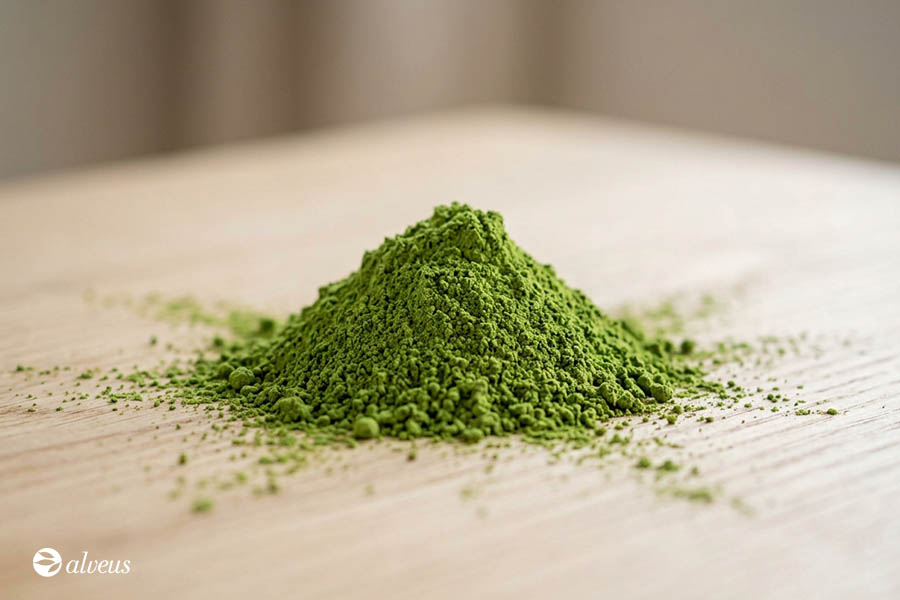
Organic Chinese Matcha tea for cooking, Alveus product code 89107
Culinary Matcha is designed to be mixed with other ingredients. It is the most suitable grade for cooking, baking, milkshakes, smoothies, ice cream, chocolates, sponge cakes, biscuits, doughs, creams and recipes where Matcha acts as an ingredient.
This does not mean that it is a Matcha of no value. It means that it serves a different purpose. A good culinary Matcha must have sufficient intensity to remain noticeable when combined with milk, plant-based drinks, sugar, flour, fat, fruit or chocolate. If a Matcha that is too delicate is used in cooking, its nuances are easily lost.
Compared to ceremonial or premium Matcha, culinary Matcha may have a less vibrant colour, a more pronounced vegetal profile and a greater presence of bitterness or astringency when consumed on its own with water. However, in a recipe, these characteristics can be balanced out and become an advantage.
Culinary Matcha can also offer a very interesting product rotation for shops. Many customers buy it to prepare recipes at home, to make cold drinks or to incorporate Matcha into their diet in a more casual way. It serves as a gateway into the category, especially for those who are not yet drawn to the traditional preparation method.
When to recommend culinary matcha
Recommend it to customers who want to cook, bake or prepare mixed drinks where matcha is not consumed on its own. It is also suitable for cafés, bakeries, restaurants or hospitality ventures that require good yield, colour and a recognisable flavour in recipes.
It is not the best option for a customer seeking a refined, clean and elegant experience with water. In that case, it is better to steer them towards a ceremonial or premium ceremonial matcha.
Why a tea shop should stock different grades of Matcha
A specialist shop should not offer just one type of Matcha for all purposes. A customer who wants to drink it on its own is not the same as one looking to make lattes or use it in cooking.
Offering different grades allows each product to be recommended more precisely. The premium ceremonial grade covers the top end of the range; the ceremonial grade is designed to be drunk with water; the premium grade offers versatility for everyday consumption; and the culinary grade works best in recipes and blended drinks.
This structure facilitates sales, prevents incorrect recommendations and enhances the customer experience. Furthermore, it caters to different consumer profiles and price points, making the category clearer and more profitable for both the customer and the shop.
How to explain the grades of Matcha tea to the end customer
The explanation should be simple, clear and focused on usage. There’s no need to start by going into all the technical details. First, it’s best to help the customer get their bearings.
An effective way to explain it would be as follows:
Premium ceremonial Matcha is the highest grade, designed for those seeking a superior experience when drinking it on its own. Ceremonial Matcha is also taken with water, but it is more accessible and perfect for regular, high-quality consumption. Premium Matcha is a versatile mid-range option, ideal for everyday use and for high-quality lattes. Culinary Matcha is designed for cooking, baking and mixed drinks.
If the customer then shows interest, you can go into more detail about the origin, shading, grinding, harvest, cultivars, or preparation. However, the initial explanation should focus on addressing their main need, which is to choose the right Matcha based on how they intend to use it.
It is also worth remembering that the grade name provides guidance, but does not tell the whole story. The true quality is appreciated in the cup, so a specialist shop should select Matcha based on its sensory qualities and not just its commercial label.