

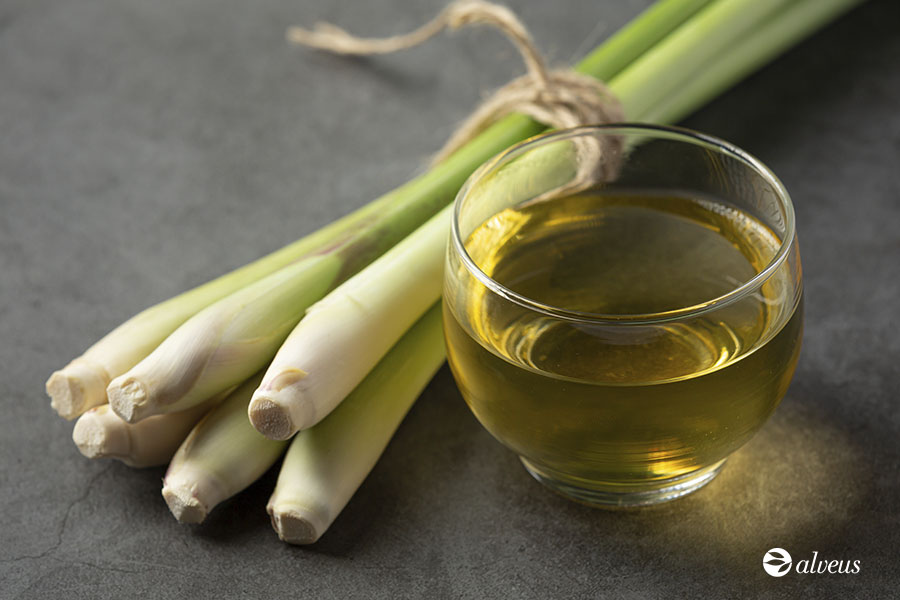
Lemongrass, also known as West Indian lemon grass or lemon grass, offers a clean, fresh citrus aroma without the acidity of lemon juice. This characteristic makes it a highly versatile ingredient for preparing herbal teas and creating balanced, aromatic, and enjoyable tea blends.
Although it is commonly found in Southeast Asian cuisine, lemongrass has carved out a niche for itself in tea shops, restaurant menus, and herbal tea catalogues.
Its bright profile means it can be used as a main ingredient or as a supporting note capable of adding freshness, bringing flavours together, and lightening intense blends.
What is lemongrass?
Lemongrass is an aromatic plant of the grass family, whose botanical name is Cymbopogon citratus. It grows in dense clumps, with long, narrow leaves that have slightly serrated edges.
It is native to tropical and subtropical climates, although it is now cultivated in various warm regions around the world.
It should not be confused with lemon verbena, whose botanical name is Aloysia citrodora, nor with lemon balm, Melissa officinalis. All three have aromas reminiscent of lemon, but they belong to different species and offer distinct sensory profiles.
Lemon verbena is generally more delicate, sweet, and fragrant. Lemon balm offers a milder, greener, and slightly minty citrus note. Lemongrass, on the other hand, has a more direct, fresh, and structured character, with a citrus presence that remains clearly evident in the infusion.
What does Lemongrass Taste Like?
The first aroma that comes to mind with Lemongrass is, inevitably, lemon. However, when tasted carefully, its profile reveals greater complexity.
Its aroma can be described as citrusy, green, and fresh. In the background, there are floral notes, a slightly minty sensation and hints of ginger and pepper.
On the palate, it lacks the harsh acidity of freshly squeezed citrus. Its flavour is aromatic and refreshing, with a clean finish that may exhibit very slight astringency depending on the dosage and infusion time.
This lack of acidity is one of its main advantages in beverage development. Lemongrass evokes the flavour of lemon without significantly lowering the pH of the preparation and without imparting the sour taste that might overpower other ingredients.
It also offers a sensation of freshness that is different from that of mint. Mint has a very distinct cool, mentholated note. Lemongrass creates a brighter, more citrusy sensation that is less overpowering and, often, easier to combine with other flavours.
Why does lemongrass have a lemony scent?
Citral helps to explain why lemongrass is so distinctly reminiscent of lemon, even though the plant does not belong to the citrus family. Alongside it are other aromatic components that contribute to its green, floral, and spicy notes.
These compounds are volatile and sensitive to factors such as heat, light, humidity and storage time. For this reason, the quality of the raw material, the drying process and storage have a direct influence on the flavour in the cup.
A well-selected Lemongrass should retain a distinct citrus aroma when the packet is opened. If the product smells only of dry hay or has a muted profile, it is likely to have lost a significant proportion of its aromatic oils.
Lemongrass for use as a herbal tea
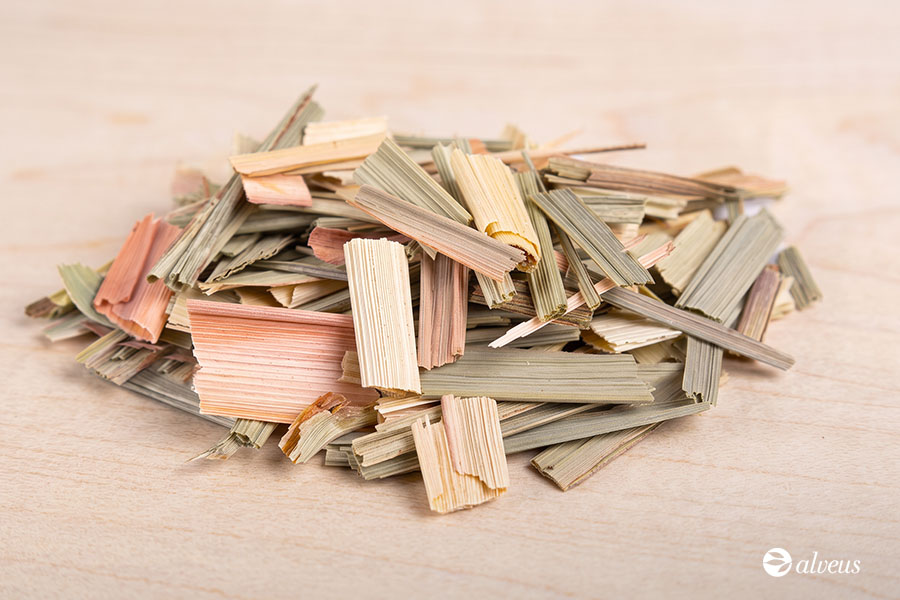
Organic Lemongrass, Alveus product code 82580.
Lemongrass can be brewed on its own as a herbal tea, without being combined with other herbs or spices. The result is a light, aromatic herbal tea that is naturally caffeine-free.
Its approachable flavour makes it a good choice for those looking for simple herbal teas, without overly pronounced floral notes, intense bitterness, or overpowering spices. It also works well as a drink for different times of the day and can be served either hot or cold.
Covering the cup or teapot whilst brewing helps to minimise the loss of the most volatile aromatic compounds. Once steeped, it is best to strain the herbal tea thoroughly.
A shorter infusion time yields a delicate and fresh flavour profile. A slightly longer infusion time enhances the citrus and herbaceous notes, although over-extraction can result in a drier flavour.
When served cold, lemongrass makes a particularly clean and refreshing drink. It can be prepared by brewing it hot and then cooling it, or by leaving it to steep for several hours in cold water. The latter option usually produces a smoother, rounder and less astringent flavour profile.
What Lemongrass brings as an ingredient in a tea or herbal tea blend
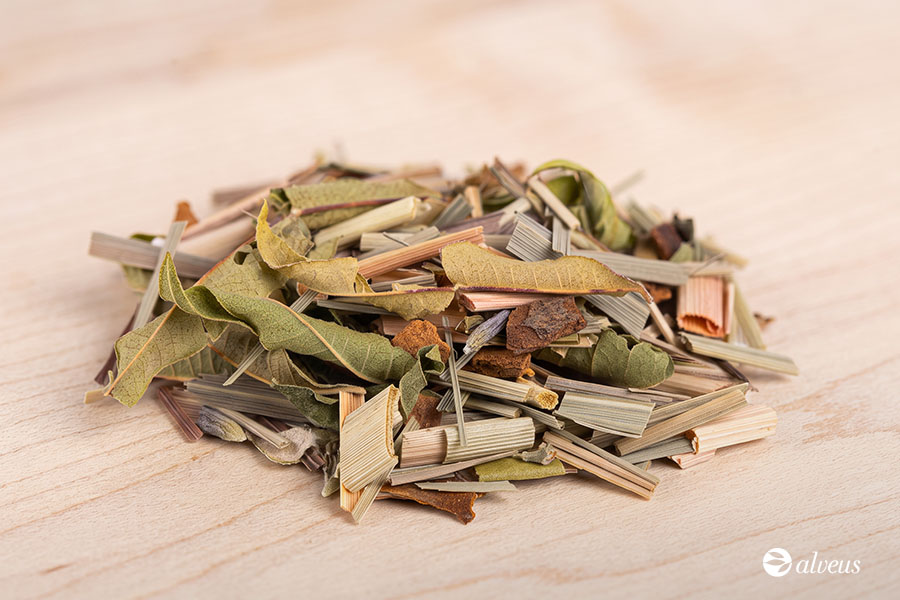
Amour Provence BIO, Alveus product code 82510.
As well as adding a lemon flavour, lemongrass can fulfil various sensory functions within a blend.
It bridges different ingredients
Lemongrass acts as a bridging ingredient. Its citrus profile pairs well with fruits, flowers, aromatic herbs, and spices, so it can bring together components that might otherwise seem unrelated.
In a blend of ginger and apple, for example, it smooths the transition between the warm spiciness and the fruity sweetness. In a blend with green tea and mint, it bridges the herbal notes with the fresh sensation. When paired with hibiscus and red berries, it adds brightness and helps the acidity come across as cleaner.
Enhances the aromatic release
The aromatic release is the first impression one gets upon opening a packet or bringing the cup close to one’s nose. Lemongrass can enhance this moment thanks to its volatile citrus compounds.
A carefully calibrated dosage provides a fresh and easily recognisable opening aroma. This is of particular interest in loose-leaf tea shops, where the aroma of the dry product plays a direct part in the shopping experience.
Promotes recognisable profiles
Consumers quickly recognise the scent of lemon. This familiarity helps to create blends that are easy to understand and communicate, even when they contain lesser-known ingredients.
Names and descriptions associated with freshness, citrus, summer, wellbeing, or lightness often find a consistent sensory foundation in Lemongrass. It does not need to be the dominant ingredient. In many formulations, it is sufficient for it to provide a clear and persistent base note.
It can add visual volume
Chopped lemon balm adds green or yellowish-green strands that give the blend a natural and light appearance. Its form can help increase the visual volume of the mixture, although the proportion should always be determined by sensory criteria rather than purely aesthetic ones.
If cut too long, it can hinder the product’s uniformity and cause some ingredients to separate during handling. For packaged products or loose blends, it is advisable to choose a particle size compatible with the rest of the components.
How lemongrass combines with different tea families
Green tea and lemongrass share a fresh, herbaceous character. Lemongrass can soften certain marine or slightly bitter notes and create a more approachable profile. In these blends, it is important to control the quantity so that the lemongrass does not overwhelm the tea’s delicate nuances.
In white tea, it should be used sparingly. Its citrus aroma can add brightness, but too high a proportion would mask the subtlety of the base. The result can be elegant and light, provided the lemongrass acts as an accompaniment rather than the absolute star of the show.
The structure of black tea allows for more noticeable quantities. Lemongrass creates a contrast with malty, toasty, or slightly astringent notes. It also allows for the creation of citrus blends that move away from the classic bergamot profile.
Floral and lightly oxidised oolongs find an interesting companion in lemongrass. This ingredient can prolong the fresh sensation and bring out the herbal nuances. In more roasted oolongs, it should be used with care, although it can work well alongside orange, peach, or mild spices.
And when it comes to rooibos, its natural sweetness and rounded character contrast with the freshness of lemongrass.
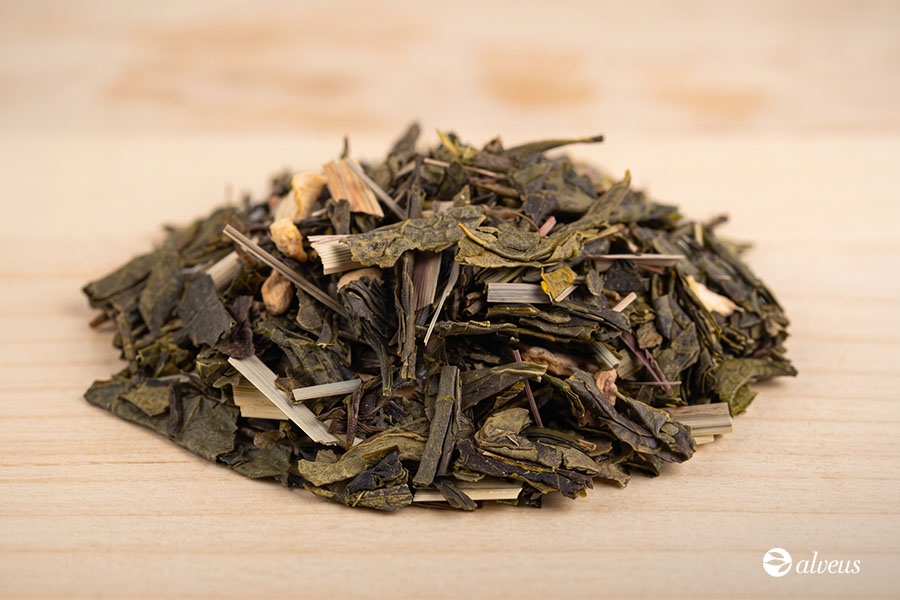
Organic ginger and lemon green tea, Alveus product code 83065.
Other uses for lemongrass beyond tea and herbal infusions
Lemongrass offers great potential in cold drinks, cold brews, mocktails, kombucha, and concentrates for the hospitality industry. Its citrusy profile pairs well with tropical fruits, cucumber, ginger, and various types of mint.
It can also be incorporated into syrups, jellies, ice creams, sorbets, and fruit desserts. In savoury cooking, it features in numerous soups, curries, marinades, and fish or chicken dishes.
Frequently asked questions about lemongrass
To round off, here are some of the most frequently asked questions we’ve received from our customers about lemongrass.
Does Lemongrass taste the same as lemon?
Not exactly. It is reminiscent of lemon peel and has a distinct citrus aroma, but it lacks the fruit’s acidity and juiciness. Its flavour profile is greener, more herbal, and slightly spicy.
Are lemongrass and lemon verbena the same thing?
No. Lemongrass is Cymbopogon citratus and belongs to the grass family. Lemon verbena is Aloysia citrodora. Both have a lemony aroma, but lemon verbena is usually sweeter and more fragrant.
Is lemongrass the same as citronella?
Not exactly. Although both belong to the genus Cymbopogon and share a citrus aroma, they are not the same plant. The lemongrass used in herbal teas and blends is Cymbopogon citratus (lemongrass).
Citronella, on the other hand, often refers to other species within the same genus, such as Cymbopogon nardus, which are more commonly used in perfumery or essential oils.
Can it be served cold?
Yes. Lemongrass retains its flavour well in cold drinks and pairs easily with fruit, ginger, mint, and hibiscus. It can be prepared hot first and then cooled, or by cold infusion.
Is it better to drink Lemongrass on its own or in a blend?
It depends on the kind of experience you’re looking for. On its own, it makes a clean and refreshing herbal tea. In a blend, it adds contrast, ties the ingredients together, and enhances the citrus flavour without introducing too much acidity.
Does Lemongrass taste the same as lemon?
Not exactly. It is reminiscent of lemon peel and has a distinct citrus aroma, but it lacks the fruit’s acidity and juiciness. Its flavour profile is greener, more herbal, and slightly spicy.
Are lemongrass and lemon verbena the same thing?
No. Lemongrass is Cymbopogon citratus and belongs to the grass family. Lemon verbena is Aloysia citrodora. Both have a lemony aroma, but lemon verbena is usually sweeter and more fragrant.
Is lemongrass the same as citronella?
Not exactly. Although both belong to the genus Cymbopogon and share a citrus aroma, they are not the same plant. The lemongrass used in herbal teas and blends is Cymbopogon citratus (lemongrass).
Citronella, on the other hand, often refers to other species within the same genus, such as Cymbopogon nardus, which are more commonly used in perfumery or essential oils.
Can it be served cold?
Yes. Lemongrass retains its flavour well in cold drinks and pairs easily with fruit, ginger, mint, and hibiscus. It can be prepared hot first and then cooled, or by cold infusion.
Is it better to drink Lemongrass on its own or in a blend?
It depends on the kind of experience you’re looking for. On its own, it makes a clean and refreshing herbal tea. In a blend, it adds contrast, ties the ingredients together, and enhances the citrus flavour without introducing too much acidity.