

Nutmeg is a small spice, but one with a long history in cooking. It is used in both sweet and savoury recipes, goes well with dairy products, pastries, vegetables and hot drinks, and can be sold either whole or ground.
Brought from Asia in the 16th century by the Portuguese and Dutch, it later became a staple spice in the kitchen.
In this article, we look at how to use it, how to store it and when to recommend each form.
What is nutmeg
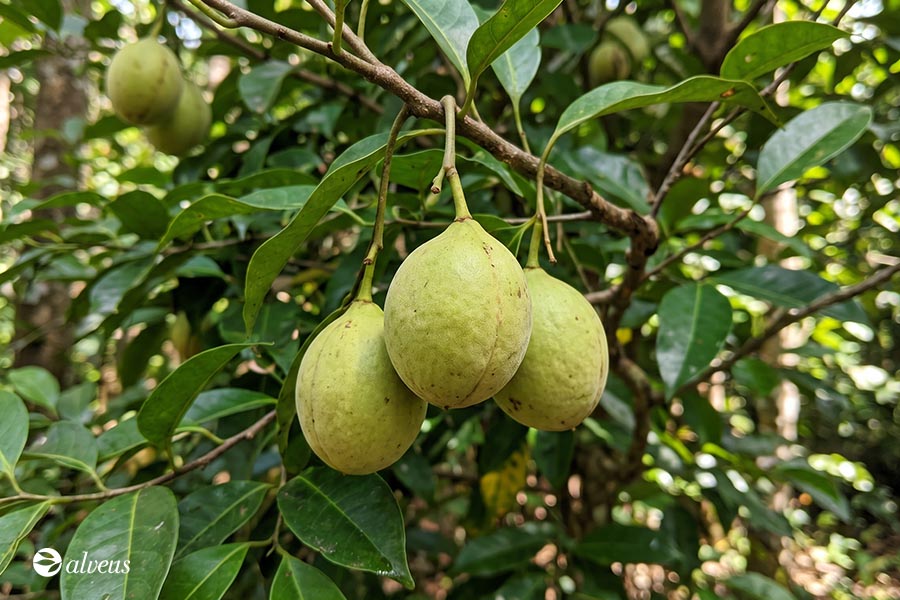
Nutmeg is the seed of the Myristica fragrans tree, a tropical species native to the Banda Islands in Indonesia, historically known as part of the Spice Islands.
For centuries, it was one of the most sought-after spices in maritime trade. Its value was due not only to its warm, intense aroma, but also to its ability to keep well, travel long distances and add depth to both sweet and savoury dishes. In fact, it became part of that small group of spices that shaped trade routes, colonial interests and great fortunes.
Today, however, it is an accessible spice and a common feature in home kitchens, bakeries, the hospitality industry and specialist shops. It is mainly sold whole or ground, two forms that serve different purposes, and it is worth knowing about to recommend it more effectively.
Cultivation and harvesting of nutmeg
The nutmeg tree is evergreen and grows in tropical regions, where it requires heat, humidity and well-drained soil. It is currently cultivated in countries such as Indonesia, Grenada, Sri Lanka, New Guinea and Malaysia, among others.
It usually grows to a height of between 10 and 12 metres, although under favourable conditions it can reach up to 20 metres. Furthermore, it is a slow-growing crop: the first fruits appear after approximately 7 or 8 years, and the tree reaches its peak yield upon maturity.
The fruit resembles a small apricot. When ripe, it splits open to reveal a seed covered by a fleshy, reddish husk. Two different spices are obtained from it: mace, which is the outer aril, and nutmeg, which is the inner seed.
After harvesting, the pulp is removed from the fruit, and the mace is carefully separated from the seed. The seed is then dried naturally or using controlled heat until the nut breaks free from its shell. Once this hard shell is broken, the nutmeg is obtained, which can be sold whole or ground.
What does nutmeg taste like?
Nutmeg has a warm, sweet, resinous and slightly camphor-like aroma. On the palate, it is intense, enveloping and somewhat woody, with hints of clove, mild pepper and certain sweet notes.
It is not a spicy spice in the usual sense, but it does have a distinct presence. A small amount is enough to flavour a sauce, a cream, or a pastry dough. That is why it is important to always recommend it in moderation, especially to customers buying it for the first time.
Its aromatic profile pairs very well with fatty and dairy ingredients. Hence, its traditional use is in béchamel, purées, gratins, white sauces, cheeses, custards, creams, fillings and hot drinks. It also works very well with winter vegetables, mild meats and cooked fruit.
Uses of nutmeg in savoury dishes, desserts, and drinks
In savoury cooking, nutmeg is mainly associated with creamy dishes. It is commonly used in béchamel sauce, croquettes, lasagna, cannelloni, gratins, mashed potatoes, vegetable soups and dairy-based sauces.
It also goes very well with spinach, cauliflower, cabbage, carrots, pumpkin, sweet potato and potato. In these cases, it is best to use it in small quantities, as its aroma can easily overpower the dish if too much is used.
In baking recipes, nutmeg is used in spiced sponge cakes, biscuits, pumpkin tarts, apple pastries, stewed pears, custard, rice pudding and creamy desserts.
It pairs very well with cinnamon, cloves, cardamom, ginger, vanilla, and allspice. That is why it features in many sweet blends inspired by European, British, North American and Eastern traditions.
That same warm profile also makes it a good fit for drinks. It can be used in hot chocolate, spiced coffee, punch, mulled wine, flavoured milk and herbal tea blends. In these types of preparations, it is best to add only a minimal amount, especially if using ground nutmeg, so that it complements the other ingredients without overpowering them.
When to use whole nutmeg or ground nutmeg
There are two main forms of nutmeg available on the market: whole and ground. A spice shop, or a dedicated spice section within a tea shop, should stock both forms, as each serves different purposes.
When to recommend whole nutmeg
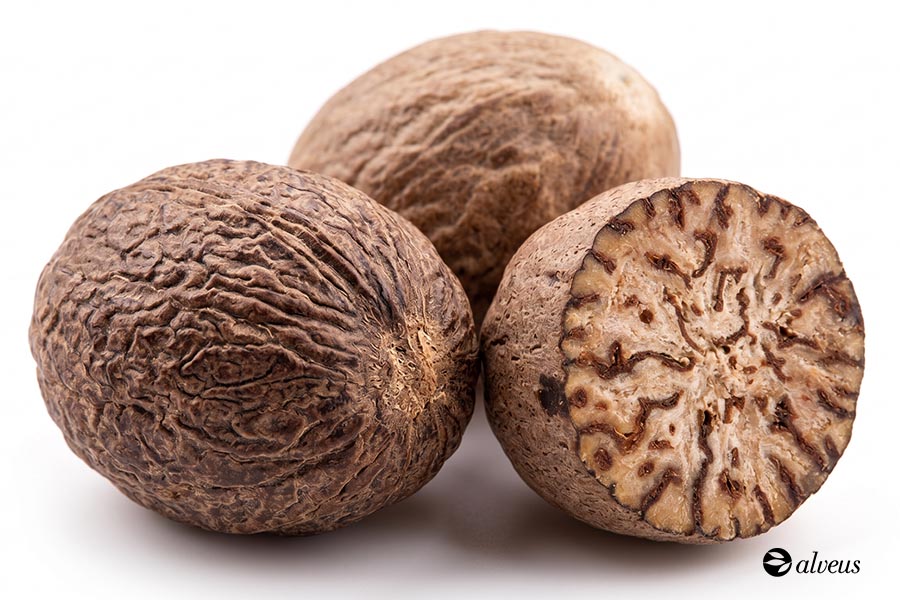
Organic whole nutmeg – Alveus ref. 50105
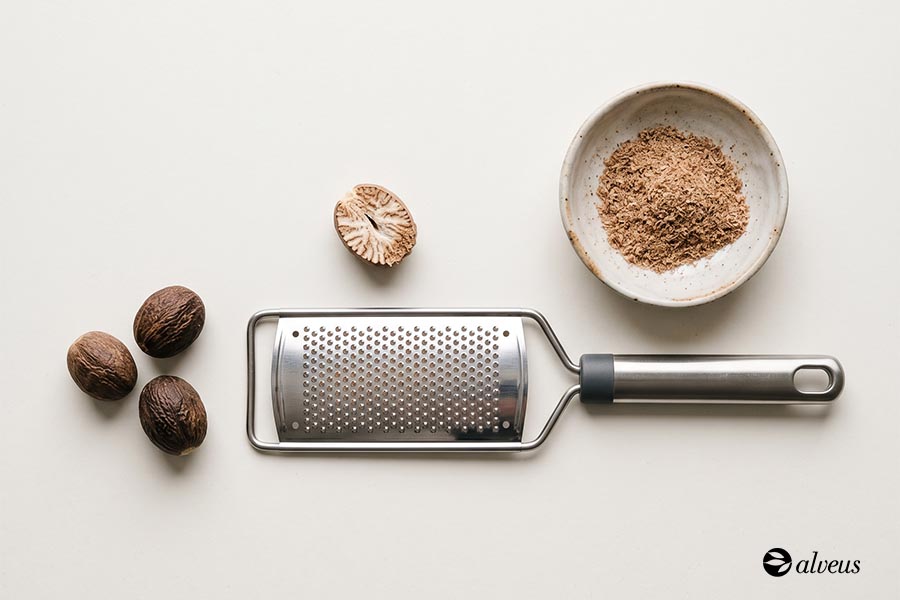
Whole nutmeg is the best choice for those seeking maximum aromatic intensity and a longer shelf life. As the seed remains whole, the essential oils are better protected, and the aroma is released the moment it is grated.
It is ideal for customers who cook with care, gourmet shops, signature restaurants, specialist cafés and consumers who appreciate the ritual of using whole spices. It is also a good recommendation for those who are already familiar with nutmeg and wish to enhance the aromatic quality of their recipes.
In-store, it can be sold alongside a small grater or with the advice that just a small amount needs to be grated over the dish. It works very well in purées, creams, béchamel sauce, stuffed pasta, cooked vegetables, hot drinks and freshly served desserts.
Whole nutmeg also has a visual advantage. It is an attractive, recognisable product with a rich history. Sold in bulk, it conveys naturalness and quality, something particularly valuable for high-street shops looking to stand out from supermarket shelves.
When to recommend ground nutmeg
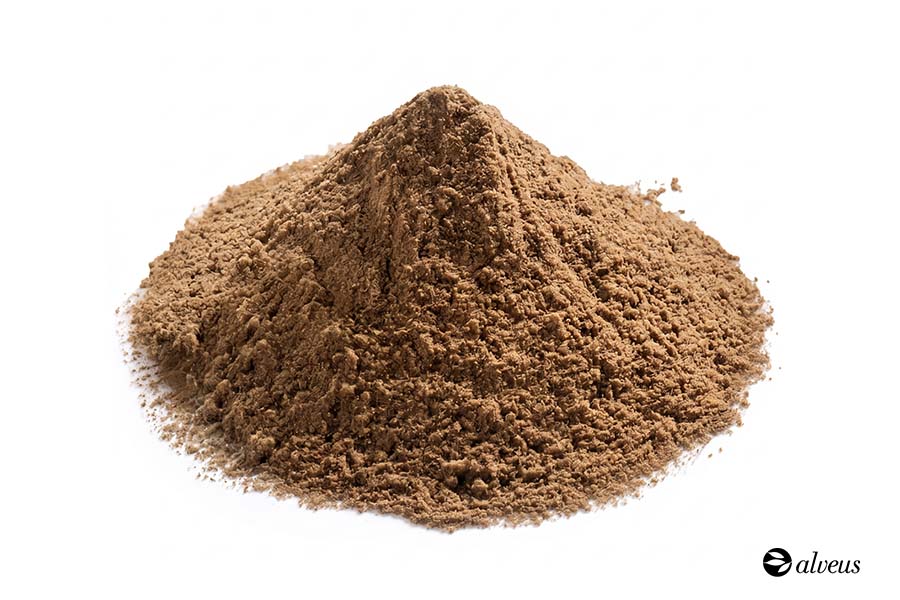
Organic ground nutmeg – Alveus ref. 50049
Ground nutmeg is the most practical option. It is ready to use, easy to measure and ideal for high-volume kitchens, production facilities, manufacturers, private labels and customers seeking convenience.
It is particularly recommended for spice mixes, baking mixes, tea blends, standardised recipes, sauces, processed products and quick home use. In the hospitality sector, it helps maintain consistency in recipes, which is important when several people are working in the same kitchen.
You should explain to your customers that, as it is ground, it should be stored in a tightly sealed container, away from light, heat, and moisture. It is also advisable to buy quantities that match your business’s actual turnover, so that the product retains its aromatic profile better.
How to sell nutmeg in your business
Nutmeg sells best when you explain it. Many consumers are familiar with it, but associate it solely with béchamel sauce or a few sweet recipes. That is where the opportunity lies for the specialist shop.
A simple way to recommend it is to link it to everyday uses: a pinch in mashed potatoes, in a pumpkin soup, in sautéed spinach, in homemade croquettes or in a rice pudding. These are easy to picture and help customers buy with a recipe in mind.
It also works very well to present the two formats together. The whole nut can be described as the most aromatic and long-lasting option; the ground version, as the most convenient for everyday use.
If your business is online, it’s a good idea to include clear recommendations on the product page: main uses, suggested quantities, storage, and pairings. Nutmeg is a small spice, but one with great potential for cross-selling. It can be featured alongside cinnamon, cloves, cardamom, ginger, pepper, baking mixes, winter blends and spiced teas.
Important: Precautions for using nutmeg
Nutmeg should always be used in small quantities. In cooking, it is customary to add just a pinch or a few gratings. Its aromatic intensity means that no more is needed.
Furthermore, in large quantities, it can be problematic, so it should not be considered a medicinal product or recommended for therapeutic purposes. For the professional sector, it is wisest to market it as a culinary spice and focus on its gastronomic value.