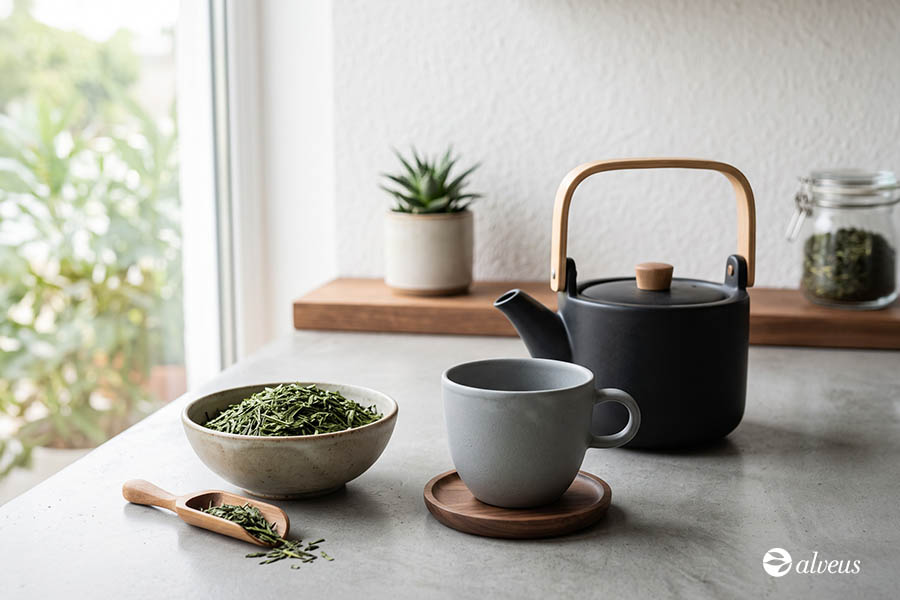


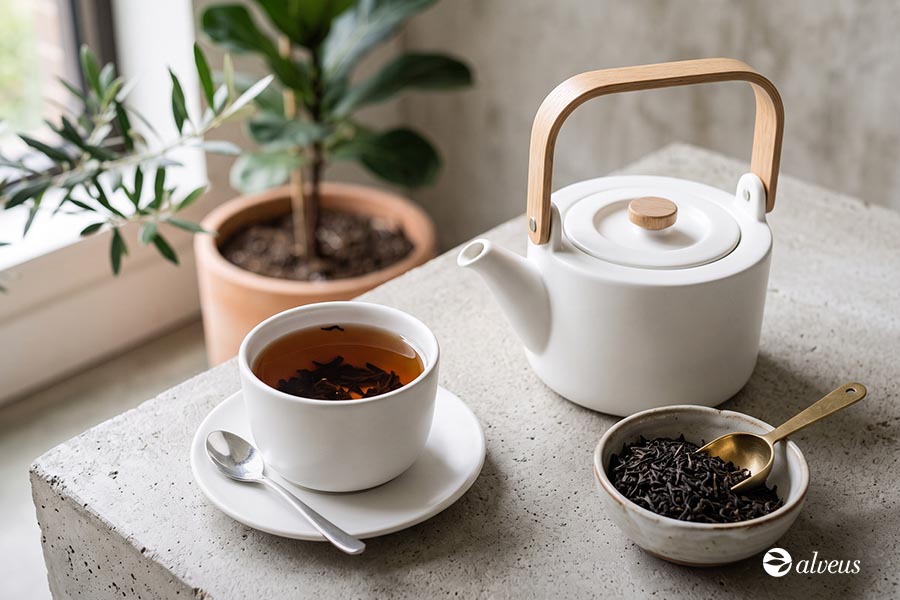
Black tea is the most widely consumed type of tea in much of the Western world, but behind that name lies an enormous diversity. An intense, malty Assam, a floral Darjeeling, a silky Keemun, or a citrus Ceylon may seem like entirely different drinks, even though they all come from the same plant.
Its origin, cultivar, harvest, processing, and method of preparation determine the colour, aroma, body, and astringency of each cup. Here are the answers to the most frequently asked questions about black tea.
What is black tea?
Black tea is a type of tea made from the leaves of Camellia sinensis that have been withered, rolled or cut, oxidised, and finally dried.
It comes from the same plant species as green tea, white tea, yellow tea, oolong, and dark teas. What distinguishes these categories is not the plant itself, but the treatment the leaves undergo after harvesting.
In China, it is known as Honggg cha, which means ‘red tea’, referring to the coppery or reddish colour of the infusion. In the West, the name ‘black tea’ was adopted because of the dark appearance of the dried leaves.
What does black tea taste like?
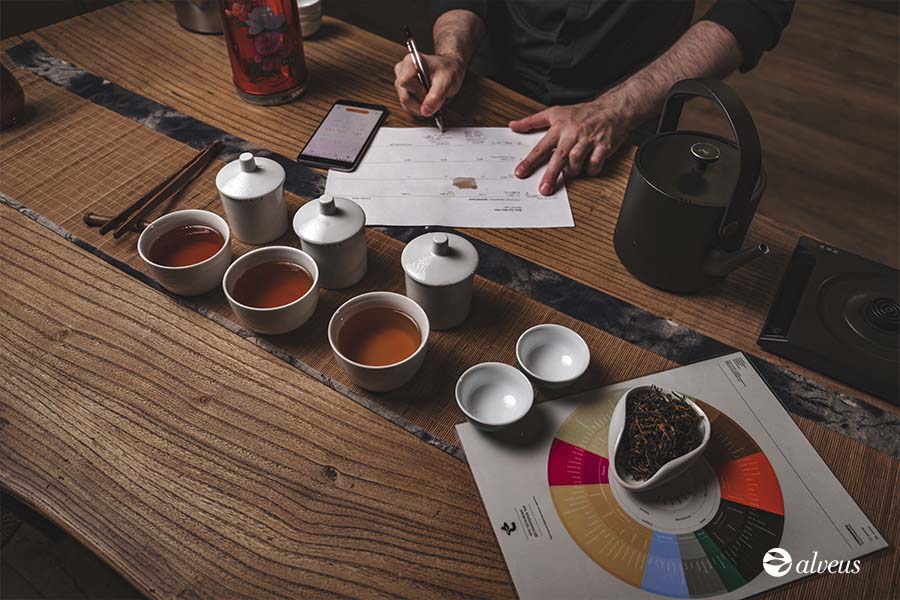
Black tea can offer one of the widest ranges of aromas in the world of tea. Depending on its origin and production method, it may be reminiscent of:
- Malt, cereal, toast, or biscuit.
- Honey, caramel, molasses, or brown sugar.
- Cocoa, dark chocolate, or mild coffee.
- Muscat grapes, plums, apricots, raisins, or red berries.
- Rose, orchid, and other flowers.
- Wood, tobacco, leather, or damp woodland.
- Cinnamon, pepper, cloves, or ginger.
- Citrus, menthol, or resin.
- Smoke, charcoal, or burnt wood.
A good black tea doesn’t necessarily have to be strong. It can be light and floral, sweet and silky, malty and full-bodied, or intensely smoky.
How is black tea prepared?
The preparation of black tea depends on the type of leaf, but as a general rule, use between 2 and 3 grams per cup (250 ml) with water at between 90 and 100 °C, and steep for 2 to 4 minutes.
More delicate teas, such as Darjeeling, require a lower temperature and a shorter steeping time, whilst more intense teas or those intended to be drunk with milk can withstand hotter water and a longer steeping time. It is important to use fresh, good-quality water, as this directly affects the flavour.
Whole-leaf teas can be steeped several times, whilst finely cut or CTC-style teas are usually best enjoyed as a single brew.
How is black tea produced?
Although there are numerous regional variations, the production process generally comprises five main stages
Harvest. Buds and young leaves are picked, either by hand or mechanically.
Wilting. The leaves lose some of their moisture and become pliable. For some black teas, this process can take between 12 and 20 hours.
Rolling or cutting. The leaves are rolled, pressed, or broken up to rupture some of their cells. This allows the enzymes and polyphenols to come into contact with oxygen.
Oxidation. The leaves are kept under controlled conditions of temperature, humidity, and ventilation. During this phase, they change colour and develop many of the aromas, flavours, and pigments characteristic of black tea.
Drying and grading. The application of heat stops the oxidation process and reduces moisture content to stabilise the product. The tea is then graded according to the size and appearance of its particles.
In this post, we tell you all about black tea production in detail.
Why is black tea so dark?
The dark colour of black tea develops mainly during oxidation.
As the leaf cells break down, the enzyme polyphenol oxidase promotes the transformation of catechins into new compounds. These include theaflavins, which are associated with golden hues, vibrancy, and some astringency, and thearubigins, which contribute coppery, reddish, and brown colours, as well as body and roundness.
As a result, the leaf changes from its initial green colour to coppery tones during processing and ends up with a dark brown or black appearance. The infusion, however, is not usually black, but rather amber, reddish, mahogany, or coppery.
What are the main types of black tea?
Black tea can be classified by origin, processing style, tea garden, harvest, or sensory profile. Among the best-known families are the following:
Black teas from China. These include Qimen or Keemun, Dian Hong from Yunnan, Zheng Shan Xiao Zhong (known outside China as Lapsang Souchong), Jin Jun Mei, and other styles from Fujian, Anhui, and Yunnan.
Black teas from India. Notable examples include Assam, Darjeeling, Nilgiri, Dooars and Kangra. Each region produces very different profiles. Those from southern India are ideal for creating blends.
Teas from Sri Lanka or Ceylon. These are often classified by region and altitude, such as Nuwara Eliya, Dimbula, Uva, Kandy, Ruhuna and Sabaragamuwa.
African black teas. Kenya is the best-known source, although they are also produced in Rwanda, Malawi, Uganda, Tanzania, Burundi, Mozambique, and other countries.
Teas from Nepal. Some are reminiscent of certain Darjeeling teas, but they have their own distinct identity, and production is becoming increasingly specialised.
Blends and flavoured teas. English Breakfast, Irish Breakfast, Earl Grey and chai are commercial blends or styles usually made from one or more black tea bases.
Which are the most important black tea-producing countries?
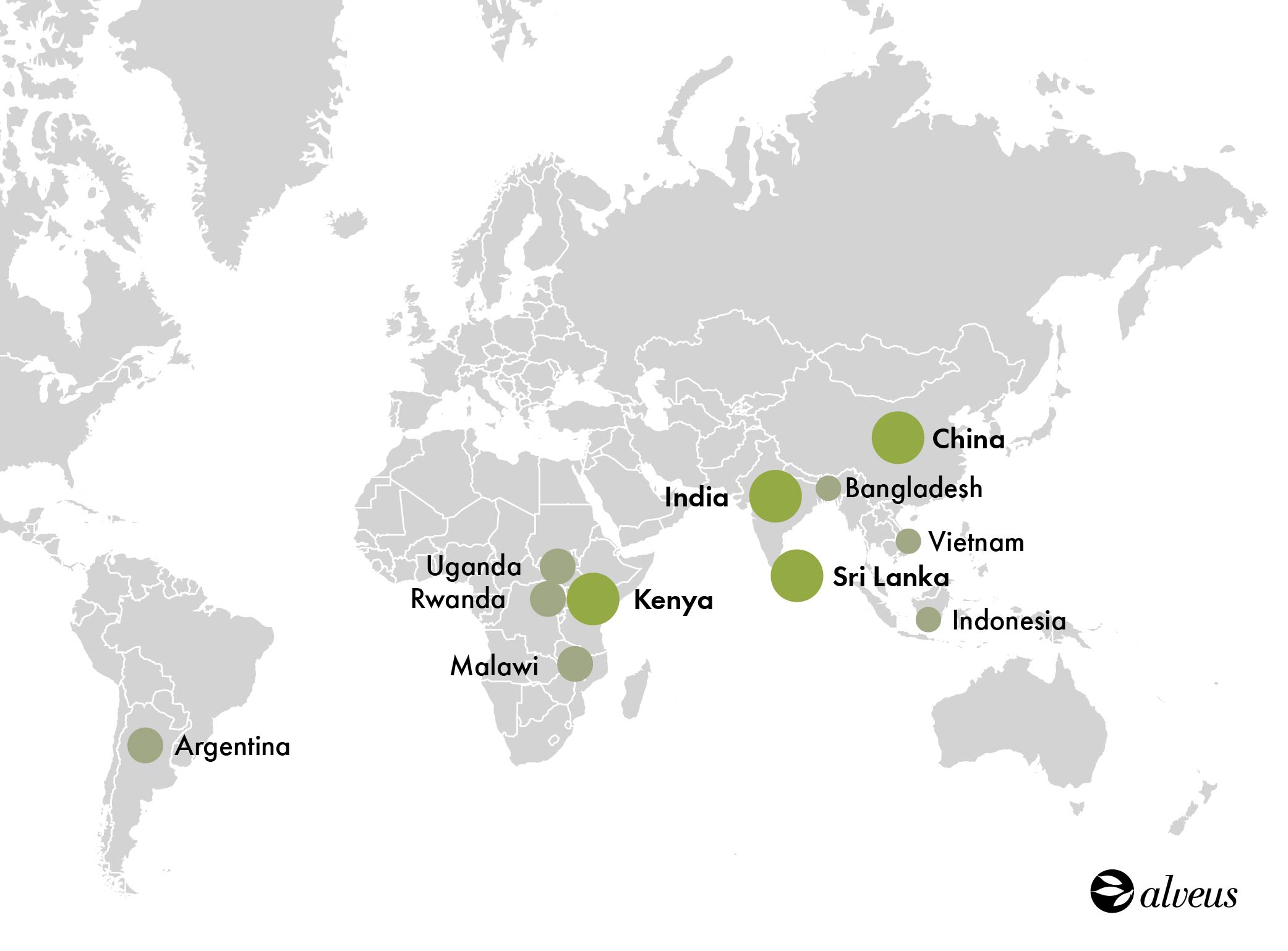
China, India, and Kenya currently lead the world in total tea production. They are followed by Turkey, Sri Lanka, Vietnam, and Indonesia, although each country allocates different proportions of its harvest to black tea, green tea, or other categories. Data from the International Tea Committee put China’s production in 2024 at around 3,740 million kilograms of tea, India’s at 1,304 million, and Kenya’s at around 598 million.
When considering black tea specifically in the context of international trade, India, Kenya, and Sri Lanka are particularly essential. Kenya is one of the major exporters of black tea, whilst a large proportion of Turkey’s production is consumed domestically. Although China is the world’s largest tea producer, it devotes a considerable proportion of its production to green teas and other categories.
Bangladesh, Indonesia, Vietnam, Uganda, Malawi, Rwanda, and Argentina are also significant players.
What do OP, BOP, FOP, FTGFOP, and SFTGFOP mean in relation to black tea?
These abbreviations refer to grading systems used mainly in India, Sri Lanka, Nepal, and some African countries. They primarily describe the appearance, particle size, and the presence of buds.
Do black tea grades indicate its quality?
Not necessarily. Grades primarily indicate the size, appearance, and physical composition of the leaf, not the overall sensory quality.
An FTGFOP leaf may be visually beautiful and contain numerous buds, but that does not guarantee that its aroma, freshness, balance, or length will be exceptional. Similarly, a well-crafted BOP or CTC can produce a superb cup for its intended purpose.
Why are some black teas astringent or bitter, and how should they be prepared?
Astringency and bitterness are not the same thing.
Bitterness is a flavour. In tea, it is associated, among other compounds, with caffeine and certain polyphenols.
Astringency causes a sensation of dryness, tightness, or roughness in the mouth. It occurs when certain polyphenols interact with proteins in saliva.
A certain degree of astringency can add vibrancy, structure, and a refreshing sensation. It becomes a problem when it completely dominates the cup.
Common causes of an excessively bitter or astringent brew are:
- Using too much tea.
- Steeping the tea for too long.
- Using water that is too hot for a delicate tea.
- Leaving the leaves in the cup after the recommended steeping time.
- Brewing a very broken grade as if it were whole leaves.
- Boiling the leaves directly for too long.
Can black tea be drunk with milk, sugar, or lemon?
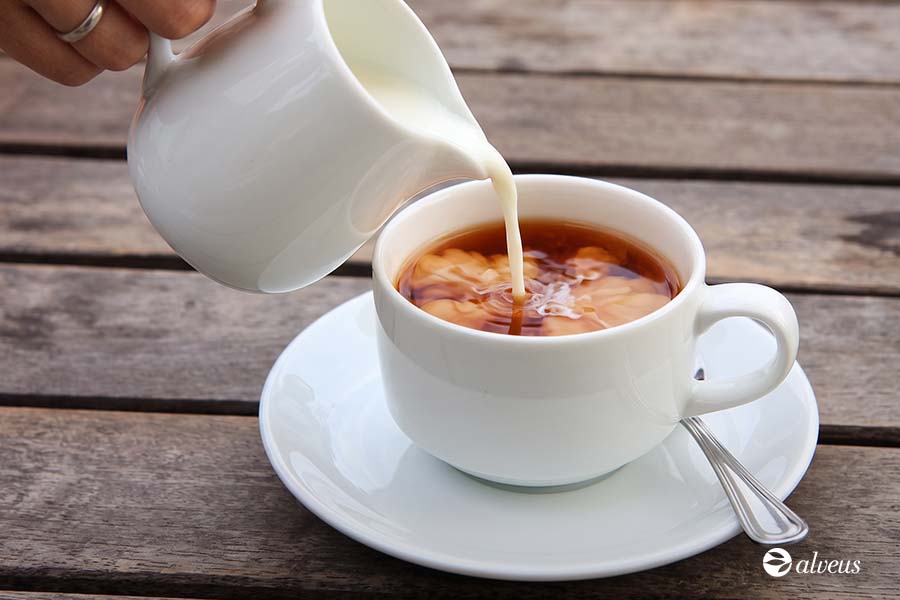
Yes, although not all black teas react in the same way.
Milk pairs particularly well with Assam, Kenyan CTC, some Ceylons, Irish Breakfast, English Breakfast, and masala chai. These teas have enough body and structure to ensure that the milk does not completely mask their flavour.
Delicate Darjeelings, fine Qimen, Dian Hong, and other complex teas are usually best enjoyed on their own, although the final choice always depends on personal taste.
Sugar or other sweeteners soften the astringency and can balance very intense blends, but they also mask subtle nuances. It’s best to add a small amount first before deciding whether the tea needs more. Even so, we recommend enjoying teas without adding sugar.
Lemon works well with Ceylon, some Chinese teas, and blends for iced tea. It should not be combined with milk, as the acidity can cause the milk proteins to curdle.
How much caffeine is there in black tea?
A cup of black tea usually contains approximately 30 to 60 milligrams of caffeine, although there can be considerable variation. However, this is only a general estimate, as it depends on various factors such as the tea variety, the proportion of young leaves, and, above all, the method of preparation.
What are the properties and benefits of black tea?
Black tea provides caffeine, L-thiamine, and polyphenols, notably theaflavins and thearubigins.
Among its best-studied effects are the following:
- Attention and alertness. Controlled trials have observed improvements in certain attention tests and in the perception of alertness after drinking black tea. These effects are mainly related to caffeine and its interaction with other components of the tea.
- Vascular function. Some studies have found small improvements in vascular markers and modest reductions in blood pressure with regular consumption. In this regard, the European Food Safety Authority (EFSA) has assessed the relationship between caffeine and cardiovascular function as part of its safety assessment of consumption among the European population.
- Cardiovascular health. Reviews of observational studies find associations between moderate tea consumption and a lower risk of certain cardiovascular problems and mortality. However, an association does not prove that tea is the direct cause of the effect. The EFSA and other European public health bodies point out that these results should be interpreted within the context of overall diet and lifestyle.
Black tea should be regarded as a drink that can form part of a healthy diet, preferably without sugar. It is not a medicine and does not replace treatment for high blood pressure, high cholesterol, diabetes, or other diseases.
When should black tea not be consumed?
There is no general ban for healthy people, but it is advisable to avoid or limit it in certain situations:
- Close to bedtime, as caffeine can affect sleep;
- with iron-rich meals if there is a risk of anaemia, as it can reduce iron absorption;
- when it causes symptoms such as nervousness, palpitations, or digestive discomfort in sensitive individuals;
- or if a healthcare professional recommends limiting caffeine intake due to pregnancy, illness, or medication.
Is black tea good for triglycerides?
There is no strong evidence that black tea significantly reduces triglycerides.
A systematic review of clinical trials in people with hypercholesterolemia found no significant differences between black tea and a placebo in terms of triglycerides, total cholesterol, LDL, or HDL. The average difference observed in triglycerides was virtually zero. (See study here)
Another review of trials involving green and black tea also failed to confirm a consistent reduction in blood lipids in the short term.
Drinking unsweetened black tea can be a good substitute for soft drinks or sugary drinks, which may well be beneficial as part of an overall healthy diet. However, it should not be marketed as a product capable of reducing triglyceride levels on its own.
Does black tea increase cortisol?
The answer is not a simple yes or no.
Caffeine on its own can temporarily increase cortisol secretion, particularly in people who are not used to it or when high doses are consumed. Tolerance reduces part of this response, although it may not eliminate it.
However, black tea also contains L-theanine and polyphenols. In a randomised, double-blind, controlled trial, six weeks of black tea consumption did not increase the subjective stress response and resulted in lower post-task cortisol levels than the placebo, as well as a greater sense of relaxation during recovery. The study can be found here: https://pubmed.ncbi.nlm.nih.gov/17013636/
It cannot, therefore, be stated that black tea chronically increases cortisol levels. The response depends on the dose of caffeine, habituation, the time of day, stress, sleep, and individual sensitivity.
Is oolong tea a type of black tea?
No. Oolong and black tea are two different categories of tea.
Both come from Camellia sinensis and allow oxidation to take place, but this is managed differently.
Oolong is a semi-oxidised or partially oxidised tea. Black tea is allowed to oxidise much more extensively before drying.
There is no universal percentage that distinguishes the two categories. The classification depends on the process as a whole, not just on a single oxidation figure. A dark oolong may look similar to a black tea, but it will retain an entirely different production process, aromatic structure, and identity.
What is the difference between black tea and Earl Grey?
Black tea is a category of tea. Earl Grey is a black tea flavoured with bergamot, in its classic form.
Is Darjeeling black tea or green tea?
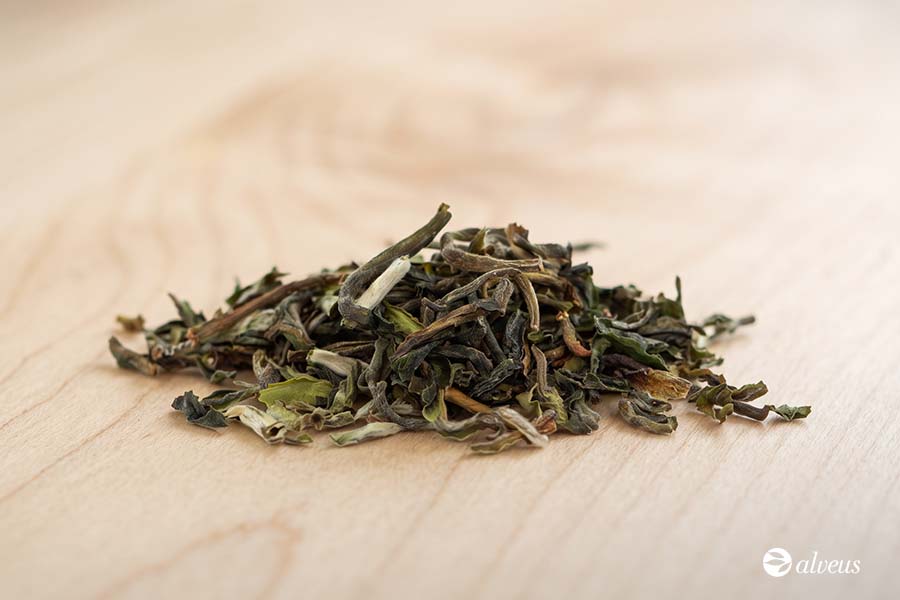
Darjeeling FTGFOP1 Singell DJ3/2026 Airfreight Organic, Alveus product code 80088
Darjeeling is a geographical origin, not a processing category.
Most traditional Darjeeling is marketed as black tea. However, green, white, and oolong teas are also produced in the region.
Confusion arises particularly with first flush teas. Some undergo relatively short oxidation and retain numerous green hues, floral aromas, and a pale infusion. From a strictly technical perspective, certain batches resemble a light oolong. Nevertheless, the industry and commercial tradition generally classify them as Darjeeling black teas.
Therefore, the category should not be determined by looking solely at the colour of the leaves. It is necessary to be aware of the processing method stated by the producer.
Which black tea is best suited for making iced tea?
For a classic, clean, and refreshing iced tea, Ceylon and Nilgiri teas usually work particularly well. They have a liveliness, citrus or floral notes, and sufficient body without being overly heavy.
The choice can be tailored to the desired style:
- Ceylon or Nilgiri: a clean, bright, and refreshing iced tea.
- Assam or Kenya: an intense brew, suitable for sugar, lemon, or milk.
- Earl Grey: a citrus and aromatic profile.
- Darjeeling or Qimen: a more delicate, gastronomic iced tea.
To prepare it hot, use around 8–10 grams per litre, steeping for 3 minutes before cooling rapidly with ice.
For cold brewing, use around 8–12 grams per litre and leave the container in the fridge for 6 to 10 hours. Cold brewing tends to produce less bitterness and a smoother texture.
Is chai always black tea?
No. The word ‘chai’ simply means ‘tea’ in Hindi and other languages of the region. What is commonly called ‘chai’ in the West is, more accurately, ‘masala chai’, meaning tea with a blend of spices. However, there is no single recipe. It can be made with other teas and even sold as a spice blend without Camellia sinensis.
Can you drink black tea during pregnancy?
Yes, but you should monitor your total caffeine intake throughout the day. The EFSA states that up to 200 mg of caffeine per day from all sources does not pose a risk to the foetus during pregnancy (EFSA, 2015: https://www.efsa.europa.eu/en/efsajournal/pub/4102). The American College of Obstetricians and Gynaecologists also recommends not exceeding this amount.
Caffeine is found not only in black tea, but also in coffee, chocolate, cola drinks, energy drinks, and some medicines, so the total daily intake must be added up. A cup of black tea can contain approximately 30 to 60 mg of caffeine, depending on the type and how it is prepared.