

Some teas are sold based on their reputation, while others need to be explained to understand their true value. And undoubtedly, Kukicha belongs to the latter group.
At first glance, it catches the eye due to its appearance, which is very different from other teas, as it is made from fine stems. But that is precisely where its main appeal lies. Kukicha will enable you to discuss in your business the benefits of the plant, its sensory profile, smoothness, and lower astringency, in a very accessible way, to introduce your customers to Japanese teas.
In this article, we’ll look at what Kukicha tea is, how it’s made, what its profile is in the cup, how to prepare it correctly… in short, everything you need to know to sell it successfully in your tea business.
What is Kukicha tea
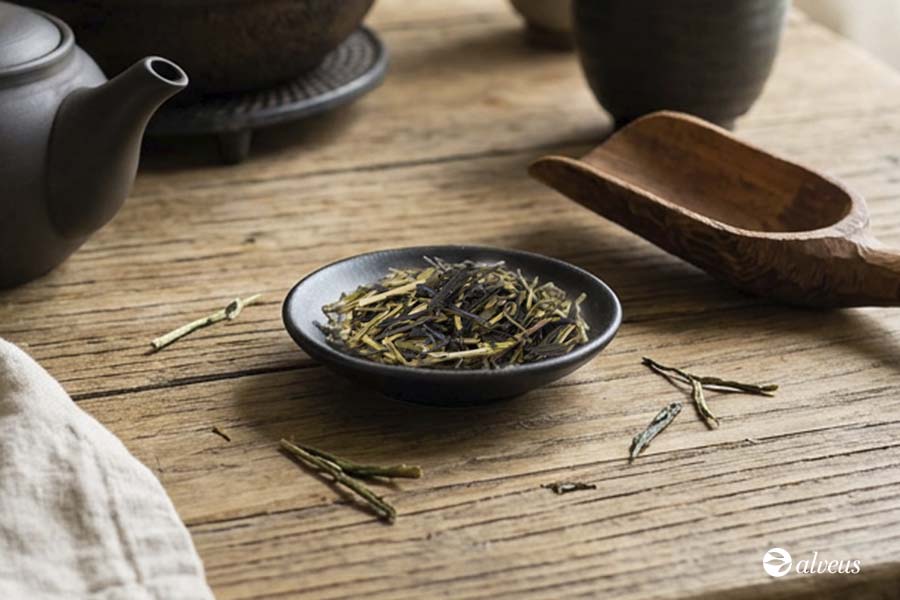
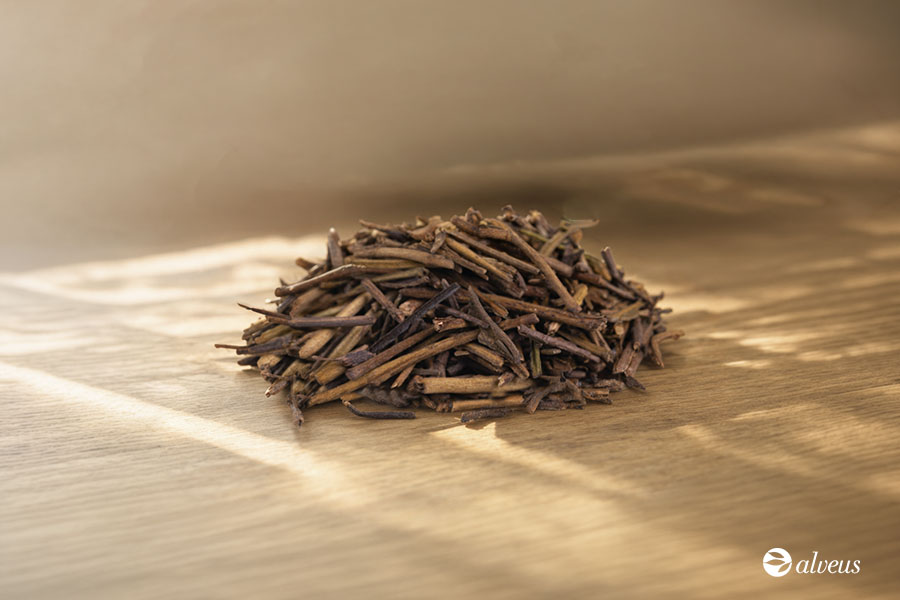
Organic Japanese Kukicha – Ref. 82534 from Alveus
Kukicha is a Japanese green tea made mainly from stems, petioles, and small parts of the tea plant that are separated during the refining process of other Japanese teas, particularly bancha, sencha, kabusecha or gyokuro.
At first glance, it may seem like an inferior tea, as it is not made solely from tender leaves. However, that view is too simplistic. In Japan, where making the most of raw materials and the precision of refining are part of tea culture, the stems are not necessarily worthless waste. When carefully selected and processed, they yield a cup with character: smooth, sweet, vegetal, and with moderate astringency.
Kukicha may also appear under other names, such as bocha or ‘stick tea’. When it comes from gyokuro production, it is often called karigane, a finer, umami-rich, and more elegant version.
How Kukicha is made
To understand Kukicha, one must look at the Japanese green tea process. After harvesting, the leaves are steamed to halt oxidation, then rolled and dried. In a later stage, the tea is refined, sorted, and separated into different fractions: leaves, stems, small fragments, dust, and buds.
This separated material is not all treated in the same way. This gives birth to categories such as konacha, made up of small particles; mecha, made from buds; and kukicha, made from stems.
The quality of Kukicha depends greatly on the tea from which it is made. A simple Kukicha made from a basic sencha is not the same as a Karigane made from good-quality gyokuro or kabusecha. In the first case, we will have a light, vegetal, and ‘flatter’ cup. In the second, the profile will be sweeter, more umami, creamier, and with greater aromatic depth.
Roasted Kukicha is also available. In this case, the heat transforms the green, vegetal profile into a warmer cup, with hints of cereal, hazelnut, toast, soft wood or light caramel.
Roasted Kukicha can be very appealing to customers looking for a low-caffeine tea that is mild and pleasant for the afternoon.
Organic roasted Japanese kukicha – Ref. 83103 by Alveus
Tasting notes for Kukicha tea
Kukicha usually produces a clear, smooth, and very approachable cup. When dry, before brewing, it may show a mixture of yellowish or pale green stems with fragments of green leaves. The better the quality of the tea from which these stems are taken, the finer, cleaner and more balanced the cup will be.
On the nose, green Kukicha may be reminiscent of sweet corn, sweet grass, mild vegetables, nori, light butter, fresh almond, or even a very delicate fruity note. On the palate, it is usually round, medium-light in body, with little harshness and a very pleasant vegetal sweetness.
The astringency, when present, is usually more moderate than in many senchas. This makes it a particularly welcome tea for those new to Japanese green tea. It is not as demanding on the palate as a gyokuro, nor is it as intense as some deep senchas or fukamushi.
In roasted versions, the character changes. The colour of the infusion becomes more golden or light amber; the aroma warms up, and notes of cereal, nuts, puff pastry, clean wood, and soft caramel emerge. It has a less marine and less vegetal profile, but is very comfortable, enveloping, and easy to drink.
How to brew Kukicha correctly
As with all teas, and especially green tea, you must pay close attention to the brewing parameters, particularly the steeping time and water temperature. If these are excessive, Kukicha loses its sweetness and develops an unnecessary bitterness.
For a standard green Kukicha, a good guideline is to use between 3 and 4 grams per 200 ml of water, at a temperature of 70 to 80 °C, and to steep for 1½ to 2 minutes. If you prefer a lighter cup, you can lower the temperature slightly or reduce the steeping time.
For a Karigane made from gyokuro or kabusecha, it is best to handle it with greater care. It is better to use water at 60 to 70 °C and a slightly shorter steeping time, of 60 to 90 seconds. This preserves the sweetness, umami and silky texture.
For a roasted kukicha, the range is wider. It can be prepared with water at 85 or 90 °C, or even slightly hotter if the roast is pronounced. The steeping time can range from 1 to 2 minutes. In this case, we aim to extract warm, toasty and sweet aromas, rather than a fresh, vegetal flavour.
What to pair with Kukicha tea
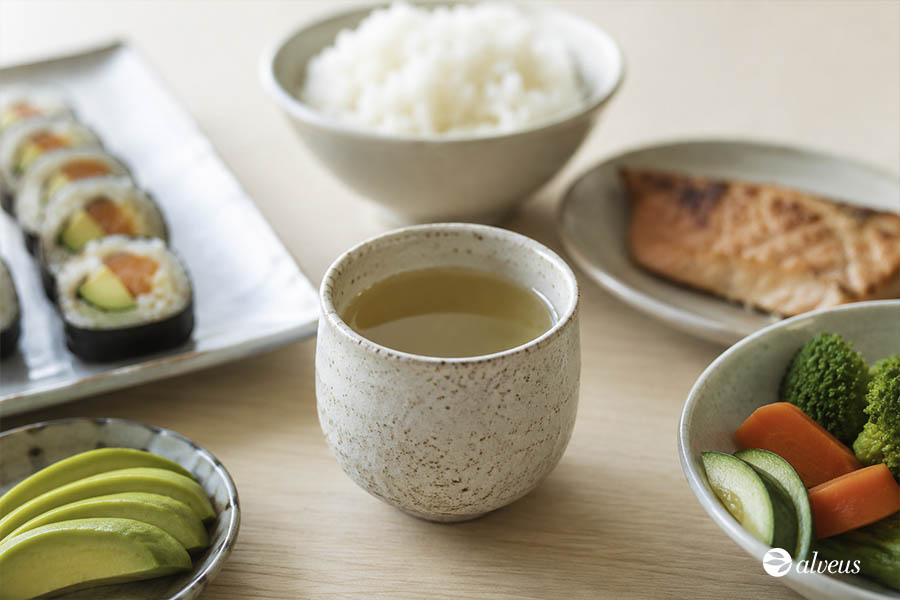
Kukicha tea has a vegetal sweetness that complements various dishes, such as sushi. It pairs very well with vegetable dishes, rice, mild fish, tofu, avocado, steamed vegetables, light soups and dishes with moderate umami.
It does not cleanse the palate as intensely as some more astringent teas, but it accompanies food elegantly and does not overpower the flavour of the fish.
Furthermore, it also works well with fresh cheeses, almonds, rice crackers or lightly sweetened pastries. It is not a tea intended for rich desserts, but rather for mild accompaniments, with low sugar content and flavours that do not mask its delicate vegetable notes.
If the Kukicha is roasted, it goes very well with nuts, mildly sweet milk chocolate, simple sponge cakes, chestnuts, toast, light pastries, and autumn dishes.
Why you should add Kukicha to your range and how to explain it to your customers
There are numerous reasons why, if you don’t already sell Kukicha, you should add it to your range. Here are the most important ones:
Firstly, because it is a classic Japanese tea, and as a specialist shop, it is almost a must to stock it. Furthermore, thanks to social media, it is becoming increasingly popular due to its lower caffeine content and mild flavour.
Secondly, it is a wonderful gateway to Japanese tea. Many customers are drawn in by Matcha or Gyokuro, but are not ready for such distinct and intense teas. Kukicha is a mild, easy-to-drink tea that introduces them to the classic, recognisable notes of Japanese tea.
Thirdly, it has a clear selling point for customers sensitive to caffeine. There is no need to promise that it is ‘caffeine-free’, as that would not be accurate. It is enough to explain that, as it is made mainly from stems, it is usually less stimulating than a conventional sencha.
With that in mind, let’s now look at how you can explain it, so that the customer understands its value, simply and effectively:
Our range includes various high-quality organic Japanese Kukichas, as well as conventional and roasted varieties.